July 1, 2026
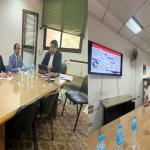
Under the patronage of Professor Ahmed El-Minshawy, President of Assiut University, Professor Mohamed Adawy, Vice President for Community Service and Environmental Development, received Mr. Hatem Mohamed Kotb, Head of the Social Workers Syndicate and Member of the Child Protection and Child Labor Prevention Committee in Assiut, along with the Field Representative and Partnerships Manager of Terre des Hommes Egypt. The meeting was attended by Professor Ali Kamal Mabed, Director of the Center for Monitoring and Studying Community Problems, and Professor Asmaa Gaber Mehran, Deputy Director of the Center. The discussions focused on strengthening cooperation between the Center for Monitoring and Studying Community Problems, affiliated with the University's Community Service and Environmental Development Sector, the Assiut Social Workers Syndicate, and Terre des Hommes Egypt.
The meeting addressed mechanisms for activating joint cooperation and developing an action plan to implement a series of training and awareness programs and activities. Discussions also explored ways to benefit from scientific and professional expertise in designing community initiatives aimed at supporting families, children, and youth, while strengthening the role of social and psychological specialists in addressing community issues, thereby contributing to sustainable development and community service in Assiut Governorate.
Professor Ahmed El-Minshawy affirmed that Assiut University is committed to building effective partnerships with various institutions and organizations, based on its belief that collaborative action is a fundamental pillar of sustainable development. He explained that cooperation with the Social Workers Syndicate reflects the University's commitment to employing its academic and research expertise to support community initiatives, qualify specialized professionals, and enhance their capacity to address societal challenges through scientific and professional approaches, ultimately creating a positive and sustainable impact that benefits the community of Assiut Governorate.
Professor Mohamed Adawy stated that this partnership between the University, represented by the Center for Monitoring and Studying Community Problems, the Assiut Social Workers Syndicate, and Terre des Hommes Egypt, comes within the framework of supporting community development efforts. He explained that the collaboration will include organizing a series of seminars, workshops, and training courses for social and psychological specialists across Assiut Governorate in the fields of psychological, social, and family counseling. These initiatives aim to enhance their professional competencies and empower them to perform their roles effectively within civil society institutions, while providing support to various community groups across the governorate's cities and villages. He further emphasized the University's commitment to expanding its partnerships with national and international organizations in pursuit of the Sustainable Development Goals and to maximizing the positive impact of its community services.
Professor Ali Kamal Mabed noted that the Center for Monitoring and Studying Community Problems plays a pivotal role in examining and addressing a wide range of societal issues affecting different age groups, including youth, children, and older adults. The Center also works to confront negative social phenomena and mitigate their impact. He expressed his appreciation for the collaboration between the University, the Assiut Social Workers Syndicate, and Terre des Hommes Egypt, describing it as an important step toward strengthening community development efforts and achieving sustainable developmental impact across Assiut Governorate.
Professor Asmaa Gaber Mehran explained that this constructive partnership highlights the importance of institutional collaboration and the integration of roles among different stakeholders. She noted that relying on scientific approaches and specialized expertise in designing and implementing developmental initiatives and programs enhances community participation in addressing various societal issues, while contributing to meeting community needs and supporting the achievement of the Sustainable Development Goals.