

The Pharmaceutical Analytical Chemistry Department Council will hold its regular monthly meeting number (484) On Monday 7 March 2022. Ten o'clock in the morning.
Do you have any questions? (088) 2080369 - 2345622 Pharmacy_QAAU@pharm.aun.edu.eg
The Pharmaceutical Analytical Chemistry Department Council will hold its regular monthly meeting number (484) On Monday 7 March 2022. Ten o'clock in the morning.
God willing, the meeting of the Pharmaceutics Department Board of the Faculty of Pharmacy No. (497) will be held on Monday 7 March 2022 at ten in the morning in the teaching hall on the third floor under the chairmanship of Prof. Dr. / Dean of the Faculty to discuss the topics that we will inform you later
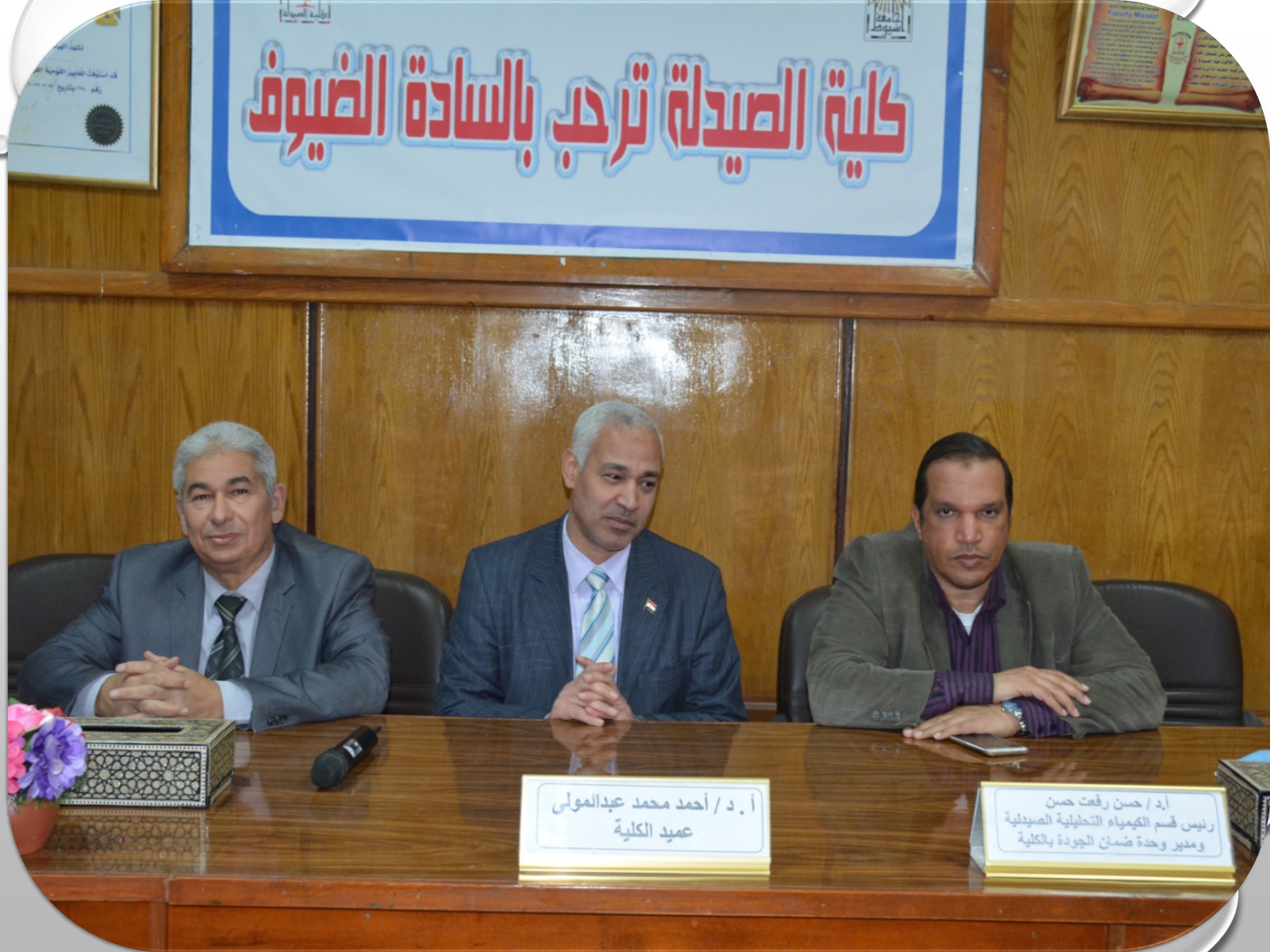
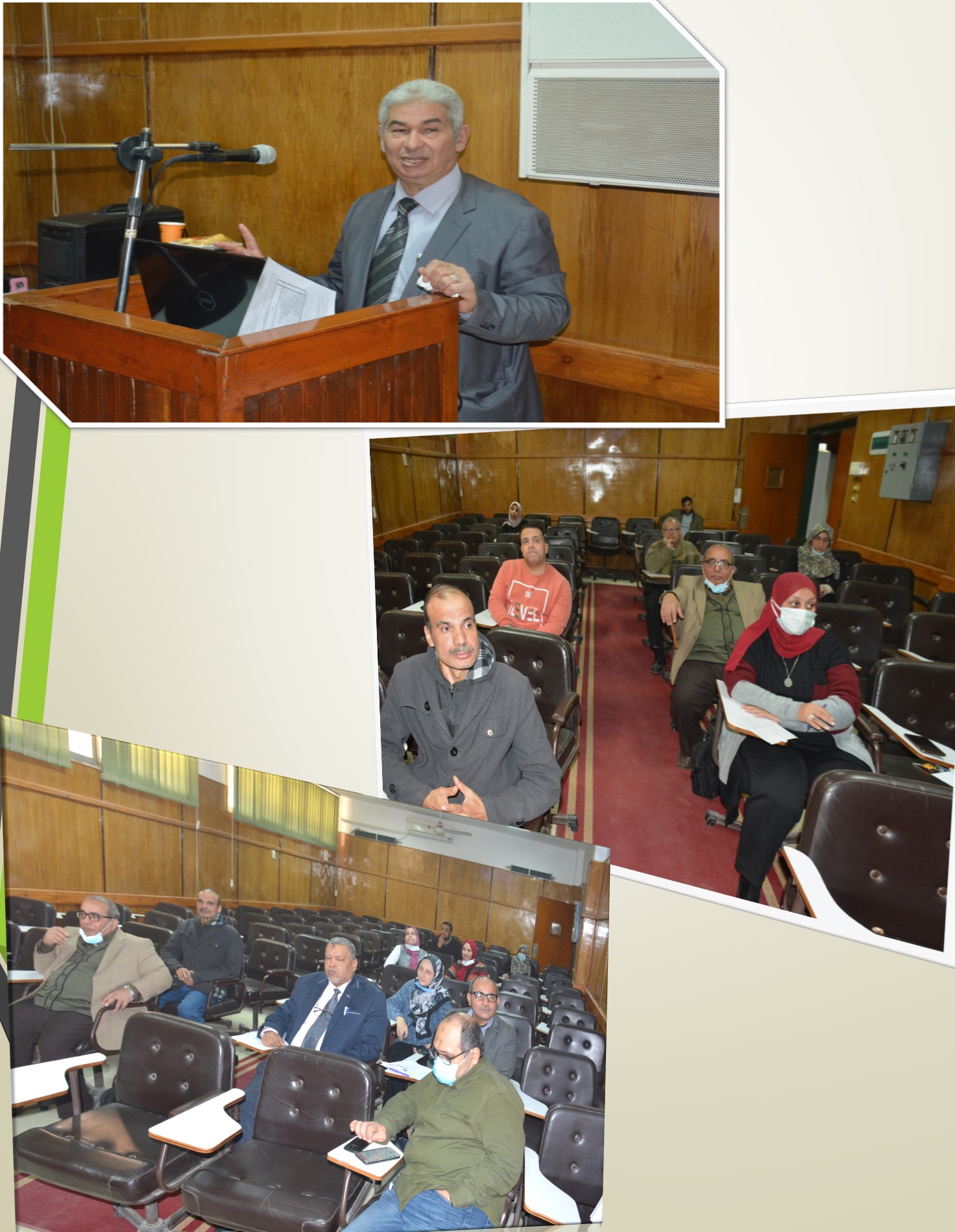
Prof. Dr. Ahmed Mohamed Abdel Mawla, Dean of the Faculty, starteded a workshop for faculty members, which was organized by the Quality Assurance and Accreditation Unit at the Faculty und entitled Documenting and Self-Evaluation Standards, under the supervision of Prof. Dr. Hassan Refaat Hassan - Head of the Department of Pharmaceutical Analytical Chemistry And Director of the Assurance Unit, and Dr. Gilan Abdel Razek Abdel Alim - Vice Director of the Quality Assurance Unit, and in the presence of the faculty members, where the workshop was attended by Prof. Dr. Mahrous Othman Ahmed - Professor of Industrial Pharmacy at the Faculty - an accredited external auditor by the National Authority for Quality Assurance and Accreditation of Education
This was done in the Faculty Celebration Hall on Wednesday 2/3/2022.


The protein tyrosine phosphatase CD45 plays a crucial role in B cell antigen receptor (BCR) signaling by activating Src family kinases. Cd45−/− mice show altered B cell development and a phenotype likely due to reduced steady-state signaling; however, Cd45−/− B cells show relatively normal BCR ligation–induced signaling. In our investigation of how BCR signaling was restored in Cd45−/− cells, we found that the coreceptor CD22 switched from an inhibitory to a stimulatory function in these cells. We disrupted the ability of CD22 to interact with its ligands in Cd45−/− B cells by generating Cd45−/−St6galI−/− mice, which cannot synthesize the glycan ligand of CD22, or by treating Cd45−/− B cells in vitro with the sialoside GSC718, which inhibits ligand binding to CD22. BCR ligation–induced signaling was reduced by ST6GalI deficiency, but not by GSC718 treatment, suggesting that CD22 restored BCR ligation–induced signaling in Cd45−/− mature B cells by altering cellular phenotypes during development. CD22 was required for the increase in the surface amount of IgM-BCR on Cd45−/− B cells, which augmented signaling. Because B cell survival depends on steady-state BCR signaling, IgM-BCR abundance was likely increased by the selective survival of IgM-BCRhi Cd45−/− B cells because of CD22-mediated signaling under conditions of substantially reduced steady-state signaling. Because the amount of surface IgM-BCR is increased on B cells from patients with other BCR signaling deficiencies, including X-linked agammaglobulinemia, our findings suggest that CD22 may contribute to the partial restoration of B cell function in these patients.
The asymmetric unit of the title compound, C 25 H 21 N 3 O 2 S, comprises four molecules. Their conformations differ primarily in the orientations of the styryl and the N -phenylcarboxamido groups. In the crystal, intermolecular N—H...N, C—H...O and C—H...S hydrogen-bonding contacts as well a C—H...π(ring) interactions lead to the formation of a layer structure parallel to (010). Hirshfeld surface analysis revealed that H...H interactions represent the main contributions to the crystal packing.
The Executive Committee meeting will be held On Sunday 6 March 2022 at eleven in the morning in the Faculty Council Hall - the fifth floor (administrative building)