

Stereoselective trimethylsilylation of α- and β-galactopyranoses

Research Abstract

Trimethylsilylation of the anomeric hydroxyl groups of tetra-O-benzyl and tetra-O-acetyl galactopyranoses was investigated. Stereoselective formation of β-trimethylsilyl glycoside (β-TMS glycoside) of benzyl protected compound was achieved using N-trimethylsilyl diethylamine. In the course of the investigation of the selective synthesis of TMS galactosides using TMS-imidazole, we observed the formation of an intermediate, which was converted predominantly into α-TMS glycoside after silica gel column chromatography. A reaction of acetylated compound using TMS-trifluoromethanesulfonate-2,6-lutindine selectively yielded α-TMS glycoside.

Research Authors
Yuri Asami, Yuka Kawaguchi, Yoshimi Kanie, Hajjaj Abdu-Allah, Katsuhiko Suzuki, Osamu Kanie.
Research Date
Research Journal
Carbohydrate Research
Research Publisher
Elsevier
Research Vol
474
Research Website
https://www.sciencedirect.com/science/article/pii/S0008621518307031?via%3Dihub
Research Year
2019
Inhibition of SHP2 by new compounds induces differential effects on RAS/RAF/ERK and PI3K/AKT pathways in different cancer cell types

Research Abstract

Kinases and phosphatases are important players in growth signaling and are involved in cancer development. For development of targeted cancer therapy, attention is given to kinases rather than phosphatases inhibitors. Src homology region 2 domain-containing protein tyrosine phosphatase2 (SHP2) is overexpressed in different types of cancers. We investigated the SHP2-inhibitory effects of two new 5-aminosalicylate-4-thiazolinones in human cervical (HeLa) and breast (MCF-7 & MDA-MB-231) cancer cells. In-silico molecular docking showed preferential affinity of the two compounds towards the catalytic over the allosteric site of SHP2. An enzymatic assay confirmed the docking results whereby 0.01 μM of both compounds reduced SHP2 activity to 50%. On cellular level, the two compounds significantly reduced the expression of SHP2, KRAS, p-ERK and p-STAT3 in HeLa but not in the other two cell lines. Phosphorylation of AKT and JNK was enhanced in HeLa and MCF7. Both compounds exhibited anti-proliferative/anti-migratory effects on HeLa and MCF7 but not in MDA-MB-231 cells. These results indicate that inhibition of SHP2 and its downstream pathways by the two compounds might be a promising strategy for cancer therapy in some but not all cancer types.

Research Authors
Cijo George Vazhappilly, Ekram Saleh1, Wafaa Ramadan, Varsha Menon, Aya Mudhafar Al-Azawi, Hamadeh Tarazi1
Research Date
Research Journal
Investigational New Drugs
Research Publisher
Springer Nature
Research Vol
37
Research Website
https://link.springer.com/article/10.1007%2Fs10637-018-0626-5
Research Year
2019

The protein tyrosine phosphatase SHP-1 (PTPN-6) but not CD45 (PTPR-C) is essential for the ligand-mediated regulation of CD22 in BCR-ligated B cells

Research Abstract

CD22 is an inhibitory B cell coreceptor that regulates B cell development and activation by downregulating BCR signaling through activation of SH2-containing protein tyrosine phosphatase-1 (SHP-1). CD22 recognizes α2,6 sialic acid as a specific ligand and interacts with α2,6 sialic acid-containing membrane molecules, such as CD45, IgM, and CD22, expressed on the same cell. Functional regulation of CD22 by these endogenous ligands enhances BCR ligation-induced signaling and is essential for normal B cell responses to Ags. In this study, we demonstrate that CD45 plays a crucial role in CD22-mediated inhibition of BCR ligation-induced signaling. However, disruption of ligand binding of CD22 enhances CD22 phosphorylation, a process required for CD22-mediated signal inhibition, upon BCR ligation in CD45-/- as well as wild-type mouse B cells but not in mouse B cells expressing a loss-of-function mutant of SHP-1. This result indicates that SHP-1 but not CD45 is required for ligand-mediated regulation of CD22. We further demonstrate that CD22 is a substrate of SHP-1, suggesting that SHP-1 recruited to CD22 dephosphorylates nearby CD22 as well as other substrates. CD22 dephosphorylation by SHP-1 appears to be augmented by homotypic CD22 clustering mediated by recognition of CD22 as a ligand of CD22 because CD22 clustering increases the number of nearby CD22. Our results suggest that CD22 but not CD45 is an endogenous ligand of CD22 that enhances BCR ligation-induced signaling through SHP-1-mediated dephosphorylation of CD22 in CD22 clusters.

Research Authors
Amin Alborzian Deh Sheikh, Chizuru Akatsu, Hajjaj H. M. Abdu-Allah, Yuki Suganuma, Akihiro Imamura, Hiromune Ando, Hiromu, Takematsu, Hideharu Ishida, Takeshi Tsubata
Research Date
Research Journal
The Journal of Immunology
Research Publisher
The American Association of Immunologists, Inc.
Research Vol
206 (11)
Research Website
https://www.jimmunol.org/content/early/2021/05/14/jimmunol.2100109
Research Year
2021

Conjugation of 4-aminosalicylate with thiazolinones afforded non-cytotoxic potent in vitro and in vivo anti-inflammatory hybrids

Research Abstract
  1. Eicosanoids like leukotrienes and prostaglandins that produced within the arachidonic acid cascade are involved in the pathogenesis of pain, acute and chronic inflammatory diseases. A promising approach for an effective anti-inflammatory therapy is the development of inhibitors targeting more than one enzyme of this cascade. Aiming to develop balanced COX/LOX inhibitors; 4-aminosalicylate based thiazolinones having different substituents at the 5th position of the 4-thiazolinone ring (2-22) were designed, synthesized, characterized and evaluated in vitro and in vivo for their anti-inflammatory activity. Most of the investigated compounds showed high COX-2 inhibitory potencies (IC50 39-200 nM) with selectivity indexes (30-84). Two compounds, 19 and 21, (IC50 = 41 and 44 nM), are equipotent to celecoxib (IC50 = 49 nM), while compound 22 (IC50 = 39 nM) was the most potent. For 15-LOX, compounds 5, 11, 19, 21 and 22 revealed higher potency (IC50 1.5-2.2 µM) than zileuton (IC50 15 µM). Thus, compounds 5, 11, 19, 21 and 22 are potent dual inhibitors of COX-2 and 15-LOX. In vivo anti-inflammatory testing of these compounds revealed that, compounds 5 and 21 had an anti-inflammatory activity similar to indomethacin and celecoxib (% inhibition of oedema = 60 ± 9) and higher than diclofenac potassium (% inhibition = 52 ± 29), while compound 22 (% inhibition = 63 ± 5) was more active than the reference drugs. The results showed that the activity is controlled by the bulkiness and lipophilicity of the substituent at the 5th position. The cytotoxicity results revealed that all compounds are not cytotoxic, additionally, in an experimental model of ulcerogenic effect, the most active compounds 21 and 22 showed better safety profile than indomethacin. Further, at the active sites of the COX-1, COX-2 and 15-LOX co-crystal, 19, 21, and 22 showed high binding forces in free binding energy study, which is consistent with in vitro and in vivo results. In conclusion, these compounds are good candidates for further biological investigation as potential anti-inflammatory drugs with dual balanced inhibition of COX and 15-LOX and good safety profile.
Research Authors
Hajjaj H.M.Abdu-Allah, Alshaimaa A.B.Abdelmoez, Hamadeh Tarazi, Abdel-Nasser A.El-Shorbagi, Raafat El-Awady
Research Date
Research Journal
Bioorganic Chemistry
Research Publisher
Elsevier
Research Vol
Volume 94
Research Website
https://www.sciencedirect.com/science/article/pii/S0045206819313975?via%3Dihub
Research Year
2020

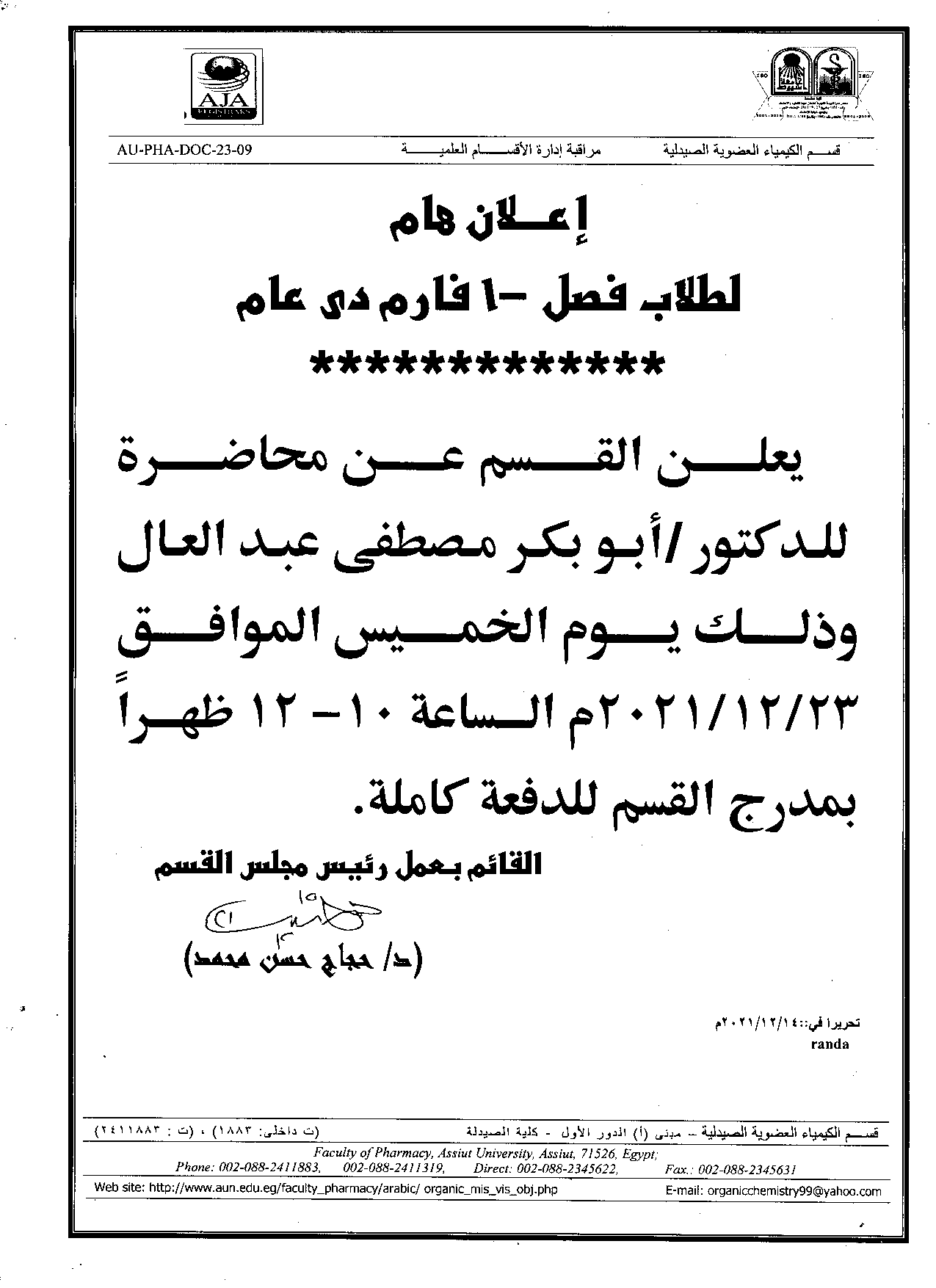
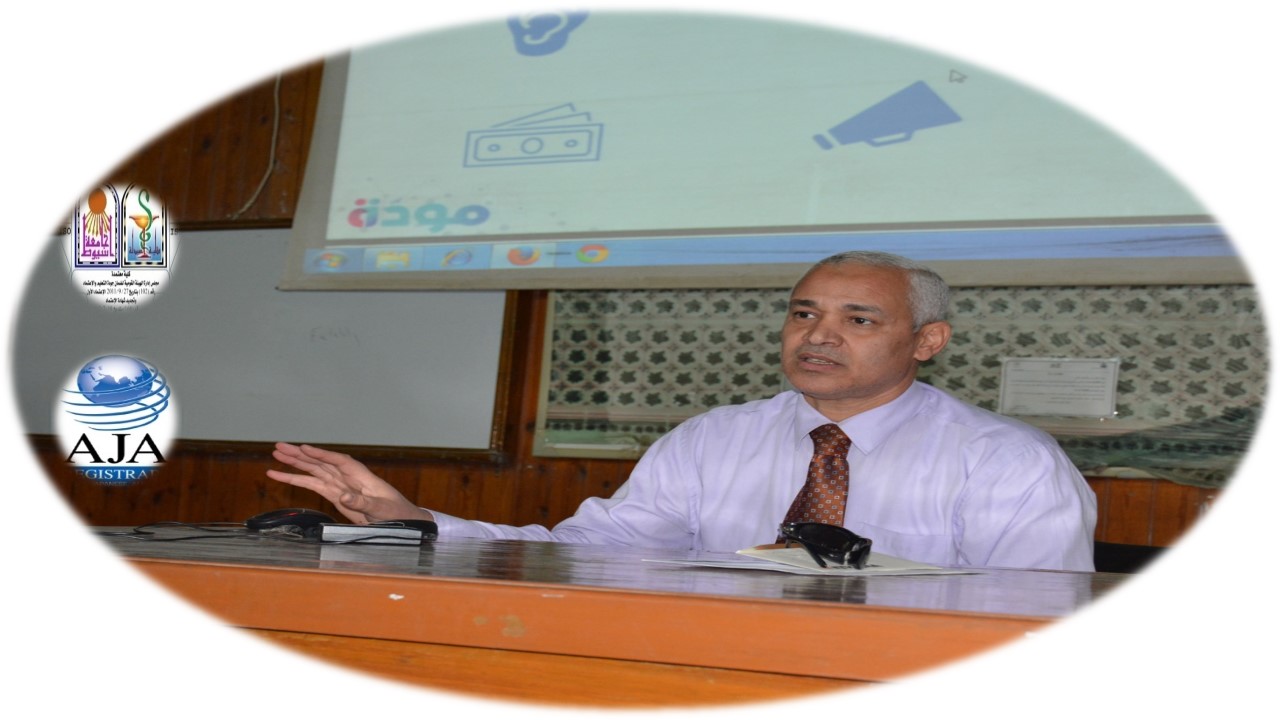
Important Announcement for Students of Class (1) Pharm D The department Pharmaceutical Organic Chemistry announces the lecture of Dr. Abu Bakar Mustafa Abdel-Aal Elsayed on Thursday 23/12/2021 at ten in the morning

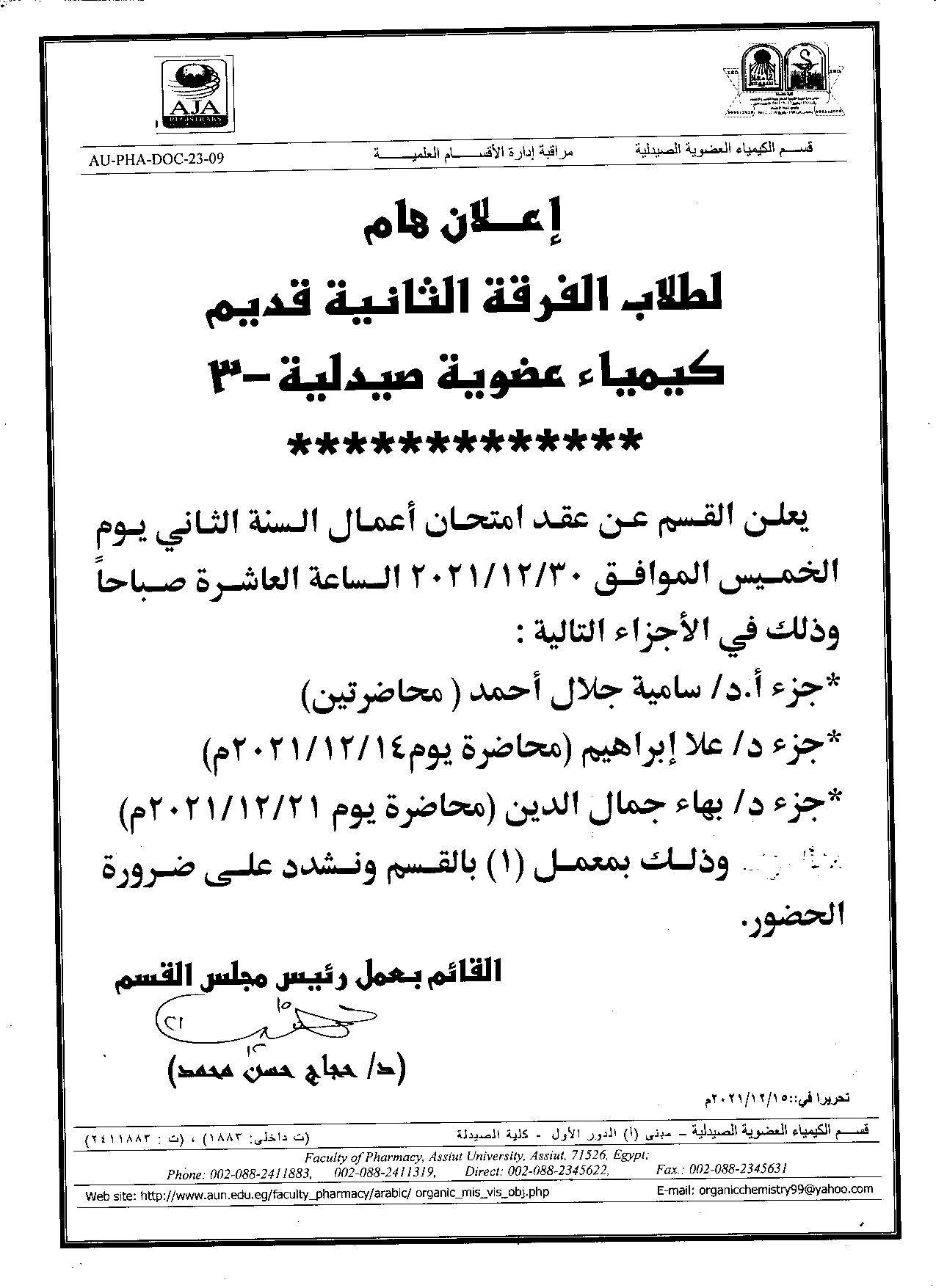
Important Announcement, Second Year, old course “Pharmaceutical Organic Chemistry-3” The Department of Organic Chemistry announces that the examination for the second year mid term will be held on Thursday 30-12-2021 at ten in the morning in the followin

Awareness campaign entitled "Our Faculty is Smoke Free Zone"


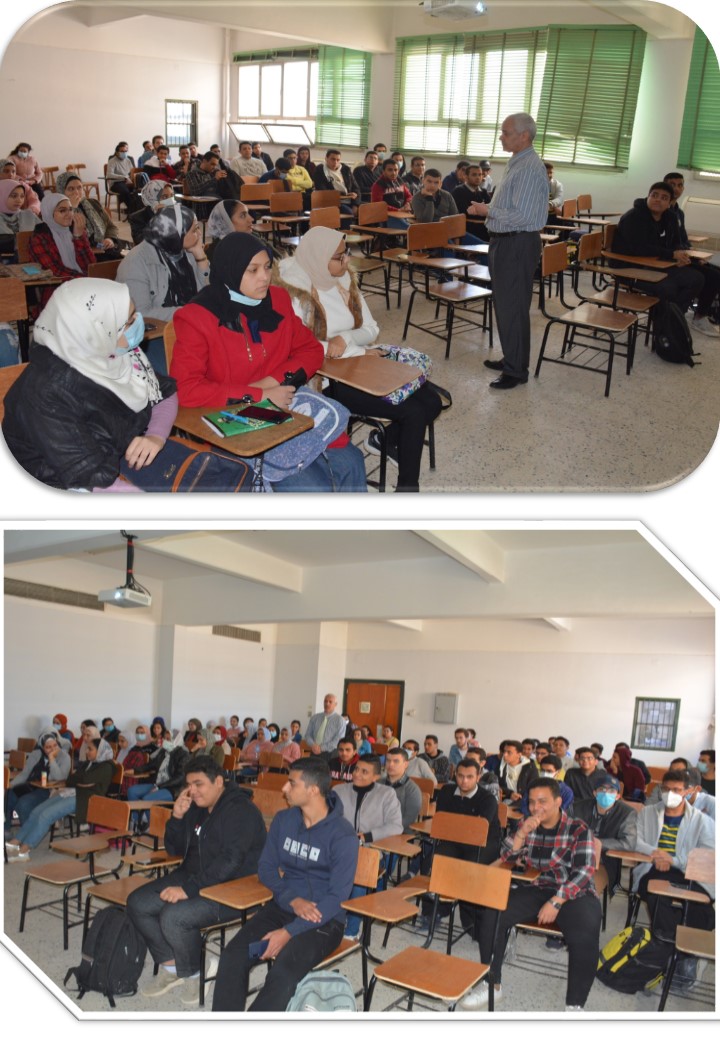
Under the supervision of Prof. Dr. Prof/Tarek Abdalla Morsy El-Gammal- President of the University, Prof. Dr. Maha Kamel Ghanem Omar- Vice President for Community Service and Environmental Development Affairs, Prof. Dr. Ahmed Mohamed Ahmed Abd El-Mawla- Dean of the Faculty, and Prof. Dr. Mahmoud El-Badry Abdel-Motaleb - The Vice Dean for Community Service and Environmental Development, the Community Service and Environmental Development Sector, with the participation of the students of the Faculty of Pharmacy, the Faculty of Medicine, and the Faculty of Engineering, organized an awareness campaign entitled “Our Faculty is Smoke Free Zone” in the Faculty of Engineering, in accordance with the decision of Prof. Dr. Khaled Abdel Ghaffar - Minister of Higher Education and Scientific Research Concerning Activating the Mechanisms Implementing Law No. “52” 1981 regarding the prevention of the harms of smoking and its executive regulations, which includes a permanent ban on smoking in all its forms in health and educational facilities

On the 5th and 12th of December 2021

Awareness campaign entitled "Our Faculty is Smoke Free Zone"

حملة توعية بعنوان " كليتنا بلا تدخين" "

news category
خبر عام
Subscribe to