

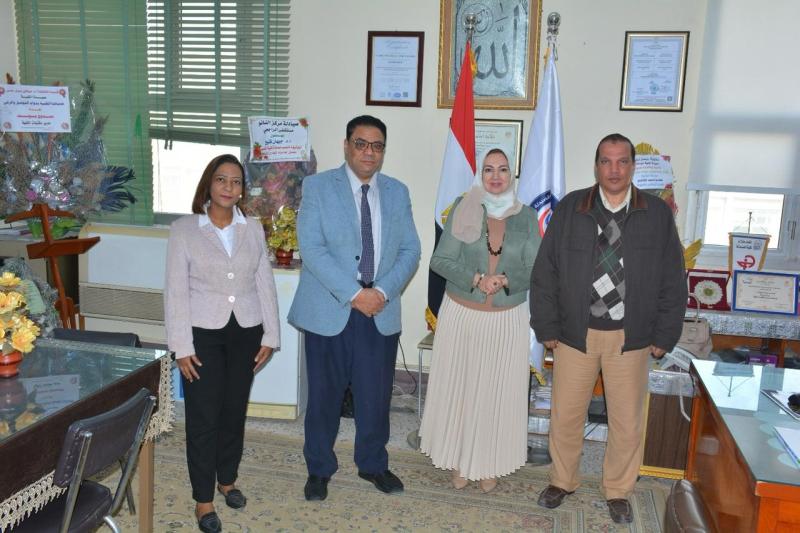

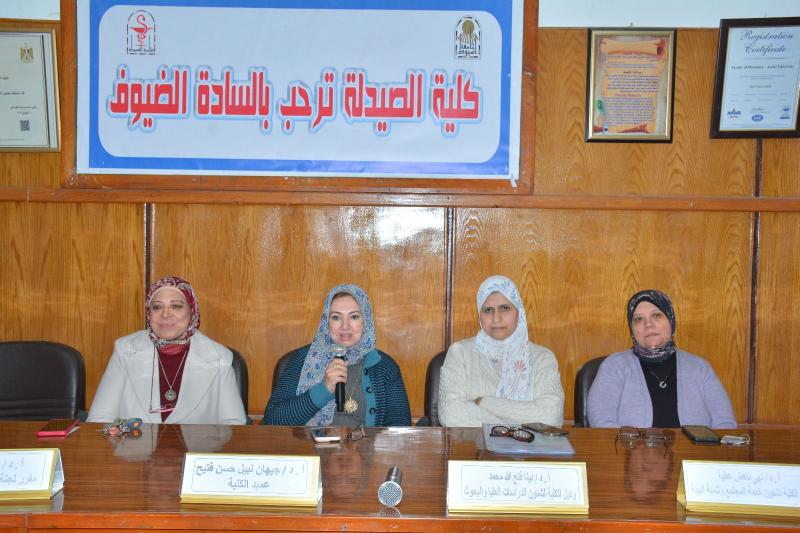
As part of the ongoing cooperation between the Faculty of Pharmacy at Assiut University and EIPICO Pharmaceuticals in training students at different academic levels to equip them with the skills necessary for the job market, training completion certificat

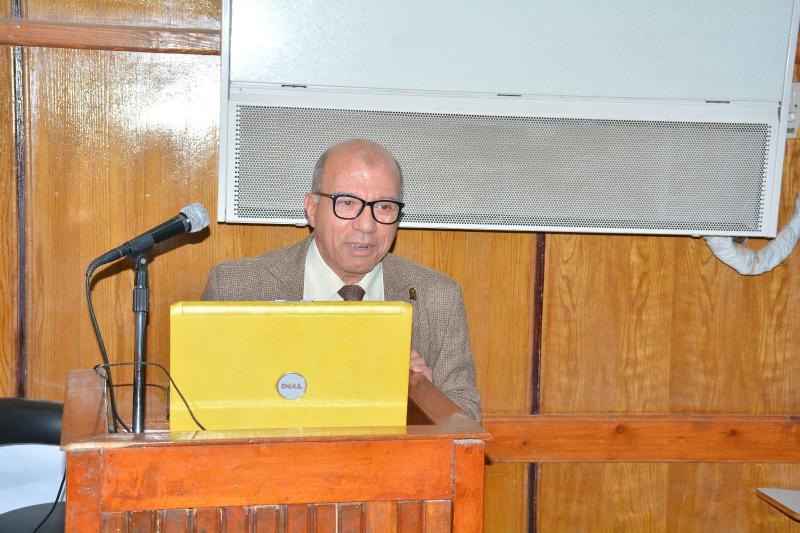
Lecture Entitled: “Safe Handling of Chemicals and Disposal of Their Waste”

Under the patronage of His Excellency Prof. Dr. Ahmed Al-Manshawy, President of the University, and Prof. Dr. Gamal Badr, Vice President for Postgraduate Studies and Research,
and under the supervision of Prof. Dr. Jihan Nabil Fetih, Dean of the Faculty,
Prof. Dr. Dina Fathallah Mohamed, Vice Dean for Postgraduate Studies and Research,
and Prof. Dr. Tahani Hassan Elfaham, Emeritus Professor of Pharmaceutics and Rapporteur of the Research Ethics Committee at the Faculty,

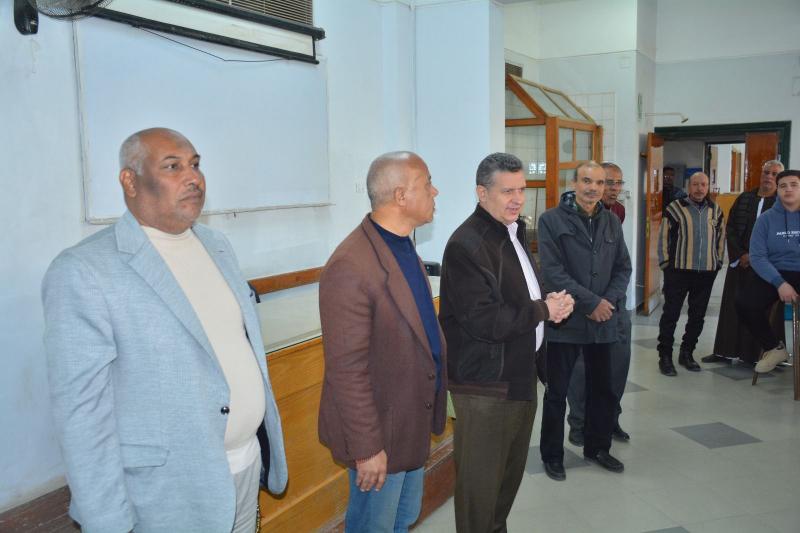
and in accordance with the training plan of the Research Ethics Committee, a lecture entitled “Safe Handling of Chemicals and Disposal of Their Waste” was organized.

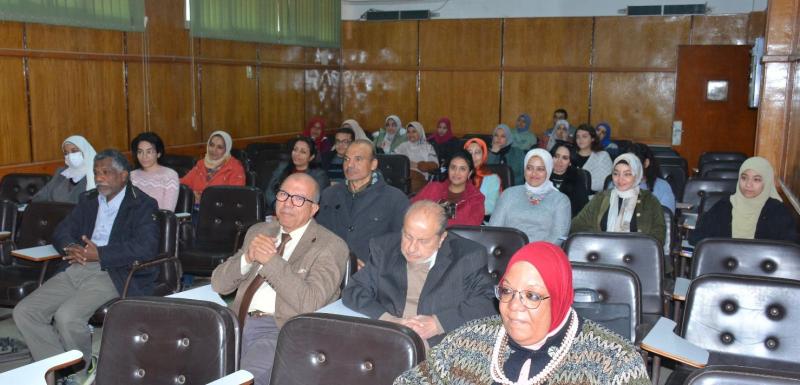
The event was attended by Prof. Dr. Noha Nahid Atiya, Vice Dean for Community Service and Environmental Development, along with Heads of Departments, members of the academic staff and their assistants, administrative employees from different departments, and postgraduate students.

The lecture was delivered by Prof. Dr. Tarek Abou El-Fadl Mohamed, Emeritus Professor of Medicinal Chemistry.

The event was held on Wednesday, 17/12/2025.
 

news category
خبر عام

[HTML] from rsc.org Dithioerythritol-capped silver/gold nanoclusters for determination of ciprofloxacin, norfloxacin, and enrofloxacin in food and urine samples

Research Abstract

Fluoroquinolones (FQs) are widely used in the poultry and livestock industries due to their effectiveness in preventing and treating bacterial infections. However, improper use and poor biodegradability lead to their accumulation in the food chain, posing risks to human health. To address this, a novel ratiometric fluorescence probe was developed for sensitive FQ detection. The probe consists of dithioerythritol-protected silver–gold nanoclusters (DIT@AgAuNCs) with weak red fluorescence at 615 nm. Addition of Al3+ induces nanocluster aggregation, enhancing fluorescence emission. Upon adding FQs to the DIT@AgAuNCs/Al3+ system, fluorescence at 615 nm decreases due to the removal of Al3+ from the ligand (DIT) surface via coordination interactions. Simultaneously, a new blue fluorescence peak emerges at 465 nm, attributed to the formation of an Al3+-FQs coordination complex. Under optimal conditions …

Research Authors
Mohamed N Goda, Laila S Alqarni, Hossieny Ibrahim, Al-Montaser Bellah H Ali, Mohamed M El-Wekil
Research Date
Research Journal
RSC advances
Research Pages
23364-23373
Research Publisher
Royal Society of Chemistry
Research Vol
15
Research Website
https://scholar.google.com/scholar?oi=bibs&cluster=7179258037069383549&btnI=1&hl=en
Research Year
2025

Visit of Students from Shaheed Mostafa Hamdoun Secondary School (Umm Al-Qusour – Manfalout) to the Faculty

Under the patronage of His Excellency Prof. Dr. Ahmed Al-Manshawy, President of the University, and Prof. Dr. Mohamed Ahmed Adawy, Vice President for Community Service and Environmental Development,
and under the supervision of Prof. Dr. Jihan Nabil Fetih, Dean of the Faculty;
Prof. Dr. Hassan Refat Hassan Ali, Vice Dean for Education and Student Affairs;
and Prof. Dr. Noha Nahidh Atiya, Vice Dean for Community Service and Environmental Development,

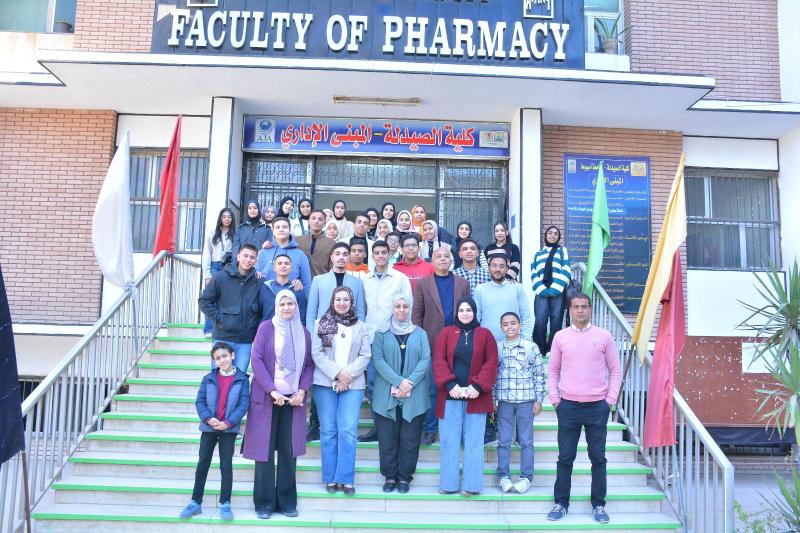
and within the framework of the Faculty’s outreach to the wider community, students from Shaheed Mostafa Hamdoun Secondary School – Umm Al-Qusour, affiliated with Manfalout Educational Administration, visited the Faculty in order to learn about its facilities and to encourage academic excellence.

They were warmly received and welcomed by Prof. Dr. Gehan Nabil Fateeh, Dean of the Faculty, accompanied by Prof. Dr. Dina Fathallah Mohamed, Vice Dean for Postgraduate Studies and Research, and Prof. Dr. Jilan Abdel-Razek Abdel-Aleem, Professor of Industrial Pharmacy and Director of the Quality Assurance and Accreditation Unit.

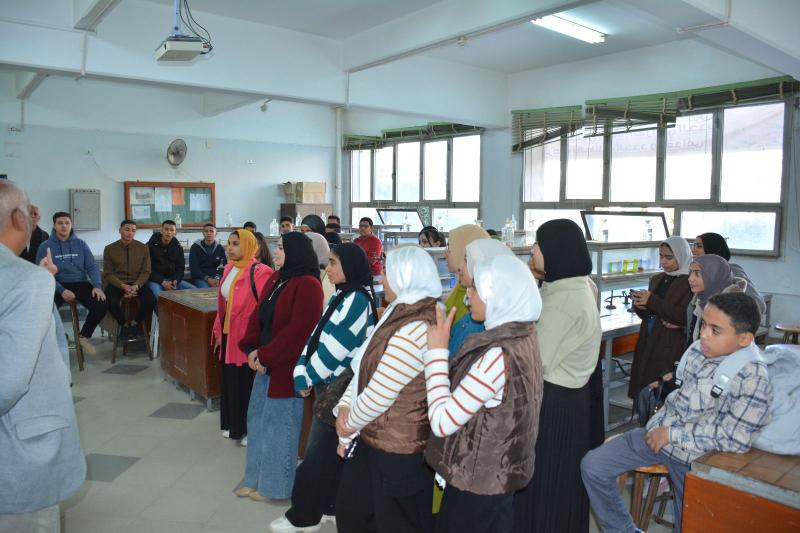
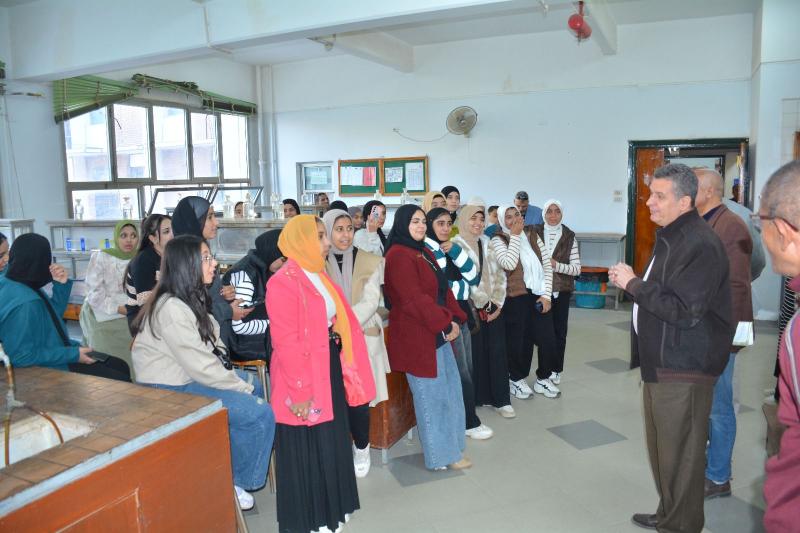
The students toured the Faculty and visited the laboratories of the Department of Pharmaceutical Organic Chemistry, where they were received by Prof. Dr. Mostafa Ahmed Hussein, Head of the Department.

At the end of the visit, the school representatives expressed their thanks to the Faculty Administration for the warm reception, generous hospitality, and kind welcome extended to the students.

The visit took place on Thursday, 18/12/2025.

news category
خبر عام

Faculty Dean’s Tour to Follow Up the First Semester Examinations for the Academic Year 2025/2026

Under the patronage of Prof. Prof. Dr. Ahmed Al-Manshawy, President of the University, and Prof. Dr. Ahmed Mohamed Abdel-Mawla, Vice President for Education and Student Affairs,
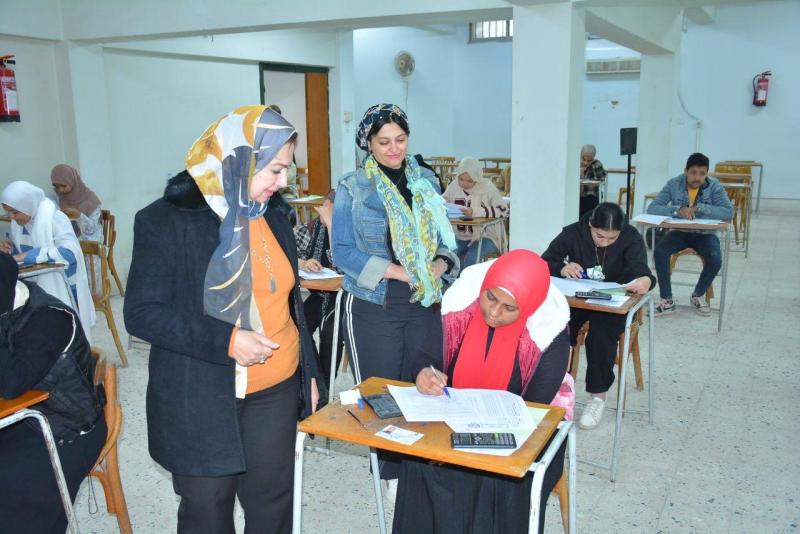
Prof. Dr. Jihan Nabil Fetih, Dean of the Faculty, accompanied by Prof. Dr. Hassan Refat Hassan Ali, Vice Dean for Education and Student Affairs, and Dr. Nermeen El-Sayed El-Iraqi, Acting Head of the Pharmaceutics Department and member of the Examination Control Committee, made an inspection tour to follow up the progress and regularity of the first-semester examinations for the academic year 2025/2026.

Her Excellency ensured full commitment to all regulations governing the examination process.

This took place on Wednesday, 24/12/2025.

news category
خبر عام

The Department of Biochemistry announces that the oral exam for second-year students (private university) for the Biochemistry I course will be held on Saturday, January 3, 2026


The Department of Biochemistry has decided to hold an oral exam for second-year students (private university) for the course Biochemistry-1 

on Saturday, January 3, 2025, at nine o'clock in the morning in the Department of Biochemistry - Building (B)

news category
إعلانات الطلاب

Dual-Mode Histamine Detection Using Nitrogen and Iron Co-Doped Carbon Dots: A Novel Nanozyme-Based Sensing Platform for Food Safety Applications

Research Abstract

This work presents several significant novelties in the field of histamine detection and biosensing through the development of nitrogen and iron co-doped carbon dots (N, Fe@CDs) with intrinsic peroxidase-like activity. The dual-mode sensing mechanism is particularly innovative, simultaneously exploiting both the colorimetric conversion of 2,3,5-triphenyl-2 H-tetrazolium chloride (TTC) to formazan and the fluorescence enhancement of the carbon dots N, Fe@CDs. This approach cleverly integrates enzymatic specificity through porcine diamine oxidase (DAO) with nanozyme catalysis. The ability to achieve both visual detection and fluorometric analysis for precise measurements. The developed dual-mode sensing platform demonstrates excellent analytical performance with both colorimetric and fluorometric detection modes showing linear detection ranges of 1.0–60.0 µM and 0.1–13.0 µM, achieving limits of detection of 0.28 µM and 0.034 µM respectively, with strong linearity (R² >0.9959). The method was successfully applied to determine histamine levels in different fish products, demonstrating excellent accuracy with percentage recovery values ranging from 97.11 to 102.0%. The successful application to diverse fish products demonstrates the practical versatility of this sensing strategy, overcoming matrix interference challenges. This multifunctional nanomaterial-based approach represents a significant advancement in developing cost-effective, user-friendly analytical tools for food quality control and safety assessment.

Research Authors
Mohamed N. Goda, Laila S. Alqarni, Hossieny Ibrahim, Mohamed M. El-Wekil, Yousef A. Bin Jardan & Al-Montaser Bellah H. Ali
Research Date
Research Journal
Journal of Cluster Science
Research Pages
220
Research Publisher
Springer nature
Research Rank
Q1
Research Vol
36
Research Website
https://link.springer.com/article/10.1007/s10876-025-02924-w#citeas
Research Year
2025

Fe/N-CD Nanozyme for Dual-Mode Fluorescence and Colorimetric Detection of Carbendazim

Research Abstract

Carbendazim, a widely used benzimidazole fungicide, poses significant environmental and health risks, necessitating sensitive analytical methods for its determination in food and environmental samples. A novel dual-emission iron and nitrogen co-doped carbon dots nanozyme with fluorescent bands at 440 nm and 522 nm was developed, functioning simultaneously as both ratiometric probe and peroxidase mimic. The nanozyme catalyzes 3,3’,5,5’-tetramethylbenzidine oxidation in hydrogen peroxide presence, generating blue oxidized 3,3’,5,5’-tetramethylbenzidine that quenches the 522 nm emission while 440 nm serves as internal reference. Carbendazim scavenges reactive oxygen species, suppressing oxidized 3,3’,5,5’-tetramethylbenzidine formation and restoring 522 nm fluorescence, producing a self-calibrating fluorescence ratio immune to environmental variations. Additionally, the reduction of oxidized 3,3’,5,5’-tetramethylbenzidine color upon carbendazim addition enables colorimetric detection. Kinetic studies revealed excellent peroxidase-like activity with Michaelis-Menten parameters. The dual-mode sensing platform achieved linear responses of 3.0–18.0 ng/mL (colorimetric, limit of detection = 1.25 ng/mL) and 1.0–38.0 ng/mL (fluorometric, limit of detection = 0.64 ng/mL) for carbendazim detection. Successful application to fruit and water samples demonstrated excellent accuracy with recovery rates of 96.89–102.00%, representing the first integration of carbon dots-based peroxidase mimicry with ratiometric fluorescence detection for carbendazim analysis.

Research Authors
Mohamed N. Goda, Yasmeen G. Abou Elreash, Hossieny Ibrahim, Mohamed M. El-Wekil & Al-Montaser Bellah H. Ali
Research Date
Research Journal
Journal of Cluster Science
Research Pages
219
Research Publisher
Springer nature
Research Rank
Q1
Research Vol
36
Research Website
https://link.springer.com/article/10.1007/s10876-025-02921-z
Research Year
2025

Ratiometric fluorescence sensor for sensitive quantification of salinomycin residues in edible poultry tissues using R/CDs@Rh6G: A novel food safety approach

Research Abstract
Salinomycin (SAL) is widely used as an anticoccidial agent in poultry production; however, its residue accumulation in edible tissues raises significant food safety concerns. Therefore, accurate and sensitive determination of SAL levels in chicken tissues is essential for consumer protection and regulatory compliance. In this study, a novel dual-emission fluorometric method was developed for the detection of SAL, utilizing a ratiometric sensing platform based on rhodamine 6G (Rh6G) and red-emitting carbon dots (R/CDs). Under a single excitation wavelength of 530 nm, Rh6G exhibited a fluorescence emission at 550 nm, while R/CDs emitted at 610 nm. SAL selectively enhanced the Rh6G signal without affecting the R/CDs emission, enabling a robust and reliable ratiometric response for quantification. The developed system demonstrated a wide linear response range, both in standard solutions (1.0–60.0 ng/mL) and in spiked tissue matrices (10.0–600.0 μg/kg), confirming its suitability for real-sample analysis. Extraction efficiencies were high across tested tissues, ranging from 94.51 to 97.50 % in liver, 95.54 to 98.90 % in kidney, and 98.83 to 100.20 % in skin/fat samples. Moreover, the method was successfully applied to monitor SAL residue depletion in edible tissues over time, allowing for the accurate determination of the appropriate slaughtering time to ensure food safety. These results highlight the method's precision, reliability, and potential application in routine monitoring of SAL residues in poultry tissues. Overall, the proposed approach offers a valuable analytical tool for food safety laboratories and supports ongoing efforts to ensure compliance with international residue regulations.
Research Authors
Mohamed N. Goda, Laila S. Alqarni, Hossieny Ibrahim, Mohamed M. El-Wekil, Al-Montaser Bellah H. Ali
Research Date
Research Journal
Microchemical Journal
Research Pages
114876
Research Publisher
elsevier
Research Rank
Q1
Research Vol
217
Research Website
https://www.sciencedirect.com/science/article/pii/S0026265X25022246?casa_token=tqUGnVISuZoAAAAA:ut-8cx0HCO6G-RUA7XQkRC-E4g_trp-AKk-Ri9QuAwqIe5JFvYESJyuLLChH2rIFtb-FX6_Fs2g
Research Year
2025

Novel ratiometric fluorescence platform based on N, S-carbon dots for interference-free silicate detection with portable smartphone integration

Research Abstract
The determination of soluble silicates is essential for environmental monitoring and industrial water treatment, while indicating water quality and geochemical processes in natural waters. This work introduces the first ratiometric fluorescence method for detecting soluble silicates using nitrogen and sulfur co-doped carbon dots (N, S-CDs) that emit at two distinct wavelengths: 500 nm and 650 nm. When silicates react to form the blue molybdenum complex, this blue color selectively blocks the 650 nm signal while leaving the 500 nm reference signal unchanged, creating a built-in calibration system. This dual-wavelength approach overcomes major limitations of current methods that rely on measuring single-wavelength color changes, which are easily affected by sample turbidity and interference. The method demonstrated excellent analytical performance with a linear response range of 0.05–0.8 mg Si/L, a detection limit of 0.018 mg Si/L, and recovery rates between 96.0 and 99.0 % with relative standard deviations below 3.03 % in the water matrices studied. The method was successfully validated for real-world applications through analysis of Nile River water and groundwater samples, demonstrating excellent recovery rates and precision in complex environmental matrices. Additionally, a smartphone-based colorimetric detection system was integrated to enable field measurements by capturing the fluorescence color changes under UV illumination, providing a portable and user-friendly alternative for on-site silicate monitoring.
Research Authors
Mohamed N. Goda, Yasmeen G. Abou Elreash, Hossieny Ibrahim, Mohamed M. El-Wekil, Al-Montaser Bellah H. Ali
Research Date
Research Journal
Microchemical Journal
Research Pages
115848
Research Publisher
elsevier
Research Rank
Q1
Research Vol
219
Research Website
https://www.sciencedirect.com/science/article/pii/S0026265X25031960?casa_token=hamsDGjrm34AAAAA:TqCQC3NjS0R0ksTJ-h9_ndj04eb5_QBY-xujhcCv0b89gi8nU6iHOdzaX1lb5K8pI-wKVzrw3wI
Research Year
2025
Subscribe to