

Direct Involvement in National and Regional SDG Policy Development
Assiut University – Community Service and Environmental Development Sector
Question 17.2.1 Does your university have direct involvement in, or input into, national government or regional non-government organisations' SDG policy development – including identifying problems and challenges, developing policies and strategies, modelling likely futures with and without interventions, monitoring and reporting on interventions, and enabling adaptive management? |
Answer: YES | Assiut University takes a direct part in SDG policy development at the national and regional levels. It does this through its leadership's seats on government development bodies, through specialised centres in the Community Service and Environmental Development Sector, and through formal partnerships with national councils, government agencies and national and international NGOs. The work covers all five stages of the policy cycle. |
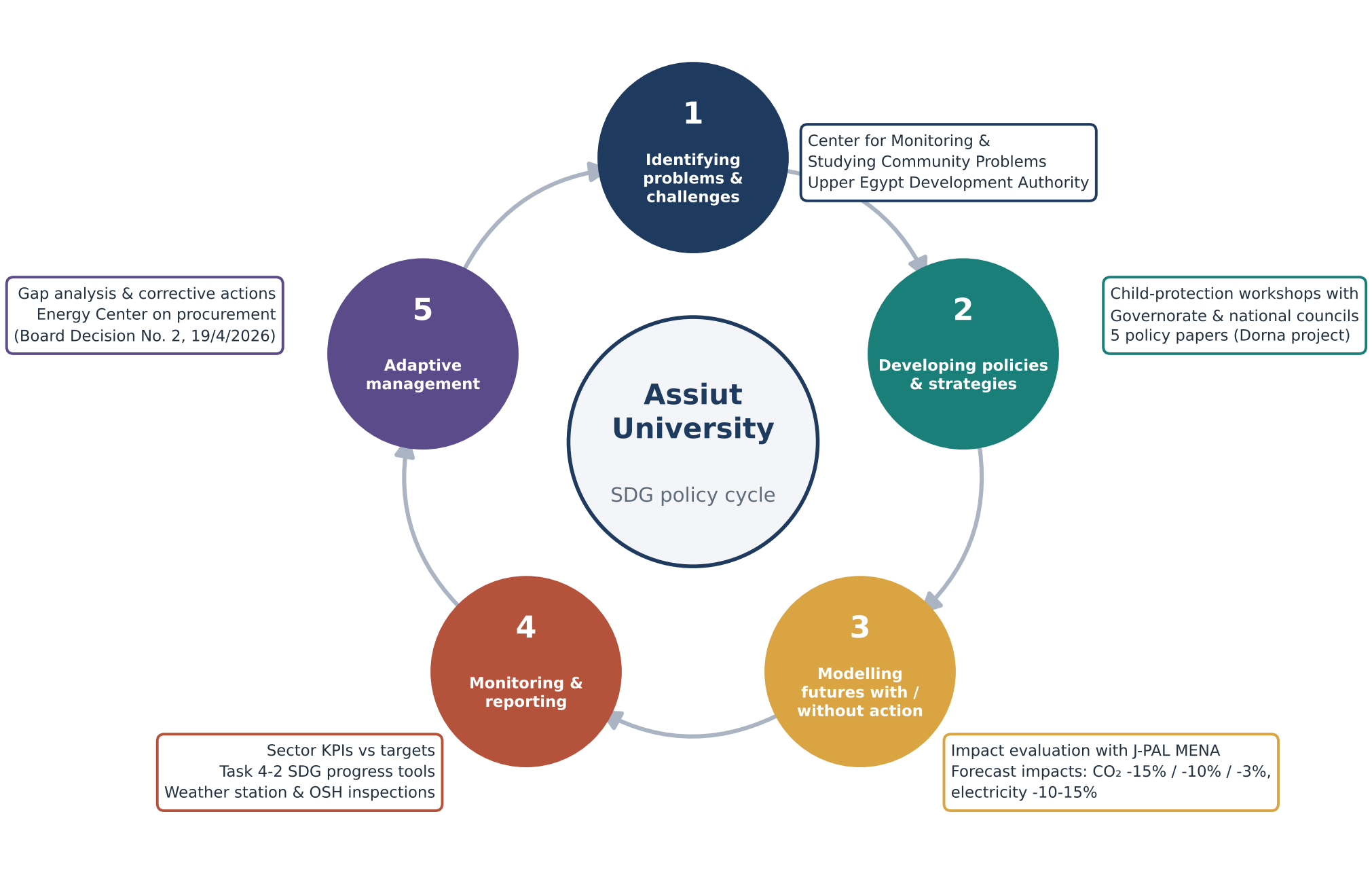
Figure 1. Assiut University's contribution at each stage of the SDG policy cycle
Summary of evidence
| Stage of the policy cycle | Main evidence |
| 1. Identifying problems & challenges | Center for Monitoring and Studying Community Problems; seat on the Upper Egypt Development Authority board; stakeholder (SWOT) analysis by the Civil Society Support Center |
| 2. Developing policies & strategies | Child-protection workshops with Assiut Governorate and national councils; NCCM symposium; five policy papers (Dorna project); NGO strategic objectives |
| 3. Modelling futures with / without interventions | Randomised impact evaluation with J-PAL MENA; forecast impacts for each planned sector intervention |
| 4. Monitoring & reporting | Sector KPIs tracked against targets; Task 4-2 SDG progress tools; weather station upgrade with the Egyptian Meteorological Authority; OSH inspections |
| 5. Adaptive management | Gap analysis and corrective actions; Board Decision No. 2 (19/4/2026); national initiatives (Decent Life, Bedaya, UNESCO Green Belt) |
1. Identifying problems and challenges
- Center for Monitoring and Studying Community Problems. This centre belongs to the Community Service and Environmental Development Sector. Its mission is to:
- identify current and emerging social, economic and security problems in society;
- study them scientifically through research;
- pass the findings to decision-makers, with proposed solutions, so they can act in line with sustainable development.
The centre works with sectors and bodies both inside and outside the university.
- Upper Egypt Development Authority. The University President sits on the Authority's Board of Directors. The university helps review, plan and evaluate development projects across Upper Egypt under Egypt's sustainable development plan.
- Stakeholder analysis. In a strategic planning workshop (29 February – 2 March 2024), the Civil Society Support Center analysed its internal and external environment (SWOT) and its relationships with government, private-sector, NGO and international stakeholders.
2. Developing policies and strategies
- Workshop “Together to Protect Children from Begging”. Organised with the Child Protection Unit of the Assiut Governorate General Office, the National Population Council, the National Council for Women and the Human Rights Unit. Its aim was to draw up plans and solutions to the spread of child begging.
- Symposium on homeless children with the National Council for Childhood and Motherhood (31 March 2026). It called for integrated roles for academic, executive and civil-society institutions, so that lasting mechanisms are set up to reduce the problem and to rehabilitate and reintegrate the children.
- Workshop on protecting children from verbal, physical and psychological abuse, with the Child Protection Unit and the Faculty of Early Childhood Education (21 June 2026).
- Five policy papers. Through its Center for Political and Strategic Studies, the university presented five policy papers in the “Dorna” project, with CDS, the National Development Association, Crisp Organization and five Egyptian universities. The topics were:
- local administration and youth empowerment
- youth economic empowerment in border governorates
- social determinants of women's political participation
- migration of young doctors
- digital transformation and youth electoral campaigns
- Strategic objectives with NGOs. The Civil Society Support Center set its strategic objectives together with the Sawiris Foundation, Misr El-Kheir, CDS, UNICEF, Save the Children, CARE International and Terre des Hommes. It also signed a cooperation protocol with Misr El-Kheir to build the capacity of civil-society organisations in institutional and sustainable development.
- Rural women's economic empowerment. The university held the First and Second Forums for Rural Women's Economic Empowerment with the National Council for Women in Assiut (13 January 2025 and 28 April 2026).
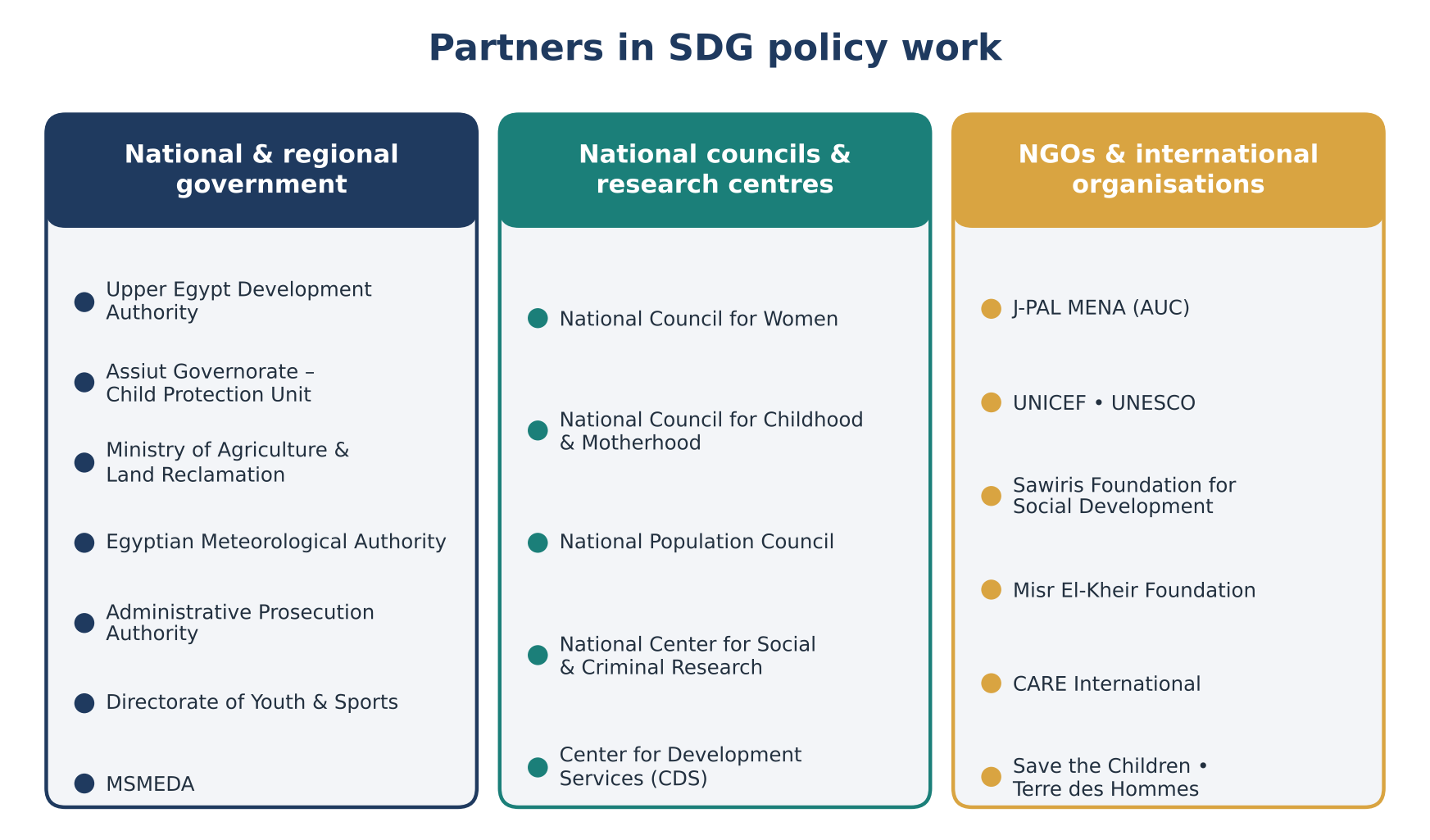
Figure 2. Government, national and international partners in the university's SDG policy work
3. Modelling likely futures with and without interventions
- Impact evaluation with J-PAL MENA (American University in Cairo). The university works with J-PAL to bring randomised impact evaluation into public policy design:
- seminar on randomised evaluations in policy making (13 October 2024)
- session on using evidence in the design of social policy, with a focus on gender (18 December 2024)
- seminar on what works and what doesn't in labour-market policy, with the Sawiris Foundation (29 April 2024)
- review of the “Bab Al-Amal” poverty-reduction programme in Assiut and Sohag (3 August 2024)
- Forecast impacts for sector interventions. The sector's indicator framework sets an expected impact for each planned intervention:
- replacing gas boilers at the university guesthouse with solar heaters: expected cut in the carbon footprint of up to 15%
- electrifying internal campus transport: expected cut of 10%
- checking that vehicles entering campus meet the Ministry of Environment's emission standards: expected cut of 3%
- energy-management measures: expected cut of 10–15% in electricity use
4. Monitoring and reporting on interventions
- Sector performance indicators. The Community Service and Environmental Development Sector tracks a set of indicators against targets. For example, employer satisfaction is 82% (91% of target), and strategic-partner satisfaction is 84% (93.3% of target).
- SDG progress tools. The sector's Executive Strategic Plan (2024–2029) includes Task 4-2: tools for measuring national and regional SDG progress, and periodic case studies on the challenges local institutions face.
- Meteorological monitoring. The university agreed with the Egyptian Meteorological Authority to upgrade the agricultural weather station on the Faculty of Agriculture farm to the latest climate-measurement systems.
- Occupational safety monitoring. A central Occupational Safety and Health Administration carries out planned field inspections across all faculties and university hospitals. It writes reports documented with photos, sends recommendations to the bodies concerned, and follows up on whether each issue has been corrected.
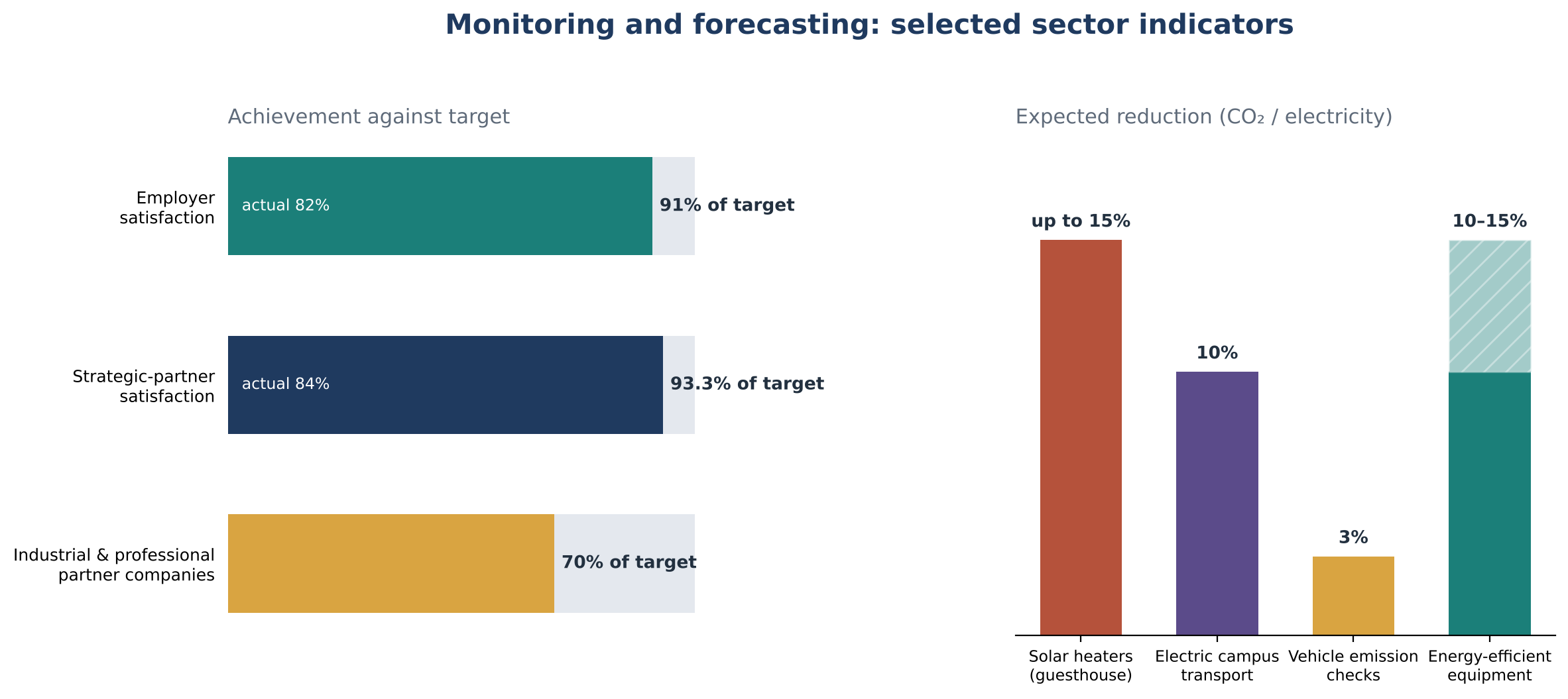
Figure 3. Selected sector indicators: achievement against target and expected impact of planned interventions
5. Enabling adaptive management and supporting national programmes
- Gap analysis and corrective action. Each indicator in the sector's framework includes a gap analysis and a corrective action. For example:
- a paper-recycling project with the Egyptian-German University, to close the waste-management gap;
- new industry-linked research and graduation projects, to raise the number of joint projects with industry.
- Energy management. By Board Decision No. 2 of 19 April 2026, Energy Management Center representatives joined the university's procurement-specification committee and its maintenance department, to make sure equipment meets energy-efficiency standards.
- National initiatives. The university takes part in carrying out the national initiatives “Decent Life” (Hayah Karima), “A New Beginning for Building the Human” (Bedaya Gadida) and the “National Project for the Development of the Egyptian Family”, in line with Egypt Vision 2030.
- UNESCO Green Belt Initiative. The Faculty of Agriculture is the only faculty in Egypt taking part. It has planted 10 feddans of jojoba to fight desertification.
- Training with the Ministry of Agriculture and Land Reclamation. The university runs safe-pesticide-use courses with the Ministry (rounds 39–41). The course certificate counts as a supporting document for a licence to sell pesticides.
- Training with the National Center for Social and Criminal Research. The university ran capacity-building training with the Center (9–11 February 2026).
- Other joint activities with government bodies. The university has held joint activities with:
- the Administrative Prosecution Authority (women's leadership and Vision 2030, 13 October 2025)
- the Directorate of Youth and Sports (illegal migration and human trafficking, 10 June 2024)
- the Micro, Small and Medium Enterprises Development Agency, MSMEDA (self-employment for youth, 8 December 2024)
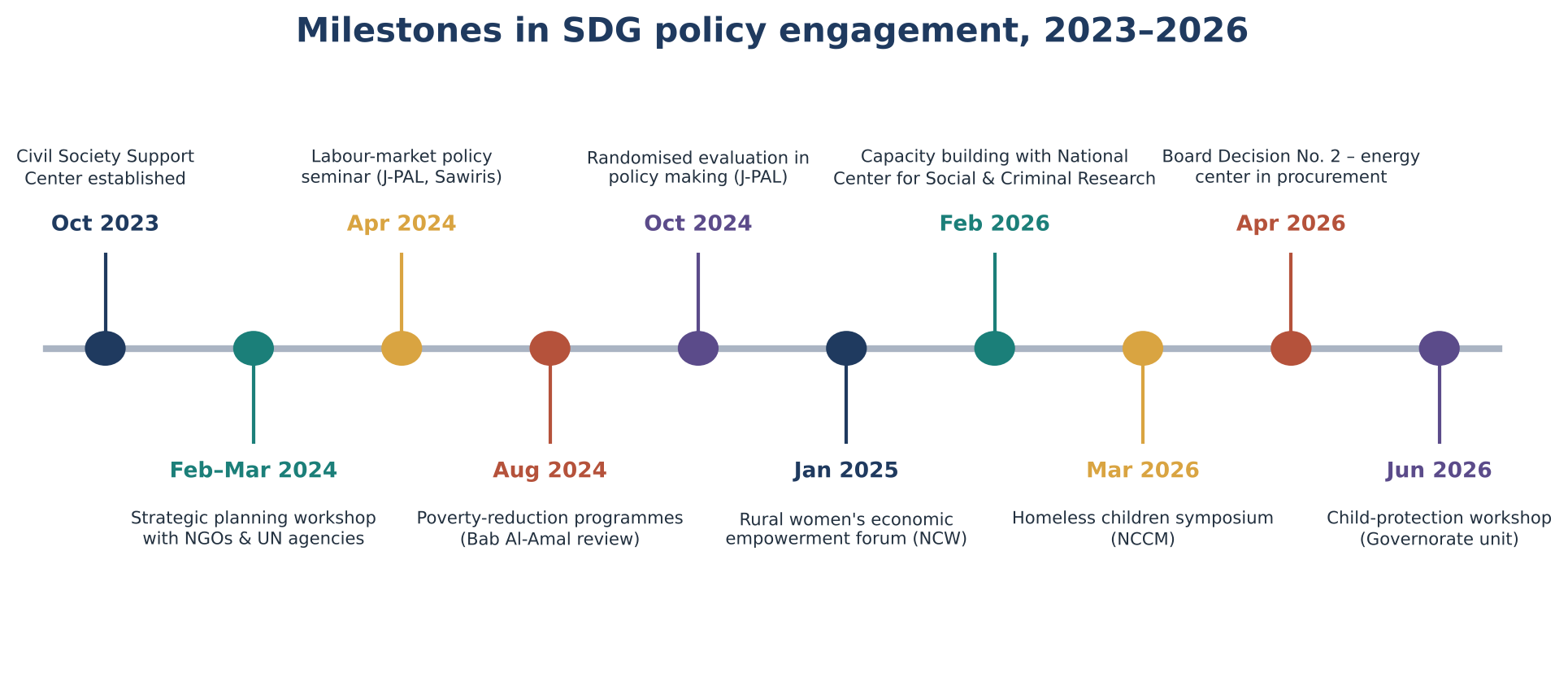
Figure 4. Key milestones in the university's SDG policy engagement, 2023–2026
Evidence links