

– International Collaboration to Compare Approaches and Develop Best Practice on the SDGs
Assiut University – International Ranking Office, Graduate Studies and Research Sector, and Community Service and Environmental Development Sector
Question 17.2.4 Does your university as a body, through international collaboration and research, review comparative approaches and develop international best practice on tackling the SDGs? |
Answer: YES | Assiut University works with international partners to compare how different countries tackle the SDGs, test and adapt what works in the Upper Egypt context, and share the results as best practice. It does this through internationally funded research and demonstration projects, joint international research, multi-country comparative studies, international conferences that issue best-practice recommendations, and benchmarking against universities worldwide. |
16 externally funded research projects in 2025 | EGP 58.2M total external research funding, 2025 | EGP 10.5M from international funders (FAO, Seeding Labs) | 15 cities compared in the Global Early Adolescent Study |
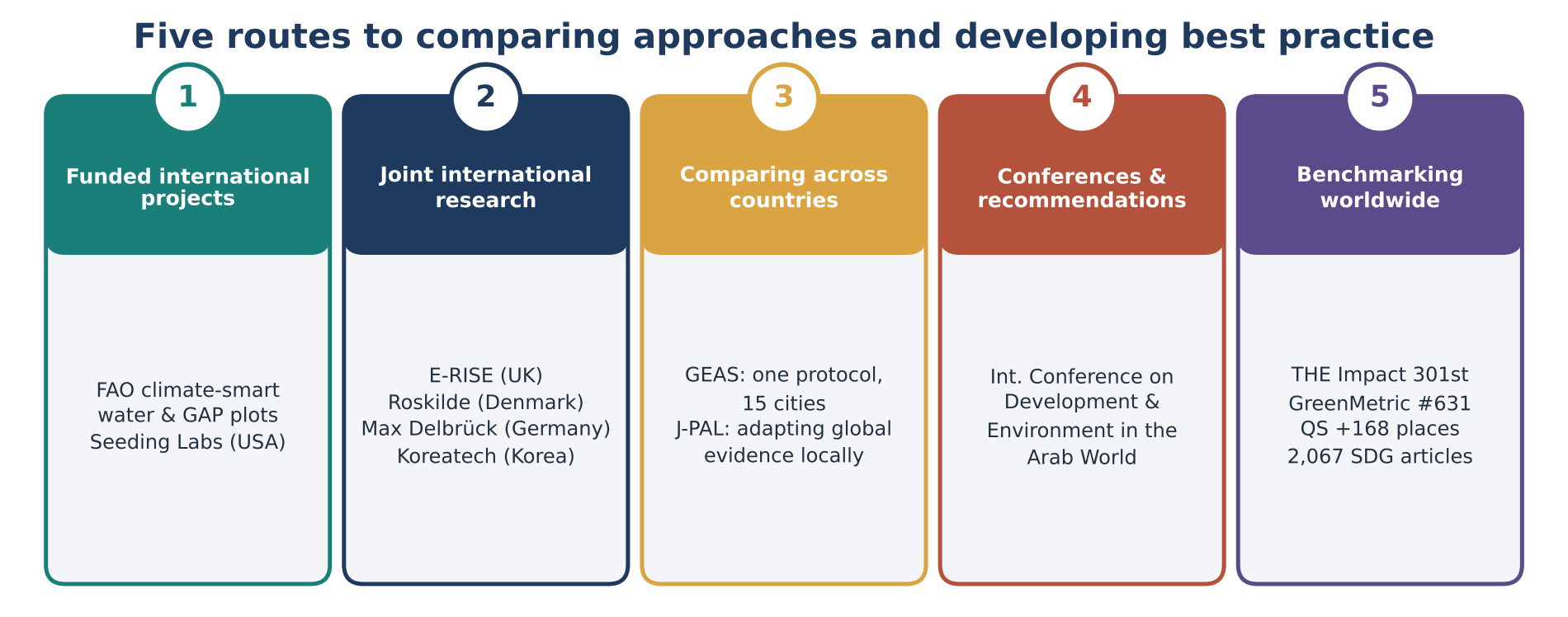
Figure 1. Five routes through which the university compares approaches and develops best practice
1. Internationally funded projects that test and adapt international best practice (2025)
In 2025 the university ran 16 externally funded research projects, with a combined budget of about EGP 58.2 million. Two are funded by international bodies and deal directly with best practice:
- FAO: “Research and Demonstration (R&D) plots to test climate-smart water management (CSWM) and good agricultural practices (GAP) for horticulture and field crops in Assiut Governorate”. Funded by the Food and Agriculture Organization of the United Nations, with a budget of EGP 2,822,660 over 12 months, led by Prof. Adel Mohamed Mahmoud, Faculty of Agriculture. The project tests internationally recognised practices, CSWM and GAP, on demonstration plots in Assiut. It measures how well they work under local conditions and produces practice that can be scaled up for farmers in Upper Egypt (SDG 2, SDG 6 and SDG 13). It complements FAO's wider programme to modernise irrigation for smallholder farmers in Assiut, Sohag and Qena.
- Seeding Labs “Instrumental Access” programme (USA). Funded through the University of Tennessee Health Science Center (USA-UTHSC), worth USD 151,346 (about EGP 7.67 million) over 12 months, led by Dr. Rana Mohamed Ibrahim Morsy. The programme gives Assiut University laboratories scientific equipment and links its researchers to an international network, so they can do research to international standards (SDG 3, SDG 9 and SDG 17).
Together, the two international projects are worth about EGP 10.5 million, around 18% of the university's externally funded research budget for 2025.
- Bringing national research up to international standards. Several nationally funded 2025 projects also aim to meet international standards or apply global approaches to local SDG challenges:
- Egyptian Microbial Culture Collection Network (EMCCN), Phase III (ASRT, EGP 4 million): “Towards Global Recognition and Academic Accreditation”
- Silicon/nano-silicon–Rhizobium formulations for climate-smart, sustainable agriculture (STDF, EGP 2.9 million)
- Biodiesel and bioethanol from starchy bio-waste (STDF, EGP 2.88 million)
- Green catalysts to convert CO₂ into urea (STDF, EGP 349,800)
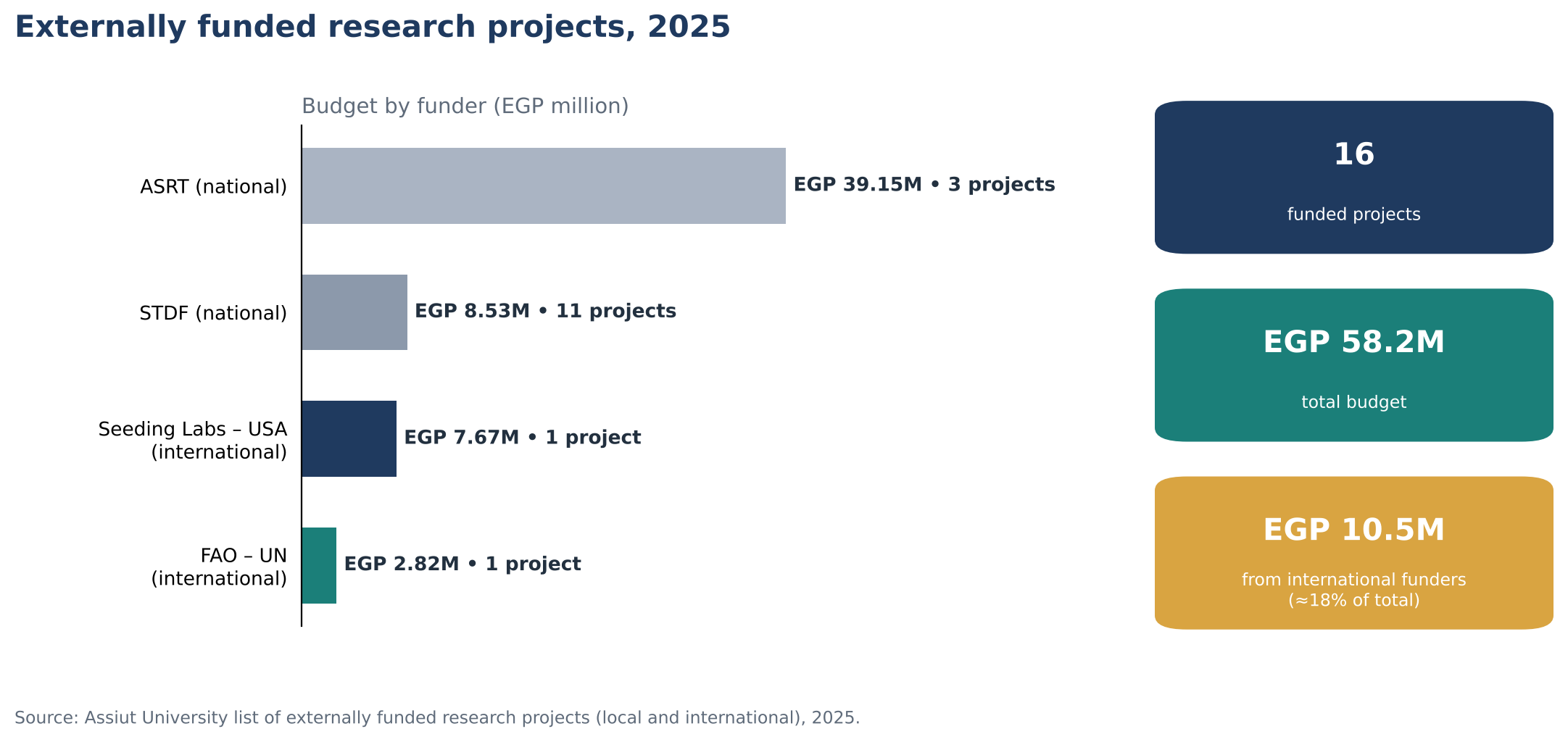
Figure 2. Externally funded research projects in 2025, by funder
2. Joint international research on SDG challenges
- E-RISE project (UK–Egypt), on renewable energy and sustainability. A research project on renewable energy and sustainability in Egypt with Cardiff Metropolitan University and Nottingham Trent University (UK) and Cairo University, funded by the British Council (SDG 7 and SDG 13).
- Roskilde University (Denmark). Joint research on the geology and agriculture of Egypt's oases region (SDG 2, SDG 6 and SDG 15).
- Max Delbrück Center for Molecular Medicine (Germany). Joint research that discovered a sensory receptor involved in touch, published in Science (February 2024) (SDG 3).
- Koreatech University (South Korea). A joint project in engineering, research services, practical training and medical engineering laboratories, with a budget of USD 800,000.
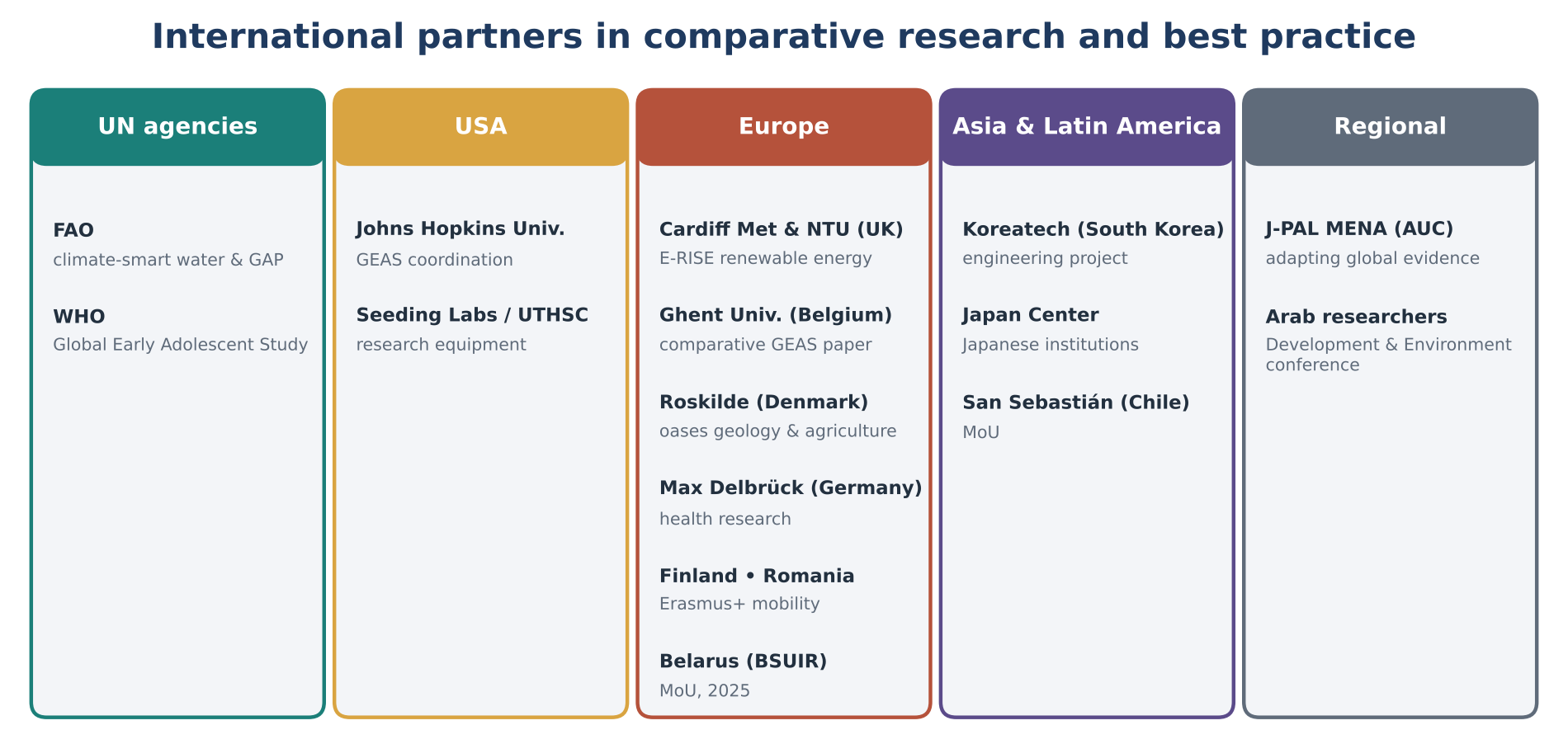
Figure 3. International partners in comparative research and best practice
3. Comparing approaches across countries
- Global Early Adolescent Study (GEAS), with the WHO and Johns Hopkins University. The study used the same research tools in 15 cities to compare how gender norms develop in early adolescence, with Assiut University as the Egyptian site. Other sites include Baltimore, Blantyre, Cape Town, Cochabamba, Cuenca, Edinburgh and Ghent. One comparative paper looked at adolescent friendships in Assiut and Ghent side by side, written by Assiut University's Public Health Department with Ghent University's International Centre for Reproductive Health. The findings inform programmes and policies on SDG 3 and SDG 5.
- Adapting global evidence with J-PAL MENA (American University in Cairo). The Civil Society Support Center and J-PAL held a series of seminars in 2024 on policy making, labour markets and poverty reduction. They aimed to teach impact-assessment methods, adapt global evidence to the local context, and exchange experience to improve the design of development programmes.
4. International conferences that review approaches and issue best-practice recommendations
- International Conference on Development and Environment in the Arab World. A recurring series in which researchers from across the Arab world compare national experiences and agree recommendations:
- 12th conference (February 2024): Dr. Mahmoud Mohieldin, UN Special Envoy on Financing the 2030 Agenda, lectured on how a long-term sustainability approach can help address current challenges in the Arab world.
- 11th conference: its recommendations led the university to launch the “Climate Students” initiative.
- Ninth International Conference of the Faculty of Education, “The Role of Arab Education in Achieving Sustainable Development Goals”. It recommended green, environmentally friendly school initiatives to achieve the SDGs, and research plans for Arab education departments built around the SDGs.
5. Benchmarking against universities worldwide
- International rankings:
- THE Impact Rankings 2025: 301st globally, 2nd in Egypt
- UI GreenMetric 2025: up 100 places to world rank #631
- QS Sustainability 2025: up 168 places
- THE Interdisciplinary Science Rankings 2026: 151st globally, up 100 places
- Research mapping. The International Ranking Office mapped 2,067 SDG-related research articles, identified the strengths and weaknesses of the university's research programmes, and advised the administration on strategic research planning.
- International agreements:
- Erasmus+ mobility with the University of Eastern Finland (2022–2025) and Alexandru Ioan Cuza University, Romania
- Memorandums of understanding with the Belarusian State University of Informatics and Radioelectronics (2025) and San Sebastián University, Chile
- The Japanese Center for Education and Research Activities (February 2025)
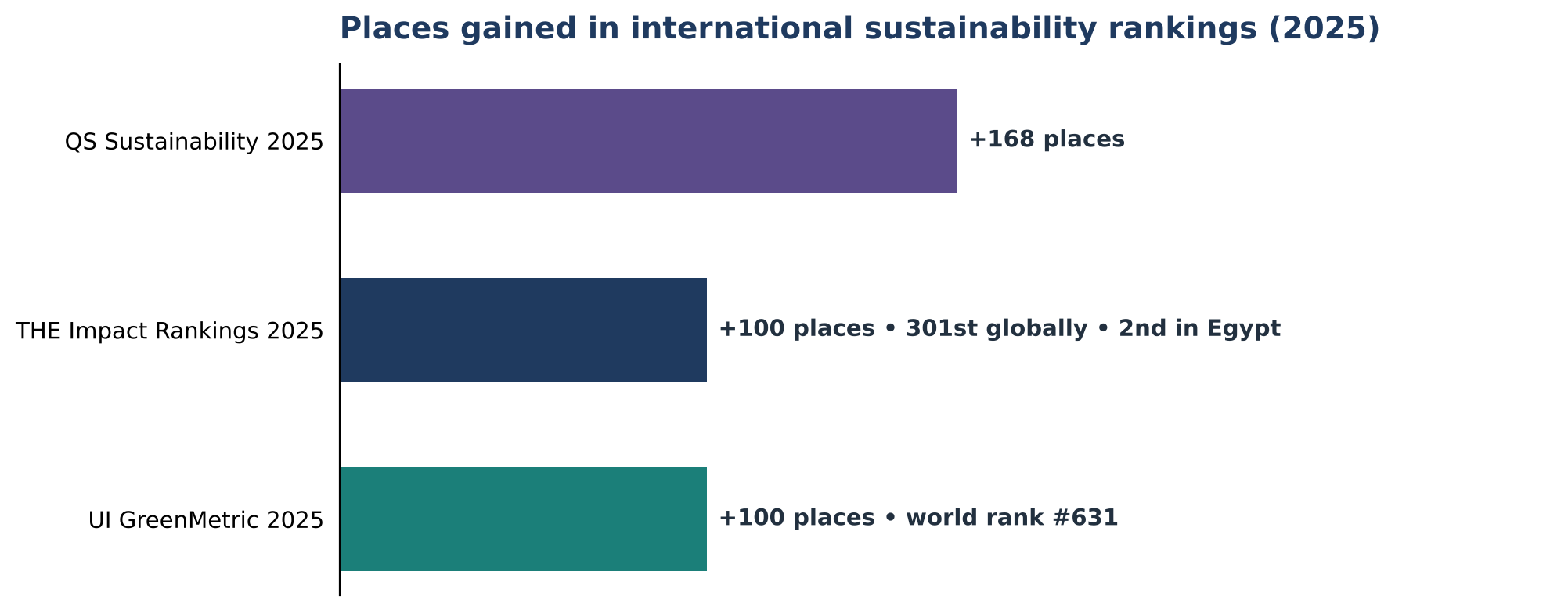
Figure 4. Places gained in international sustainability rankings, 2025
Selected funded projects, 2025
Project (2025) | Funder | Budget (EGP) | SDG focus |
R&D plots to test climate-smart water management (CSWM) and good agricultural practices (GAP), Assiut Governorate | FAO (UN) | 2,822,660 | SDG 2, 6, 13 – testing international best practice locally |
Seeding Labs – Instrumental Access programme | Seeding Labs / UTHSC (USA) | 7,665,675 (USD 151,346) | SDG 3, 9, 17 – research to international standards |
Egyptian Microbial Culture Collection Network (EMCCN), Phase III: towards global recognition and accreditation | ASRT | 4,000,000 | SDG 9, 15 – meeting international standards |
Silicon/nano-silicon–Rhizobium formulations for climate-smart, sustainable agriculture | STDF | 2,906,030 | SDG 2, 13, 15 |
Biodiesel and bioethanol from starchy bio-waste by microorganisms | STDF | 2,884,500 | SDG 7, 12 |
Computation-aided design of green catalysts for CO₂ conversion into urea | STDF | 349,800 | SDG 9, 13 |
Evidence links