

Does your university as a body provide public access to museums, exhibition spaces/galleries, and/or works of art and artifacts?
Yes, Assuit University has two museums:
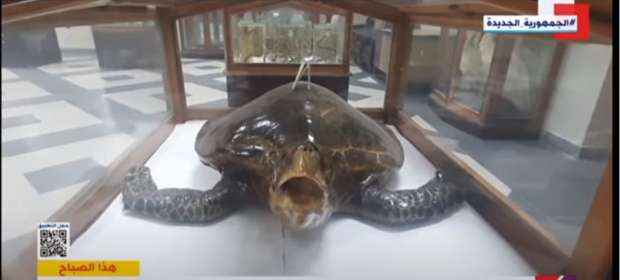
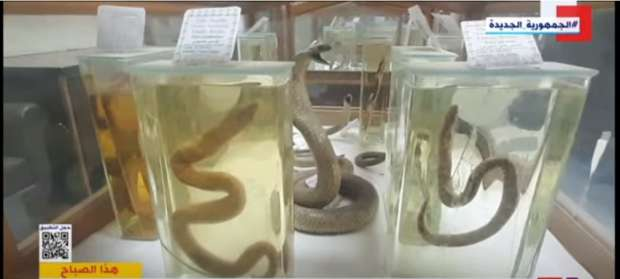
(First) an anatomy museum at the Faculty of Veterinary Medicine, Assiut University, in addition to its role as a destination serving the community, school students, and scholars from various locations, with the assistance of a team of specialists.
(A)Mechanism and Work System:
It is universally acknowledged that teamwork facilitates the achievement of goals more rapidly than individual effort. Given the critical need to form a successful, effective, well-trained team capable of accomplishing assigned tasks—a paramount necessity and an indispensable pillar—the team's methodology was characterized by effective communication with all members, management, and resolution of conflicts when they arose, motivation, active participation, and efficient and effective information management.
Work within the museum has been marked by efficiency and effectiveness in terms of performance development, resulting in numerous artistic and scientific works that were highly commended by Prof. Dr. Tarek El-Gamal, the former University President; Prof. Dr. Ahmed El-Menshawy, the current Acting University President; and many professors and foreign ambassadors. This work thus gained local, regional, and international resonance. None of this was achieved in a vacuum: Prof. Dr. Madiha Hosny Darwish, Dean of the Faculty and Head of the work team, was keen to overcome obstacles and difficulties hindering the team's task completion. Furthermore, during her tenure as Head of the Anatomy and Histology Department, Prof. Dr. Enas Abdel Hafez initiated efforts to ensure the sustainability of the museum's activities by establishing a specialized tissue museum and preparing histological models in collaboration with Prof. Dr. Mohamed Ahmed Elam Din, who worked on performance development and enhancing the museums to serve as places for study and education alongside being community destinations for school students and scholars. This distinguished work was ultimately brought to light with the assistance of numerous artists and specialists, resulting in many innovative outputs.
(B) Distinguishing Features of the Anatomy Museums:
First: Two halls have been designated for practical lesson review and study (one for the first year and the other for the second year), equipped with all amenities and innovative educational aids (these two halls are unparalleled in various faculties within and outside the Arab Republic of Egypt), according to the testimony of Prof. Dr. Mohamed Elam Din, who has worked in the United States, Saudi Arabia, and Libya, and has visited Germany, Italy, Japan, Canada, and Austria.
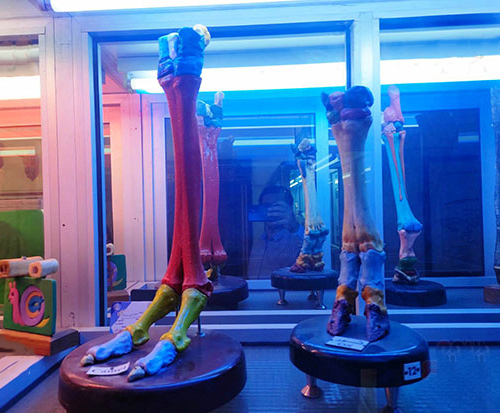
Second: The creation of innovative and unique teaching aids, unmatched within and outside the Republic, to assist students across all academic years in various faculty subjects (Anatomy, Surgery, Obstetrics, Meat Inspection, Forensic Medicine, Internal Medicine, Poultry Diseases, Fish Diseases).
Third: The Dean, Prof. Dr., allocated a suitable space to serve as a workshop for these activities and promised to allocate an adjacent room as a storage facility for the workshop.
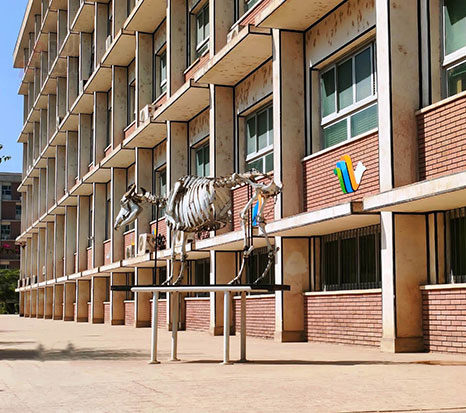
Fourth: Maintenance of some old skeletons and the creation of new animal skeletons.
Fifth: Construction of new display cabinets for preserving specimens.
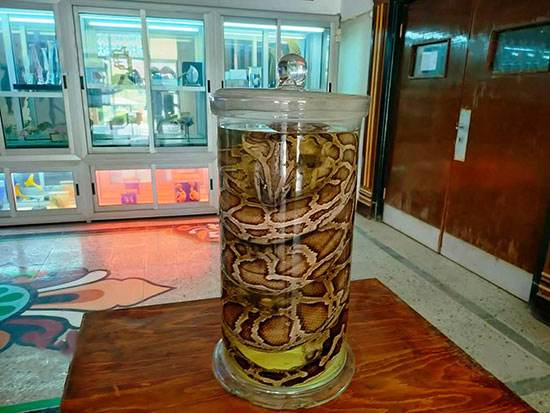
Sixth: Construction of a table and a glass display case for housing a snake measuring 3.5 meters in length and over 20 cm in diameter, displayed at the faculty's entrance.
Seventh: Fabrication of aluminum cabinets and the creation of innovative models and mock-ups for various tissues (which would have cost the university thousands of dollars if imported). Additionally, production of scientific panels and specific teaching aids for histology.
Eighth: Enhancing the department's entrance and lecture halls to befit the presence of museums within the department.
Ninth: Externally adorning the faculty with scientific, aesthetic, instructional, and Pharaonic panels demonstrating the ancient Egyptians' concern for livestock and their veneration of animals.
Tenth: Initiating the production of sports-themed panels, some of which have been displayed at the Faculty's Youth Care Administration.
Eleventh: Production of specialized panels for the office of the Dean, the Quality Assurance Unit office, the offices of the Faculty Vice Deans, the Faculty Secretary, Human Resources and Student Affairs, Postgraduate Studies, the Faculty Library, the Central Laboratory, General Administration, the Scientific Journal, and some other faculty departments.
Twelfth: Equipping the workshop with all necessary tools and devices for creating the aforementioned skeletons and educational aids to ensure the sustainable development of the museums (These tools include saws for cutting wood and iron, a welding machine, an air compressor for painting, and all necessary tools for drawing, coloring, and painting). The workshop handles all tasks related to blacksmithing, welding, carpentry, painting, boiling, cleaning, assembling bones, and constructing glass cabinets. In addition to the workshop's design, drawing, and decoration tasks. Thanks to the workshop affiliated with the Anatomy and Histology Department, it possesses capabilities enabling it to undertake any requested artistic work at the university level and ensure the sustainability of these activities, thereby saving significant funds required for such works.
Thirteenth: Paying attention to national and religious occasions. The workshop created a large illuminated lantern during the holy month of Ramadan, displayed at the faculty entrance.
(C) Documentary Film about the Museum on Sada El-Balad Channel:
(D) Results were evaluated through field visits and praised by distinguished visitors, headed by:
* Prof. Dr. / Tarek El-Gamal, Former University President
* Prof. Dr. / Ahmed El-Menshawy, Current Acting University President
* Prof. Dr. / Maha Ghanem, Vice President for Community Service and Environmental Development
* Numerous foreign professors, some foreign ambassadors, various delegations, educational and research institutions, university students, and school students.
The Faculty's Anatomy Museums previously achieved first place at the university level (2018).
The museums played a major role in the Faculty obtaining academic accreditation from the National Authority for Education Quality Assurance and Accreditation.
The Faculty of Veterinary Medicine's museums have become a mandatory visit for all university guests, including senior officials, military leaders, and intelligence personnel. Visiting the veterinary medicine museums is now included in the schedules of conferences held at the university.
 |
 |
 |
 |
 |
(second) The Fauna Museum, Faculty of Science, Zoology Dept.
(A)The Idea Behind the Museum's Establishment:
The idea for establishing the Educational Museum of Egyptian Fauna (Animal Organisms) stemmed from the reliance of the educational process in the Department of Zoology on preserved animal specimens.
The museum serves many students from all faculties studying in the Department of Zoology.
The museum also represents a link for cooperation between the University and the community, as school students visit the museum.
Additionally, the museum serves as a consultative center for identifying specimens for police and judicial authorities, and research students.
The museum was inaugurated on 10/22/2016.
(B) Museum Contents:
1. The Outer Hall
It contains a panorama dedicated to the Red Sea, featuring many marine organisms and corals.
It also has a panorama dedicated to the Endangered Terrestrial Tortoise and Aquatic Turtle.
There are 10 display boards of diverse marine organisms, all categorized by scientific classification.
2. The Inner Corridor
It houses 140 types of Invertebrates.
A collection of Mammals (50 types).
3. The Main Exhibition Hall
It contains more than 250 specimens of different sizes and colors of Fish, classified scientifically, in addition to showcasing their presence in their natural habitats.
A collection of Reptiles (110 types).
A collection of Stuffed Birds (100 types).
4. The Skeletal Hall
It contains a collection of skeletons of Mammals and Fish.
5. The Microscopic Preparations and Taxidermy Room
It contains many scientific devices that allow for the preparation of histological slides and complete educational specimens.
6. The Electronic Library
It contains more than 150 scientific films and about 59 fish display boards.
Services Provided by the Museum
Full identification of any type of animal.
Preparation of histological specimen slides and complete specimens.
Taxidermy for birds, reptiles, and mammals.
Preparation of skeletons.
Preparation, preservation, and identification of insects.
Films about the animal world and their behavior.
Atlas for the full identification of animal specimens.
Creation of educational posters and display boards.
Pictures and souvenir cards of animals.
Scientific trips to different environments.
 |
 |
 |
 |
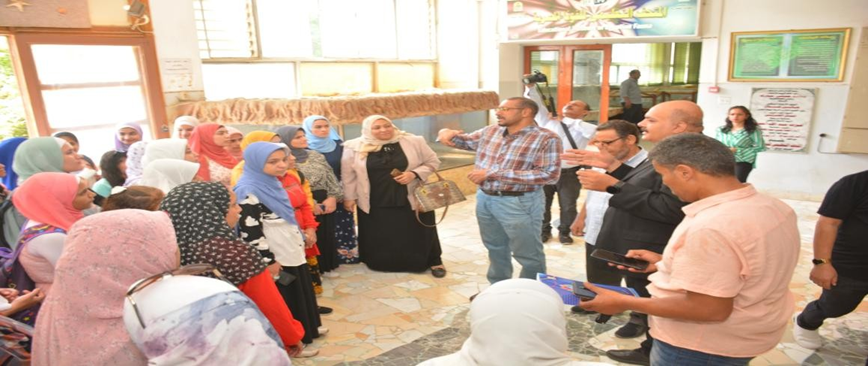
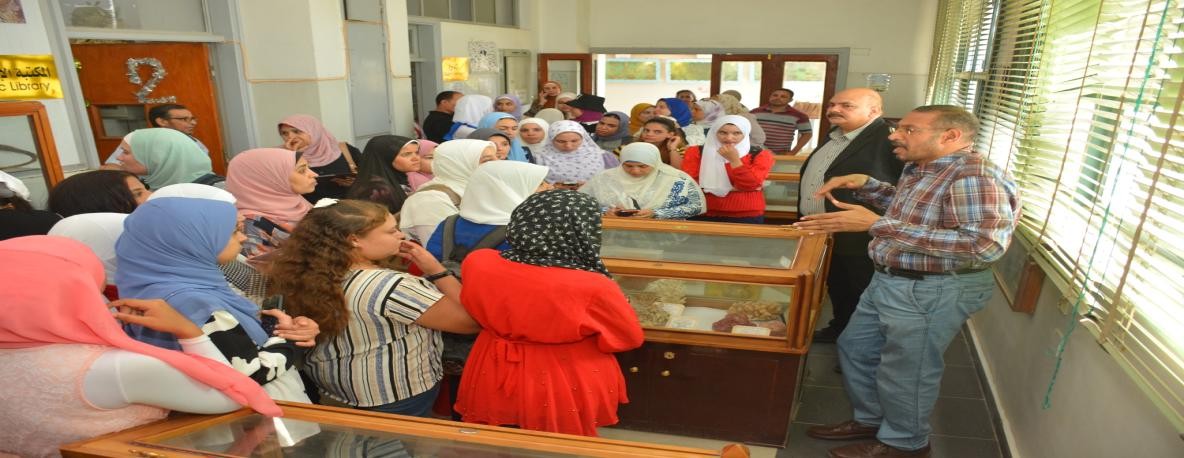
A group of female students from Al-Amal School for Deaf Girls in Al-Arbaeen City, Assiut, visited the Faculty of Science to see its most important landmarks, which included the Educational Fauna Museum in the Department of Zoology. This took place on the morning of Sunday, October 27, 2019 |