
The Dean of the Faculty Receives the Examination Committee for a Master’s Thesis on the Application of Artificial Intelligence in Analyzing the Severity of Traffic Accident Injuries
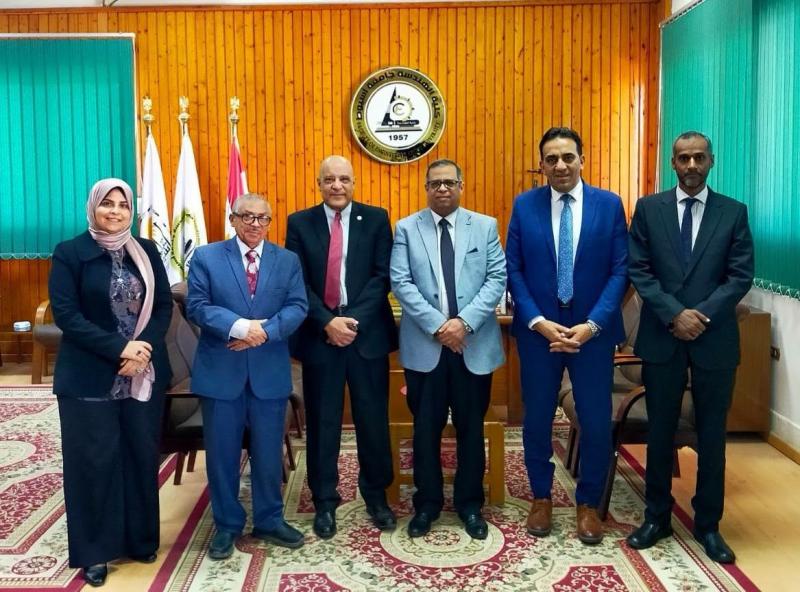
On Thursday, November 19, 2026, Professor Khaled Salah, Dean of the Faculty, welcomed the external members of the examination committee: Professor Ayman Mahmoud Othman, Professor of Highway and Traffic Engineering and former President of Aswan University, and Professor Talaat Ali Ahmed Ali, Professor of Highway and Traffic Engineering and Dean of the Faculty of Engineering at Sohag University. They arrived to participate in the defense of a Master’s thesis submitted by engineer Marwa Abdel-Gawad Abdel-Nabi Awad, a researcher in the Department of Civil Engineering (specializing in Highway and Traffic Engineering). The defense was also attended by the thesis supervisory committee, which included Professor Hassan Younis Ahmed, Professor of Highway and Traffic Engineering at the Faculty and a member of the Scientific Committee for Professorial Promotions; Professor Ghada Salah Mousa, Professor of Highway and Traffic Engineering and Vice Dean for Student Affairs at the Faculty of Engineering, Sphinx University; and Professor Amr Mohamed Wahballah, Professor of Highway and Traffic Engineering and Head of the Civil Engineering Department at Aswan University.
The thesis, titled "Advanced Analysis of Injury Severity Levels in Traffic Accidents Using Machine Learning and Comprehensive Sensitivity Assessment," examines the factors that determine the severity of injuries resulting from traffic accidents, exploring why some accidents lead to minor injuries, while others result in severe injuries or fatalities. The study is based on the analysis of over one million traffic records, incorporating 34 variables that encompass the characteristics of drivers, vehicles, roads, and the circumstances surrounding accidents. The researcher developed an advanced artificial intelligence model, dubbed "CrashNet-X," which achieved a classification accuracy of 98.4%—the highest among the classification systems evaluated. Furthermore, a comprehensive sensitivity analysis was employed to identify the factors with the greatest impact on injury severity, whether directly or through their interactions with other variables.
The Dean of the Faculty welcomed the committee members, expressing his appreciation for the participation of this distinguished group of professors—specialists in highway and traffic engineering from Aswan and Sohag Universities—in the evaluation process. This collaboration underscores the academic synergy between the faculties of engineering at Egyptian universities.
The study holds particular significance for Egypt, as it introduces a scientific methodology that shifts the focus of traffic accident analysis from merely recording the number of incidents and casualties to understanding the factors that influence their severity. This approach facilitates the identification of high-risk conditions, guides investments in road safety, and informs evidence-based engineering decisions regarding road design, speed management, and protective measures—all of which contribute to reducing the toll of traffic accidents. Additionally, the study highlights the importance of establishing an integrated Egyptian database for traffic accidents, which would enable the application of such models tailored to local conditions.