 Do you have any questions?


The Quality Assurance Unit at the Faculty of Medicine announces a training course for the faculty's administrative staff.


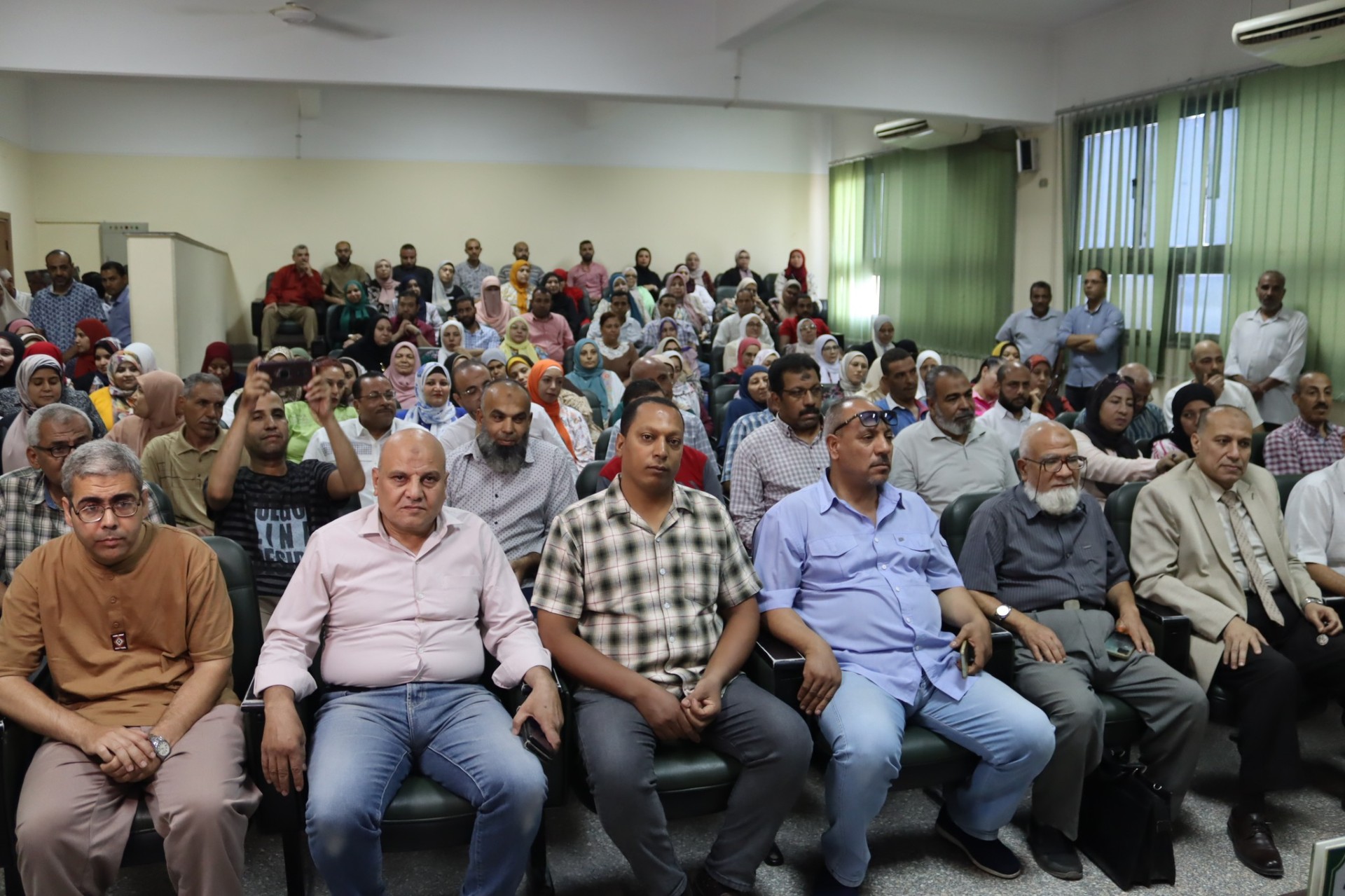
تحت رعاية الاستاذ الدكتور أحمد المنشاوي رئيس الجامعة، والاستاذ الدكتور علاء عطية عميد كلية الطب ورئيس مجلس إدارة المستشفيات الجامعية.
كرمت الاستاذة الدكتورة امانى عمر، وكيل الكليه لشئون الدراسات العليا والبحوث العاملين بالقطاعات المختلفة بكلية الطب، وذلك يوم الثلاثاء الموافق ٨ يوليو ٢٠٢٥، بمدرج وحدة ضمان الجودة بكلية الطب.
وقد صرحت الاستاذ الدكتورة امانى عمر ان هذا التكريم تعبيرا عن الحب والتقدير والعرفان للعاملين بكلية الطب ، حيث لمست فيهم التفانى في العمل والقدرة على مواجهة ضغوط العمل المستمرة وتحمل المسئولية، وكانوا خير عون لها طوال مدة ٧ سنوات متتالية، اثناء فترة رئاستها قطاع التعليم والطلاب، ويليها قطاع الدراسات العليا والبحوث.
وشهد الحفل الاستاذ الدكتور محمد عبدالرحمن وكيل الكليه لشئون التعليم والطلاب ، والاستاذة الدكتور هدى مخلوف وكيل الكليه لشئون خدمة المجتمع وتنمية البيئة، والاستاذة الدكتورة هبه عطية، مدير وحدة ضمان الجودة، والاستاذ محمود حسين امين عام كلية الطب.


بعد استقبال الأستاذ الدكتور أحمد المنشاوي، رئيس جامعة أسيوط، اليوم الثلاثاء ٨ يوليو، للوفد الكويتي رفيع المستوى الذى يضم السيد عدنان جمعة سبتي، وكيل المكتب الكويتي للمشروعات الخيرية بالقاهرة، والدكتور عمر فرغلي، مدير قطاع المشاريع بجمعية الشيخ عبد الله النوري الخيرية،
توجه الوفد بصحبة الاستاذ الدكتور محمود عبد العليم، نائب رئيس الجامعة لشئون خدمة المجتمع وتنمية البيئة، والاستاذ الدكتور علاء عطية عميد كلية الطب ورئيس مجلس إدارة المستشفيات الجامعية ، لجولة ميدانية بمستشفى الإصابات والطوارئ الجامعي، حيث شملت تفقد وحدة العناية المركزة ومتابعة تشغيل جهاز الأشعة المتنقل، المُقدم من المكتب الكويتي للزكاة لصالح مستشفى الإصابات والطوارئ الجامعي، بقيمة مليون ونصف المليون جنيه، وذلك بحضور الأستاذ الدكتور محمد عبد الحميد، مدير المستشفى، والدكتور محمد فاروق، والدكتور أحمد إكرام، نائبي مدير المستشفى.
الجدير بالذكر أن مستشفى الإصابات والطوارئ الجامعي يُعد أكبر مستشفى متخصص في هذا المجال على مستوى الجمهورية، حيث يخدم حالات الإصابات والطوارئ من محافظة أسيوط والمحافظات المجاورة، والمستشفى مقام على مساحة ٦٥٠٠ متر مربع، ويضم ٦٠٠ سرير، ومُجهز بأحدث التجهيزات الطبية، ويتكون من بدروم وطابق أرضي، و ٨ طوابق، ويستقبل سنويًا أكثر من ٤٦ ألف مصاب، إلى جانب إجراء نحو ١٣ ألف تدخل جراحي كبير يتطلب مهارة عالية.
وتم خلال الزيارة استعراض تفاصيل مشروع مبنى الإصابات (ب) الجاري تجهيزه، والذي يتكون من بدروم وطابق أرضي و٦ طوابق، ويضم وحدات لاستقبال وعلاج إصابات اليد والجراحات الميكروسكوبية، بالإضافة إلى ٦ عيادات خارجية، و٨ غرف عمليات، ووحدة رعاية حرجة تضم ٢٠ سريرًا، وغرف إقامة داخلية بسعة ٨٢ سريرًا، إلى جانب مركز متقدم للتدريب على المهارات الجراحية، وآخر للعلاج الطبيعي وإعادة التأهيل، فضلًا عن سكن للأطباء المقيمين والزائرين.
كما تم عرض فيديو استعرض تاريخ انشاء المستشفيات الجامعية (١١ مستشفى متخصص ومجهز بأحدث التقنيات والأجهزة الطبية المتطورة) ، واستعرض أبرز الخدمات المقدمة في كل مستشفى، والفيديو من إعداد الأستاذة رندا عبد الخالق ثروت مسئول الإعلام بالمركز الإعلامي لمستشفيات جامعه أسيوط .


نظمت وحدة الطب النووي بقسم علاج الأورام والطب النووي بكلية الطب جامعة أسيوط، بالتعاون مع هيئة الطاقة الذرية، دورة تدريبية مكثفة للأطباء والفيزيائين والفنيين حول "الاستخدام الآمن للمصادر المشعة والوقاية من الإشعاعات المؤينة"، تأتي الدورة التدريبية والتي تعقد للمرة الأولى، تحت رعاية الأستاذ الدكتور أحمد المنشاوي رئيس الجامعة، والأستاذ الدكتور علاء عطية عميد كلية الطب ورئيس مجلس إدارة المستشفيات الجامعية، والأستاذ الدكتور خالد عبد العزيز مدير المستشفى الجامعي الرئيسي، وبتنظيم من الأستاذة الدكتورة رحاب فاروق رئيس قسم علاج الأورام والطب النووي، والأستاذ الدكتور وليد دياب رئيس وحدة الطب النووي، والأستاذة الدكتورة لمياء العطيفي منسق الدورة.
شهدت الدورة حضور عددا من الأطباء والفيزيائين والفنيين من وحدة الطب النووي قسم العلاج الإشعاعى بمعهد جنوب مصر للأورام، برئاسة الأستاذ الدكتور حمزه عباس.
وتستمر فعاليات الدورة لمده أسبوعين، وسيحاضر بها لفيف من الخبراء من هيئة الطاقة الذرية.



AimThe aim was to describe the incidence of access-site complications (ASCs) and determine the risk factors leading to them in patients undergoing endovascular interventions for treatment of peripheral arterial disease.Materials and methodsA prospective study was conducted on all patients who underwent endovascular procedures for the treatment of peripheral arterial disease at the Department Vascular Surgery, Assiut University Hospital, between May 2017 and May 2018. Access choice depended on the vessel condition, Duplex ultrasound examination, and surgeon's preference. ASCs were detected using clinical and duplex ultrasound examination. Follow-up of patients was done at 3 and 6 months postoperatively. Univariate and multivariate analyses were used to determine risk factors predicting occurrence of ASCs.ResultsOf the 210 patients, ASCs were encountered in 23 (11%) cases. Nine (4.3%) patients presented with thrombosis of the access artery, eight (3.8%) had access-site hematoma, four (1.9%) complained of external bleeding, and two patients (0.95%) presented with femoral artery pseudoaneurysm. Significant risk factors for ASCs were advanced age (=0.027), hypertension (=0.011), increased BMI (=0.015), small vessel diameter (=0.031), and prolonged procedure time
SARS‐CoV‐2 has been associated with an increased rate of venous thromboembolism in critically ill patients. Since surgical patients are already at higher risk of venous thromboembolism than general populations, this study aimed to determine if patients with peri‐operative or prior SARS‐CoV‐2 were at further increased risk of venous thromboembolism. We conducted a planned sub‐study and analysis from an international, multicentre, prospective cohort study of elective and emergency patients undergoing surgery during October 2020. Patients from all surgical specialties were included. The primary outcome measure was venous thromboembolism (pulmonary embolism or deep vein thrombosis) within 30 days of surgery. SARS‐CoV‐2 diagnosis was defined as peri‐operative (7 days before to 30 days after surgery); recent (1–6 weeks before surgery); previous (≥7 weeks before surgery
Summary Peri‐operative SARS‐CoV‐2 infection increases postoperative mortality. The aim of this study was to determine the optimal duration of planned delay before surgery in patients who have had SARS‐CoV‐2 infection. This international, multicentre, prospective cohort study included patients undergoing elective or emergency surgery during October 2020. Surgical patients with pre‐operative SARS‐CoV‐2 infection were compared with those without previous SARS‐CoV‐2 infection. The primary outcome measure was 30‐day postoperative mortality. Logistic regression models were used to calculate adjusted 30‐day mortality rates stratified by time from diagnosis of SARS‐CoV‐2 infection to surgery. Among 140,231 patients (116 countries), 3127 patients (2.2%) had a pre‐operative SARS‐CoV‐2 diagnosis. Adjusted 30‐day mortality in patients without SARS‐CoV‐2 infection was 1.5% (95%CI 1.4–1.5)
Background:Hepatocellular carcinoma (HCC) is the most prevalent liver cancer with a high incidence and mortality, mainly when discovered in its advanced stages. Periodic screening is necessary for high risk populations for the detection of the disease in the early curable stage. The most commonly used tumor marker for screening and diagnosis of HCC is AFP. Various studies have investigated the function of miRNAs as diagnostic or prognostic biomarkers in human cancers, including HCC, where they serve both as oncogenes and tumor suppressor genes, depending on the cellular affection of their targets. This study aims to evaluate the expression of miRNA-130b in the plasma of patients with HCC, HCV, and LC and its relation to BCLC staging. Evaluate the diagnostic performance of miRNA-130b, AFP and their combination for the diagnosis of HCC, especially in early stages and high-risk cirrhotic patients.
Methods:The study included four groups: 39 patients with HCC, 15 patients with HCV without any other pathology, 15 patients with LC on top of HCV and 10 healthy control individuals. AFP was measured by chemiluminescence using ADVIA Centaur Auto-Analyzer. The expression level of miRNA-130b was assessed by a real-time polymerase chain reaction.
Results: Patients with HCC had significantly higher level of micro-RNA-130b and AFP in comparison to other groups. LC patients had significantly higher levels of AFP in comparison to those with HCV. Levels of miRNA-130b and AFP were higher in late stages of HCC and large size of HFL. By ROC curve analysis miRN-130b had better diagnostic performance in detection of high risk cirrhotic patients than AFP or on combination of both markers. For diagnosis of early HCC and differentiation between HCC and LC it was found that combination of both markers had higher AUC than each marker alone.
Conclusion:Plasma miRNA-130b level can be used as a good marker for distinguishing HCC patients from non-malignant groups (HCV, LC, and normal healthy controls) with better diagnostic performance than AFP. It showed higher levels in late stages of HCC. Combination of both markers was better in diagnosis of early stages of HCC and distinguishing LC from HCC.