





 Do you have any questions? (088) 2080369 - 2345622 Pharmacy_QAAU@pharm.aun.edu.eg
Under the patronage of Professor Dr. Ahmed El-Menshawy, President of the University, a blood donation campaign will be held today from nine o’clock in the morning in front of the Olympic Village
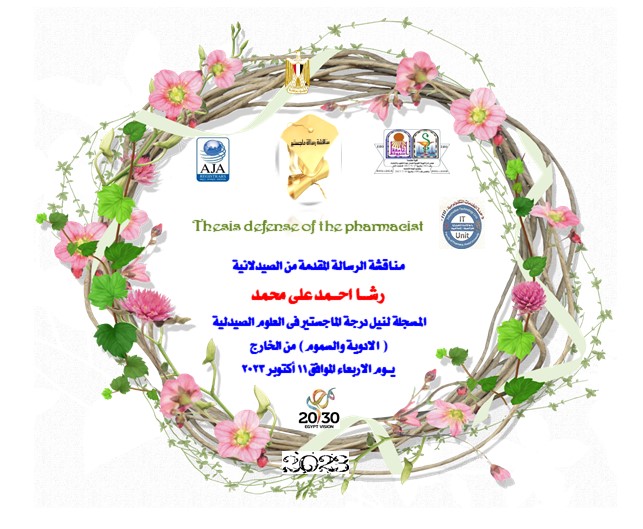
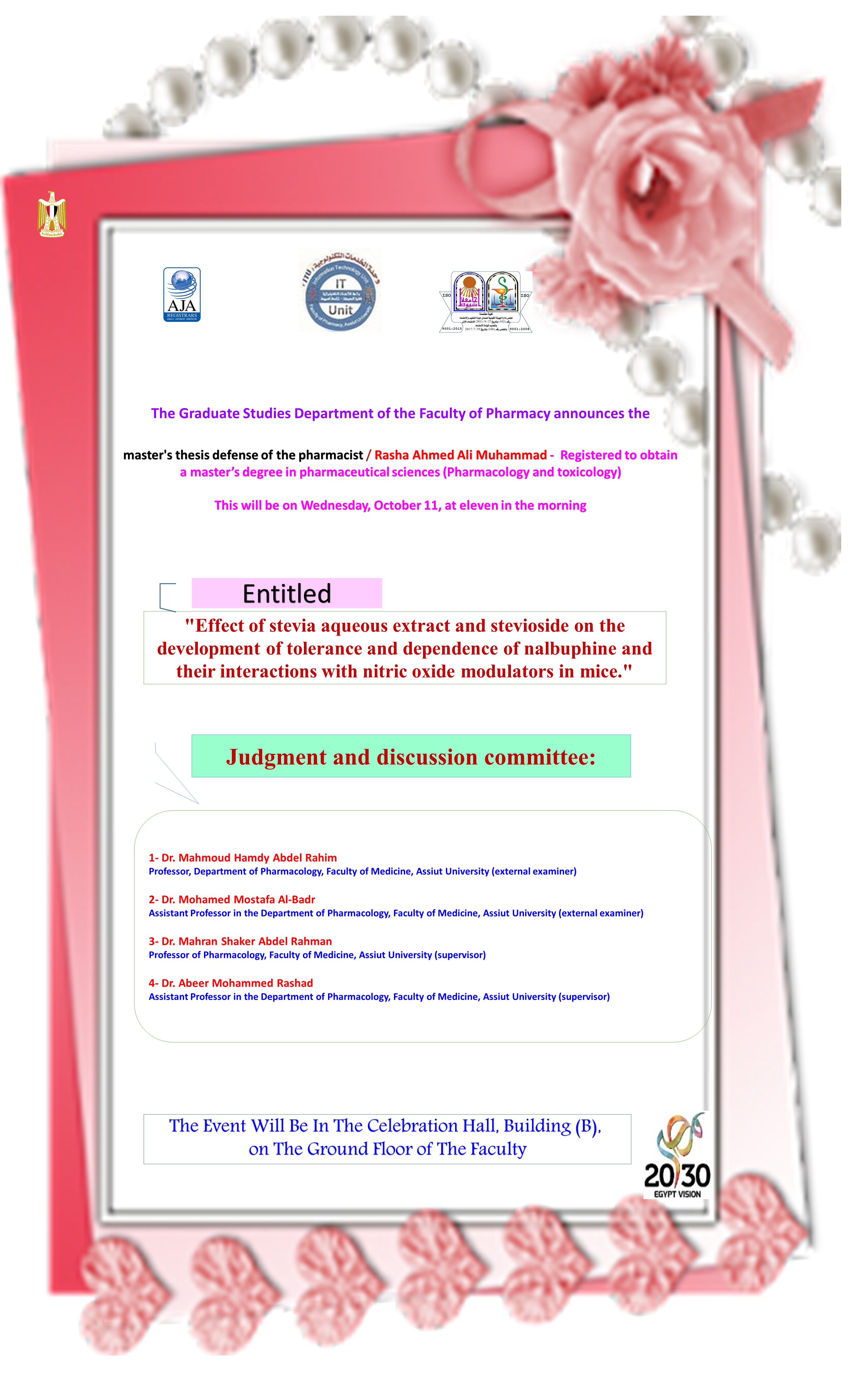
Thesis defense of the pharmacist/ Rasha Ahmed Ali Muhammad - registered to obtain a master’s degree in pharmaceutical sciences (Pharmacology and poisons) from on Wednesday, October 11, 2023, at eleven o’clock in the morning.
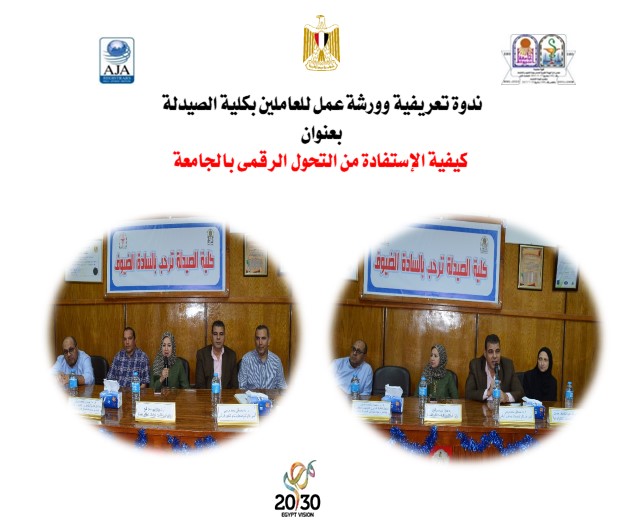
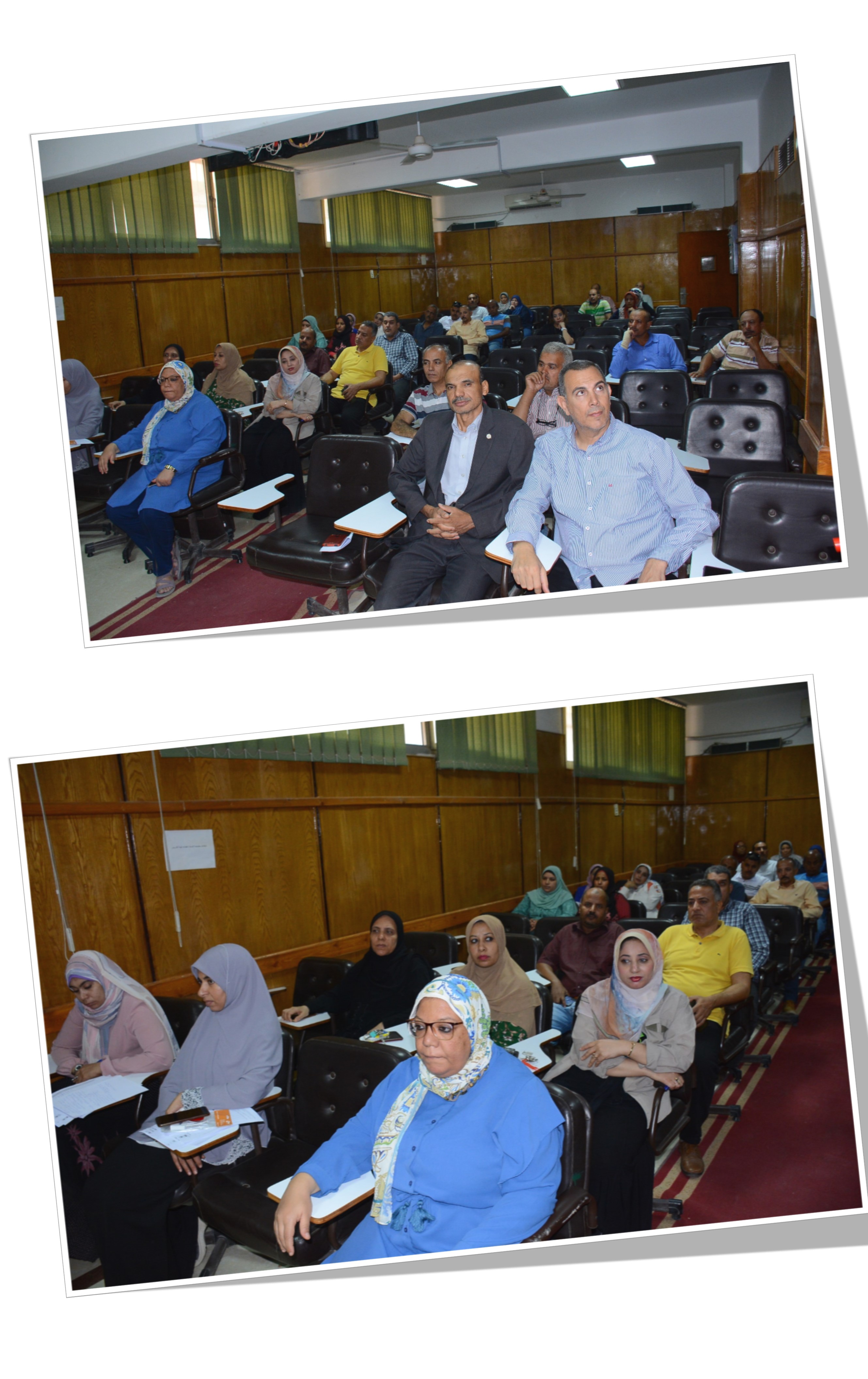
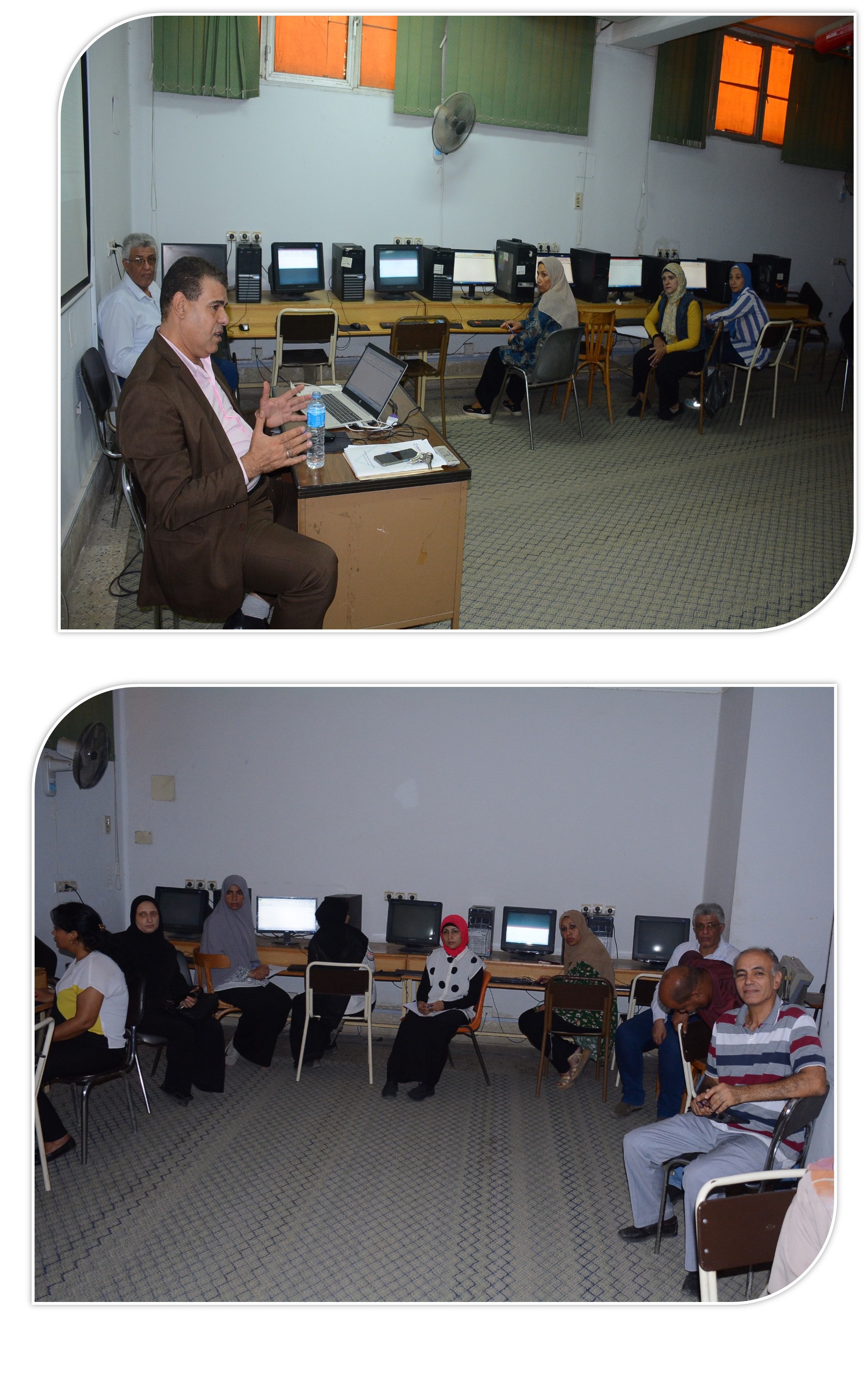
A seminar and workshop for employees of the Faculty of Pharmacy entitled How to benefit from the university’s digital transformation
Under the patronage of Professor Dr. Ahmed Al-Minshawy - President of the University,
And Professor Dr. Ahmed Abdel Mawla - Dean of the Faculty and Acting Vice President of the University for Education and Student Affairs
The Faculty's Technology Services Unit was organized in cooperation with the University's General Administration of Information Systems and Digital Transformation
An introductory seminar and workshop on how to benefit from digital transformation at the university
This was in the presence of Professor Dr. Gehan Nabil Hassan - Vice Dean of the Faculty for Postgraduate Studies and Research Affairs,
And Professor Dr. Hassan Refaat Hassan - Vice Dean of the Faculty for Education and Student Affairs,
And Prof. Dr. Soad Abdel Latif Hassan - Director of the Technology Services Unit,
And Dr. Ahmed Safwat - Supervisor of E-Learning,
And Mr. Tariq Sayed Hassan - Secretary of the Faculty,
And Dr. Mustafa Mohamed Morsi - General Director of Information Systems and Digital Transformation at the University,
And Mr. Abdel Hamid Badr Ahmed - Director of Systems and Applications at the General Administration of Information Systems and Digital Transformation,
The workshop aims to spread the knowledge of digital transformation among workers and raise their efficiency in line with Egypt’s Vision 2030 to achieve sustainable development.
This took place on Monday, October 9, 2023.
news category
خبر عام
The Faculty of Pharmacy council monthly meeting This will be on Tuesday, October 24, 2023
The Faculty of Pharmacy council will hold its monthly meeting This will be on Tuesday, October 24, 2023, at ten in the morning.
in the Hall of Faculty Council, 5th floor, administrative building.
news category
خبر عام
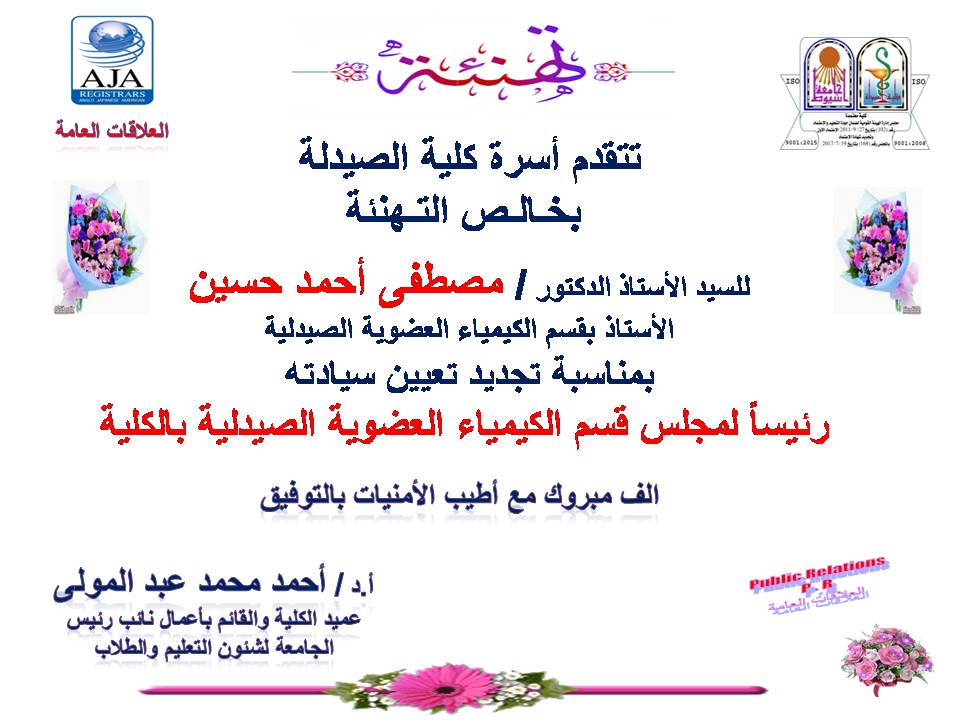
The Faculty of Pharmacy family extends its sincere congratulations to Professor Dr. Mostafa Ahmed Hussein Ahmed - Professor in the Department of Pharmaceutical Organic Chemistry on the occasion of renewing his appointment as Chairman of the Council of Pha

The Faculty of Pharmacy family extends its sincere congratulations to the faculty members On the occasion of their classification from the list of the most influential and distinguished scientists in the world, according to the American Stanford Universit


news category
خبر عام
New 1,2,3-Triazole/1,2,4-triazole Hybrids as Aromatase Inhibitors: Design, Synthesis, and Apoptotic Antiproliferative Activity
Research Abstract
A novel series of 1,2,3-triazole/1,2,4-triazole hybrids 5a, 5b, and 6a–i was designed and synthesized as antiproliferative agents targeting aromatase enzymes. The antiproliferative activity of the new hybrids against four cancer cells was studied using Erlotinib as a control. Compounds 6a and 6b demonstrated the highest antiproliferative activity among these hybrids, with GI50 values of 40 nM and 35 nM, respectively. Compound 6b was the most potent derivative, with a GI50 of 35 nM, comparable to Erlotinib’s GI50 of 33 nM. Compound 6b inhibited all cancer cell lines with comparable efficacy to Erlotinib. Compounds 5a, 5b, and 6a–i were tested for inhibitory action against aromatase as a potential target for their antiproliferative activity. Results revealed that compounds 6a and 6b were the most potent aromatase inhibitors, with IC50 values of 0.12 ± 0.01 µM and 0.09 ± 0.01 µM, respectively, being more potent than the reference Ketoconazole (IC50 = 2.6 ± 0.20 µM) but less potent than Letrozole (IC50 = 0.002 ± 0.0002). These findings indicated that compounds 6a and 6b had significant aromatase inhibitory action and are potential antiproliferative candidates. The findings were further linked to molecular docking investigations, which gave models of strong interactions with the aromatase domain for inhibitors with high binding scores.
Research Date
Research Department
Research Journal
Molecules
Research Member
Research Publisher
MDPI
Research Vol
28(20)
Research Website
https://www.mdpi.com/1420-3049/28/20/7092
Research Year
2023
Design, synthesis and antiproliferative evaluation of lipidated 1, 3-diaryl propenones and their cyclized pyrimidine derivatives as tubulin polymerization inhibitors
Research Abstract
Malignant transformations are dependent on an aberrant increase in tubulin and microtubule activities for cancer cell growth, migration, invasion and metastasis. The present work includes design and synthesis of a new series of lipidated 1,3-diaryl propenones and their cyclized pyrimidine derivatives as tubulin polymerization inhibitors. These derivatives harness lipophilicity, ease of synthesis and antiproliferative activity of lipidated 1,3-diaryl propenones and their cyclized derivatives. New compounds were synthesized from 4′-hydroxyacetophenone via O-alkylation, condensation with different aromatic aldehydes followed by cyclization with urea, thiourea or guanidine. Cyclization of 1,3-diaryl propenones into 4,6-diaryl pyrimidines increased their antiproliferative activity with the most potent derivative 19 achieving IC50 values at low micro molar concentration against two human cancer cell lines; MCF-7 (breast) and HepG-2 (liver). Compound 19 induced S-phase cell cycle arrest and apoptosis in MCF-7 with tubulin IC50 = 9.7 μM. It is well accommodated at the colchicine binding site of the tubulin protein as demonstrated by molecular docking.
Research Date
Research Department
Research Journal
Results in Chemistry
Research Member
Research Publisher
ELSVIER
Research Vol
6
Research Website
https://pdf.sciencedirectassets.com/320277/1-s2.0-S2211715623X00022/1-s2.0-S2211715623002552/main.pdf?X-Amz-Security-Token=IQoJb3JpZ2luX2VjEIf%2F%2F%2F%2F%2F%2F%2F%2F%2F%2FwEaCXVzLWVhc3QtMSJIMEYCIQCGNQ8I1kTmMQETFHOuPqd5Y1mWzLITKJFwP2Gigqd5dAIhAPftfgwJilX3
Research Year
2023
Development of magnetic molecularly imprinted polymers for the extraction of salivary pepsin prior to analysis by a novel HPLC-SEC method
Research Date
Research Department
Research Journal
Polymer
Research Member
Research Publisher
Elsevier
Research Vol
261
Research Website
https://doi.org/10.1016/j.polymer.2022.125417
Research Year
2022