June 24, 2026
President of Assiut University: The Botanical Garden Features Nearly 1,000 Trees Representing 180 Plant Species, Supporting Education, Scientific Research, and Environmental Sustainability
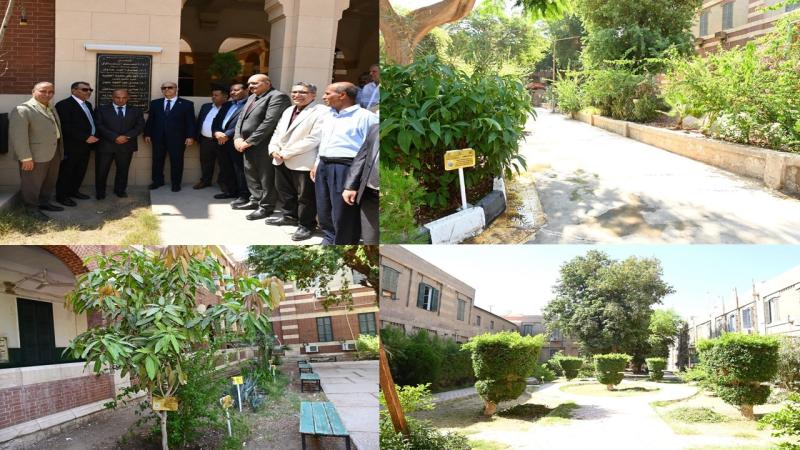
Professor Ahmed El-Minshawy, President of Assiut University, inaugurated on Wednesday, June 24, the second phase of the Open Botanical Garden at the University's Old Campus. The inauguration marks another milestone in completing the University's integrated botanical garden project, which was launched last year to support education and scientific research, promote environmental sustainability, and enhance the aesthetic appeal of the University campus.
The inauguration took place under the supervision and in the presence of Professor Mohamed Adawy, Vice President for Community Service and Environmental Development and Chairman of the Project Supervisory Committee; Professor Abu Bakr Mohamed El-Tayeb, Dean of the Faculty of Science and Vice Chairman of the Committee; Professor Magdy Alwan, Dean of the Faculty of Arts; Professor Saleh Mahmoud, Dean of the Faculty of Sugar Industry and Integrated Industries Technology; Professor Essam Fadl Abu Zeid, Vice Dean of the Faculty of Science for Community Service and Environmental Development and Supervisor of the project's implementation; Professor Hamed Mashhour, Vice Dean of the Faculty of Arts for Community Service and Environmental Development; and Professor Raymond Zaki, Vice Dean of the Faculty of Sugar Industry and Integrated Industries Technology for Community Service and Environmental Development.
Professor Ahmed El-Minshawy affirmed that Assiut University continues to implement environmental and development projects that support education and scientific research while enhancing the quality of life on campus. He noted that the Open Botanical Garden represents a practical model integrating education, research, and community service, while also promoting environmental awareness and fostering a culture of sustainability among students and members of the University community.
The second phase of the garden includes approximately 1,000 trees and plants representing nearly 180 plant species and varieties, many of them rare and distinctive. This makes the garden an important scientific reference for students and researchers, supporting the study of plant biodiversity and the conservation of rare and endangered species, while also contributing to the creation of a healthy and sustainable campus environment.
The garden features a distinguished collection of ornamental trees, palm trees, aromatic plants, and tropical species, in addition to a variety of fruit trees, including local lemon, guava, mango, grapevine, Umm Al-Fawakeh (monkey orange), loquat, mulberry, date palm, and Christ's thorn jujube. It also includes several rare species, such as Ficus benghalensis, Ficus platyphylla, bottlebrush, rose of Jericho, Indian jasmine, kaya trees, and Abu Al-Makarem trees.
All plants within the garden have been provided with identification signs displaying their scientific names, botanical families, principal uses, benefits, and geographical distribution. Each sign also features a QR code linked to a dedicated webpage on the University's official website, enabling visitors to access detailed information about each plant. This initiative enhances the educational and research value of the project while employing modern digital technologies to promote botanical knowledge.
The University President commended the efforts made in implementing the project and affirmed the University's commitment to expanding environmental initiatives that support the Sustainable Development Goals, thereby reinforcing Assiut University's position as a leading educational and research institution dedicated to community service and environmental stewardship.
For his part, Professor Mohamed Adawy explained that the Open Botanical Garden project is part of the Community Service and Environmental Development Sector's efforts to transform the University campus into an open educational and cultural environment that supports experiential learning and enhances environmental awareness among students and visitors. He emphasized that the project reflects the University's commitment to its community and environmental responsibilities alongside its educational and research mission.
The inauguration was attended by Professor Mohamed Abu Rahab, Vice Dean of the Faculty of Arts for Education and Student Affairs; Professor Sameh El-Banna, Vice Dean for Graduate Studies and Research; Professor Mohamed Hashem, Vice Dean of the Faculty of Science for Graduate Studies and Research; Professor Mohamed Badry, Vice Dean of the Faculty of Sugar Industry and Integrated Industries Technology for Graduate Studies and Research; in addition to a large number of faculty members and University staff.
The project was implemented and monitored by a dedicated team comprising Professor Sayed Shehata Abdeen, General Supervisor of the University's Gardens Administration; Professor Ahmed Mohamed Abdel Rahman, Professor in the Department of Botany and Microbiology at the Faculty of Science; Mr. Omar Ahmed Abdel Aal, Secretary of the Project Committee; Mr. Ahmed Mohamed Hassan, Director of the General Affairs Department at the Faculty of Science; Ms. Doaa Mostafa Sayed, Occupational Safety and Health Officer at the Faculty; Mr. Abdel Hamid Bayoumi Mohamed, Administrative Officer at the Office of the Vice Dean of the Faculty of Science; Ms. Shaza Ahmed Aboul Abbas, Head of the Faculty of Science Media Unit; and Mr. Mostafa Hassan Mostafa, Head of the Gardens and Nurseries Unit at the Faculty, in coordination with the administrations of the Faculties of Arts and Sugar Industry and Integrated Industries Technology, the General Gardens Administration, and the Technology Transfer Unit.