Announcement: Professional Training Grant

انضم الآن لمنحة التدريب الاحترافي الدفعة 45
المنحة متاحة للخريجين من عام 2020 إلى عام 2024
المسارات التدريبية المتاحة بفرع أسيوط :

- OPEN SOURCE APPLICATIONS 
  DEVELOPMENT
- WEB & USER INTERFACE DEVELOPMENT
- PROFESSIONAL DEVELOPMENT & 
  BI-INFUSED CRM

لمزيد من التفاصيل، وللتسجيل في المنحة: 

https://iti.gov.eg/diplomaStructure/139758dc-e1ee-4d2c-ba87-08dbe615d378/intakes/ce47193b-e8a0-4452-627f-08dbe68d3d73


https://www.facebook.com/100067485722912/posts/pfbid02EJxju9PEWhzvVbZs3SRHadBbZKPdLGBTkXP3xZJwbAKGApNHJX9uQipWjXAzCJnMl/?app=fbl

NUTRITIVE VALUE AND CHEMICAL QUALITY INDICATORS OF IMPORTED CATTLE’S LIVER

Research Abstract

The present study was conducted to assess the quality of imported frozen liver sold in Assiut markets, Egypt. A total of 100 samples were randomly collected over a 2 months period (January to March, 2020) from poultry slaughter shops, supermarkets and frozen meat markets. The liver samples were evaluated for chemical indicators of spoilage (pH, TVBN "Total Volatile base nitrogen", and TBA "Thiobarbituric acid") and some of the nutritional aspects (percentage of moisture, protein, fat, ash, and carbohydrates, as well as, gross energy (Kcal/100g) and cholesterol content (mg/100g), beside levels of iron (mg/100g). The obtained mean values of pH, TVBN (mg/100 g) and TBA (mg/kg) of the examined samples were 6.38 ± 0.01, 25.76 ± 0.44, and 0.65 ± 0.03, respectively. Of the examined samples, 92 % showed pH value exceeded the permissible limits of Egyptian standards; however, 88 % showed TVBN content within the set limit. The mean values of moisture, protein, fat, ash and carbohydrates (%) were 70.54 ± 0.11, 21.64 ± 0.08, 3.58± 0.12, 1.50 ± 0.018, and 2.74 ± 0.11, respectively. The calculated gross energy mean value was of 133.09 ± 1.06 Kcal/100 g. Additionally, the cholesterol and iron content mean values were 130.85 ± 2.17 mg/100 g and 16.07 ± 0.24 mg/100 g, respectively in the examined imported frozen liver samples. In conclusion, imported frozen liver sold in markets of Assiut city Egypt is of fair quality; it should be consumed sporadically and with care of TBARS, cholesterol and iron potential hazards.
 

Research Authors
H.Y. AHMED, ABD-ALLAH SH. M.S., D.B. MOHAMMED
Research Date
Research Department
Research Journal
Assiut Veterinary Medical Journal
Research Pages
14
Research Publisher
Assiut University, Faculty of Veterinary Medicine
Research Vol
Volume 67
Research Website
https://scholar.google.com/scholar?oi=bibs&cluster=4229019401754359547&btnI=1&hl=en
Research Year
2021

ENHANCING BEEF BURGER PROPERTIES USING LEMONGRASS OIL NANOEMULSION

Research Abstract

Lemongrass (Cymbopogon citratus) essential oil (LEO) and concentrations (1 and 1.5 %) of its nanoemulsion (LGNE) were included in beef burger formula to investigate their effect on shelf life, microbial, chemical indices, and technological properties. The product was frozen at -18±3ºC and examined at intervals (0, 48hrs, 4 weeks, then at a month interval for up to 4 months). GC analysis of LEO revealed that citric acid, verbenol, β-pinene, á-Myrcene and ethyl acetate formulate preponderance of the oil. FTIR, PDI, TEM and cytotoxicity were used for nanoemulsion characterization. The sensory attributes study disclosed that the raw oil drastically impacted the sensory criteria “colour and odour”; though samples with LGNE showed better acceptability. Samples with LEO showed the lowest TBC (P<0.05). Both LEO and LGNE showed great antibacterial effect against TCC. TYMC exhibited a numeral decrease in the count (P>0.05) except for the second month of storage (P<0.05). LGNE showed significant antioxidant efficacy nevertheless LEO samples showed higher TBARs values. TVBN was significant lower in LGNE samples especially in the last 2 months of storage. LGNE controlled the increase in samples pH compared to the control (P<0.05). WHC and cooking yield % showed improvement in the treatment’s samples. As well, diameter loss showed numeral decrease in treatments (P>0.05). In conclusion, LGNE generally improves the sensory and cooking properties of burger, over the LGO or the control samples.

Research Authors
BAKHEET DBM, Hussein Youssef Ahmed, WALAA M ELSHERIF, ABD-ALLAH SH MS
Research Date
Research Department
Research Journal
Assiut Veterinary Medical Journal
Research Pages
179-203
Research Publisher
Assiut University, Faculty of Veterinary Medicine
Research Vol
Volume 70, Issue 181
Research Website
https://scholar.google.com/scholar?oi=bibs&cluster=11571132203703738261&btnI=1&hl=en
Research Year
2024

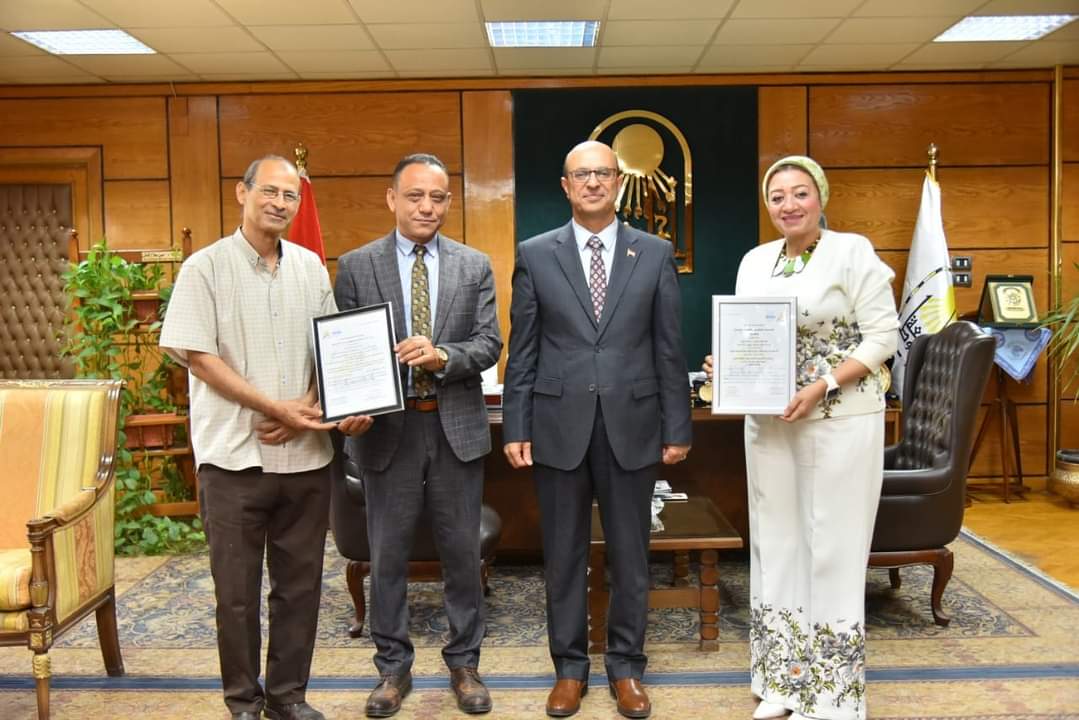
The Central Laboratory obtains renewal of accreditation from the National Accreditation Council (EGAC)

نقلا عن الصفحة الرسمية لجامعة أسيوط

رئيس جامعة أسيوط يعلن حصول المعمل المركزى بكلية الطب البيطرى على تجديد الاعتماد من المجلس الوطنى للاعتماد (إيجاك)

د. المنشاوي: تجديد الاعتماد انعكاس لما يتمتع به المعمل من القدرة على تحقيق الجودة فى الأداء وتلبية الاحتياجات التنموية للمجتمع

   أعلن الدكتور أحمد المنشاوي رئيس جامعة أسيوط؛ حصول المعمل المركزى، بكلية الطب البيطرى؛ على تجديد الاعتماد من المجلس الوطنى للاعتماد (إيجاك)، في تقدير الأفلاتوكسين للأعلاف، والمعادن الثقيلة للأغذية؛ طبقاً للمواصفة الدولية ISO/ IEC 17025:2017، وذلك اعتباراً من ۲۰۲٤/٠٦/١، وهو ما يعد إضافة جديدة لجامعة أسيوط، والتي تؤكد مواكبتها لمعايير الجودة، والتميز، وتطبيق ثقافة الجودة داخل مؤسساتها التعليمية المختلفة؛ بما يتوافق مع رؤية مصر 2030؛ فى تطبيق معايير جودة التعليم العالى.

   وهنأ رئيس جامعة أسيوط؛ أسرة كلية الطب البيطري، وفريق العمل بالمعمل المركزي؛ علي جهودهم في المحافظة علي هذا الإنجاز، والذي يعكس نجاح المعمل في تحقيق أعلى المعايير، والمواصفات القياسية الدولية، وانعكاساً لما يقدمه من خدمات بحثية متقدمة، ودوره في تعليم، وتدريب الطلاب على أحدث الأجهزة العلمية؛ حتى يستطيع خريجى الكلية؛ المنافسة فى سوق العمل بكفاءة.


  جاء ذلك خلال استقباله؛ للدكتور جمال بدر نائب رئيس الجامعة لشئون الدراسات العليا والبحوث، والدكتورة مديحة درويش عميد كلية الطب البيطري، والدكتور زكريا مختار زكى أستاذ الطب الشرعى، والسموم البيطرية، ومدير المعمل المركزى.


    تمّ إنشاء المعمل في عام 2009؛ بهدف تشخيص الحالات المرضية، والكشف عن الملوثات البيئية في الأغذية الحيوانية ومنتجاتها، والتأكد من سلامتها، بالإضافة إلى تنظيم دورات تدريبية للطلاب، والباحثين، والفنيين، وإكسابهم مهارات العمل على الأجهزة المتقدمة، مضيفاً: أن المعمل المركزي حصل مؤخراً عام 2021م، وبالتحديد في 30 ديسمبر؛ على اعتماد المجلس الوطني للاعتماد، وتم تقييمه طبقاً للمواصفة الدولية ((ISO/IEC 17025:2017 في تقدير الأفلاتوكسينات B1، B2،G1 ، G2 في الأعلاف، وكذلك تقدير نسب المعادن الثقيلة في الأغذية والمياه، وغيرها من المنتجات الحيوانية، والممتد حتى 29 ديسمبر 2025.


  وأكد الدكتور المنشاوي، أن تجديد الاعتماد انعكاس لما يتمتع به المعمل من القدرة على تحقيق الجودة فى أساليب الأداء وتبنى المعايير التى تتوافق مع الاحتياجات التنموية للمجتمع، مشيرا إلى إن الجامعة تسعى إلى تطبيق نظم الجودة داخل قطاعاتها، ووحداتها المختلفة؛ بشكل متكامل، ورفع كفائتها بما يواكب آليات ومستجدات العصر؛ وذلك حفاظاً علي استدامة معايير الجودة والاعتماد داخل الجامعة، وتلبيةً لتطلعاتها، ورؤيتها المستقبلية.


  ومن جهته، ثمن الدكتور جمال بدر؛ البنية التحتية القوية، والمتميزة التي تتمتع بها كلية الطب البيطري، وما تضمه من كوادر علمية متميزة، وإمكانيات متقدمة فى مختلف المجالات، وهو ما انعكس أثره في مدي إسهاماتها العلمية، والتطبيقية فى مجالات العلوم البيطرية، وزيادة قدرة الكلية على المساهمة فى خدمة المجتمع، وتنمية البيئة، وهو ما يندرج ضمن أهداف الجامعة الرامية إلي تحقيق الجودة فى أساليب الأداء، والتميز فى البحث العلمي، وتبنى المعايير التى تتوافق مع الاحتياجات التنموية للمجتمع.


  وفي سياق متصل، أوضحت الدكتورة مديحة درويش؛ أن المعمل المركزي يتميز بامتلاك أحدث الأجهزة، التي تخدم أكبر عدد من أقسام الكلية، والتي يصعب على القسم الواحد الحصول عليها، وكذلك إنشاء وحدة البيوتكنولوجي، والتي تقوم بتشخيص حالات الغش التجاري في اللحوم، إلي جانب التشخيص الدقيق لمسببات الأمراض، موجهةً في ذلك خالص التهنئة؛ لأسرة الجامعة، والكلية، والمعمل، علي هذا النجاح المتميز؛ والذي يعكس دعم إدارة الجامعة غير المحدود للكلية، وحرصها علي توفير كافة الاحتياجات والموارد اللازمة لها، ودعم شباب الباحثين بها، فضلاً عن تعظيم الاستفادة من إمكانياتها، ومواردها، في تطوير العملية البحثية، والتكنولوجية بالكلية.


  ومن جانبه، أفاد الدكتور زكريا مختار: أن المعمل المركزي يؤدي دوره، من خلال ثلاثة أهداف رئيسية، وهي: أهداف بحثية؛ متمثلة في تشجيع البحوث البيئية، والنهوض بالبحوث العلمية، وذلك من خلال الأجهزة العلمية الدقيقة، وإتاحة الفرصة لجميع الباحثين والطلاب بالكلية، للاستفادة منها، وأهداف تعليمية؛ تتضمن: تنظيم حلقات عمل، ودورات، وندوات ومحاضرات تدريبية للطلاب والباحثين من داخل الجامعة، وخارجها، على تشغيل تلك الأجهزة الحديثة، والتدريب علي الأسس النظرية والعلمية الخاصة بها، وكذلك الأهداف الخدمية؛ والتي تتمثل في المساعدة في تشخيص الأمراض من خلال تحليل العينات الواردة للكلية، وتقديم الاستشارات، والدعم الفني لقطاعات المجتمع المحلي، وتقديم الدراسات الخاصة بالبعد البيئي للمشروعات.

 #إعلام_جامعة_أسيوط

Assessment of cattle tick infestation: Molecular insights into Rhipicephalus annulatus and the efficacy of garlic oil and nanoemulsion as acaricidal agents

Research Abstract


Ticks, particularly Rhipicephalus annulatus, pose significant threats to livestock, causing economic losses and
transmitting various infectious diseases. This study aimed to evaluate the potential acaricidal properties of garlic
oil and its nanoemulsion against ticks infesting cattle, Rhipicephalus annulatus through the evaluation of mortality
rate and morphological changes of the treated ticks. The study also included prevalence, risk factors, and molecular
confirmation of tick species. Genetic characterization confirmed the identity of R. annulatus. Our results
revealed a high prevalence of R. annulatus (46.9%) with a higher risk in male cattle (50%) than females (44.9%)
and a nonsignificant high infection (49.1%) in animals ≤ 1 year old. The acaricidal efficiency of garlic oil and its
nanoemulsion was concentration and time-dependent. The high concentration of garlic oil (20 mg/L) induced
complete mortality within 48 hours. The nanoemulsion formulation enhanced efficacy, particularly at 5 mg/L,
which exhibited rapid and substantial acaricidal activity. Scanning electron microscopy revealed morphological
alterations induced by garlic oil and its nanoemulsion, including changes to the anterior capitulum, dorsal, and
ventral cuticles. The study contributes to the exploration of effective, safe, and eco-friendly alternatives for tick
control. Further research is warranted to validate their efficacy under diverse conditions and assess practical
strategies.

Research Authors
Salwa Mahmoud Abd-Elrahman a,1, Ahmed Kamal Dyab b,c, Fatma Atea Kamel d, Abeer A. Khedr e, Mervat M. Khalifa f, Shaymaa M. Mohamed g,2, Sara Salah Abdel-Hakeem
Research Date
Research Department
Research Journal
Veterinary Parasitology
Research Pages
11-21
Research Publisher
ELSEVIER
Research Rank
international impact factor 2.6
Research Vol
329
Research Website
www.elsevier.com/locate/vetpar
Research Year
2024

ANTIPARASITIC ACTIVITY OF MYRRH CRUDE EXTRACT AND MYRRH VOLATILE OIL COMPARED TO ALBENDAZOLE AGAINST TRICHINELLA SPIRALIS MUSCULAR LARVAE IN VITRO

Research Abstract

Trichinellosis is a foodborne zoonotic disease caused by T. spiralis affecting human and animals.
Treatment with commercially available drugs has not been satisfactory due to rapid development
of drug-resistant particularly against encapsulated larvae. There is an increasing
need to discover alternative anthelminthics agents from medicinal plants. The present study
evaluated the in vitro antiparasitic activities of myrrh crude extract and myrrh volatile oil on T.
spiralis larvae compared to albendazole to estimate their sublethal concentrations on the infectivity
of T. spiralis larvae in mice. The in vitro effect of these agents was evaluated by assessing
mortality rate and by a scanning electron microscopic analysis of ultrastructural changes in
the cuticle of the larvae. The surface changes induced by crude myrrh extract and albendazole
were more severe than those observed after exposure to myrrh volatile oil. All responses to the
substances were time dose-dependent and highly significantly different from the control group
(p<0.001). 100% mortality rate of larvae occurred on the 4th day at 3, 5, &7mg/ml of myrrh crude
extract, on the 7th day with volatile oil while total larval death occurred on the 1st day of exposure
in to 5, 10, 15 & 20μg/ml of albendazole. In vitro exposure to sublethal dose of albendazole,
crude myrrh extract and volatile oil extract resulted in infectivity reduction by 100%, 98%
& 88% respectively in intestinal phase and 100%, 98% &59% respectively in muscular phase.
Keywords: In vitro, Trichinella spiralis, Albendazole, Myrrh crude, Myrrh volatile oil

Research Authors
SALWA M. ABD-ELRAHMAN, AHMED K. DYAB NAHED A. ELOSSILY
Research Date
Research Department
Research Journal
Journal of the Egyptian Society of Parasitology
Research Member
Research Pages
307 - 314
Research Vol
Vol.50, No.2
Research Year
2020

HEPATIC DICROCOELIASIS IN BEEF CATTLE SLAUGHTERED AT ABU-SIMBEL ABATTOIR: FIRST SLAUGHTER HOUSE RECORD IN EGYPT

Research Abstract

Dicrocoelium dendriticum, the small liver fluke, is capable of parasitizing the gall bladder and liver of various mammalian species, especially ruminants. In Egypt, there was no previous abattoir-based research concerned with the incidence of dicrocoeliasis. The objective of our study is to record hepatic dicrocoeliasis in imported beef cattle of Sudanese origin that were slaughtered at Abu-Simbel abattoir, Aswan Governorate, Egypt and describe the detailed hepatic gross as well as histopathological changes induced by it. During a period from December 2020 to October 2021, 1575 liver specimens were examined from which 172 cases showed gross pathological lesions. After collection, affected specimens were fixed in 10% neutral buffer formalin, then they were prepared for histopathological examination. The recorded incidence of hepatic dicrocoeliasis was 7.5% among the affected cases. The affected liver showed fibrosis and paleness with irregular yellowish foci on its surface. Fibrous tissue proliferation was seen surrounding bile ducts. Histopathologically, parasitic eggs were detected in affected liver tissues where they stimulated a granulomatous inflammatory reaction with hepatocellular necrosis and infiltrations of neutrophils, eosinophils and giant cells. Portal fibrosis resulted in the formation of pseudolobules. As a consequence, hepatic dicrocoeliasis is prevalent in imported Sudanese beef cattle and these animals should be protected from snail-infected regions and subjected to careful inspection by veterinarians in slaughterhouses.

Research Authors
MOHAMED HESHAM M.1; MOHAMED SALAH EL-DEIN YOUSSEF 2; SARY KHALEEL ABD-ELGHAFFAR2, 3 AND SALWA MAHMOUD ABD-ELRAHMAN
Research Date
Research Department
Research Journal
Assiut Veterinary Medical Journal
Research Member
Research Pages
115-122
Research Publisher
Assiut University
Research Rank
WOS
Research Vol
Vol. 69 No. 179
Research Year
2023

Genetic relatedness and diversity of Capillaria species infecting bayad (Bagrus bajad) in upper Egypt

Research Abstract

Background This study investigates the genetic characteristics of Capillaria isolates from the infected fish, Bagrus
bajad, and their relation to human Capillaria philippinensis using Random Amplified Polymorphic DNA (RAPD-PCR)
analysis. Fifteen fish Capillaria were isolated and compared to identified human C. philippinensis using six primers:
M-are, M-1, G-7, G-11, G-15, and G-18.
Results All six primers successfully amplified DNA, highlighting their efficacy in distinguishing between human
and fish Capillaria isolates. The analysis revealed distinctive banding patterns between fish and human isolates, with
variations in size and number of DNA fragments. Additionally, genetic similarity analysis showed intriguing patterns of
relatedness, with certain pairs exhibiting high similarity percentages. Comparative assessment of RAPD polymorphism
demonstrated consistent findings of 100% polymorphism across all primers. The Unweighted Pair Group Method
with Arithmetic Mean Algorithm (UPGMA) evaluated the closest relationship between human and fish isolates. These
results underscore the utility of RAPD analysis in delineating the genetic diversity among Capillaria isolates from
different hosts.
Conclusion Overall, this study contributes to our understanding of the genetic variability and relatedness among
Capillaria isolates, shedding light on their evolutionary dynamics and zoonotic potential.
Keywords Capillaria, Fish, Genetic similarity, Relatedness, RAPD polymorphism

Research Authors
Salwa Mahmoud Abd-Elrahman1, Salma M. Abdel-Rahman2, Hanaa Y. Bakir2, Ragaa A. Othman2, Abeer A. Khedr3, Mervat M. Khalifa2 and Sara S. Abdel-Hakeem4*
Research Date
Research Department
Research Journal
BMC Veterinary Research
Research Member
Research Pages
1-9
Research Publisher
BMC
Research Rank
Q1, impact factor 2.6
Research Vol
20:235
Research Website
https://doi.org/10.1186/s12917-024-04076-x
Research Year
2024

Uncommon Cysticercus bovis-induced Liver Lesions in Slaughtered Beef Cattle Imported from Sudan

Research Abstract

In our country, imported Sudanese cattle are supposed to be an important source of high-quality
protein, which is obtained from their meat and milk. Consequently, strict veterinary inspection
should be applied to these animals in slaughterhouses before being subjected to human
consumption. This study aims to report the unusual migration of Taenia sagniata larvae (Cysticercus
bovis) to the liver of these animals and describe the pathological changes stimulated by them. In a
survey started in December 2020 and ended by October 2021, 1575 livers were carefully inspected
and examined, from which 172 specimens were condemned for different lesions. Prevalence of
cysticercosis was 1% (16/1575) among the totally examined livers. However, out of the rejected
specimens, cysticercosis occurred at a percentage of 9.3% (16\172). 5 livers showed a single cyst,
while 11 showed multiple. The total cyst count was 44, of which 28/44 (63.6%) were viable with thin
transparent walls and discharging of spotted scolex on incision. However, 16/44 (36.3%) cysts were
degenerated and appeared firm, pale yellowish, with firm consistency. The morphological appearance
of the liver varied from normal structure and consistency to swollen with rounded borders.
Histopathological analysis showed a fully developed bladder-like cyst with its invaginated scolex in
liver tissues resulting in necrotic changes in hepatocytes, fibrosis and inflammatory infiltrate. Due to
the significant risk of Cysticercus bovis to human health, meat inspection must be carefully
considered.

Research Authors
Mohamed M. Hesham1, Mohamed Salah El-Din Youssef2, Sary Khaleel Abdelghaffar 2,3 and Salwa Mahmoud Abd-Elrahman
Research Date
Research Department
Research Journal
Egyptian Journal of Veterinary Sciences
Research Member
Research Pages
pp. 669-677
Research Publisher
Egyptian Journal of Veterinary Sciences
Research Vol
Vol. 56, No. 4,
Research Website
https://ejvs.journals.ekb.eg/
Research Year
2025
Subscribe to