




Congratulations
Assiut University President inaugurates the Faculty of Engineering graduation projects exhibition for the 2025/2026 academic year.

Assiut University President Inaugurates Faculty of Engineering Graduation Projects Exhibition for the 2025/2026 Academic Year
Source: Assiut University Media Office
Dr. Abdel-Mawla: The diversity and excellence of the graduation projects reflect the preparation of graduates capable of competing and contributing to development.
Dr. Ahmed Abdel-Mawla, President of Assiut University, inaugurated the Faculty of Engineering’s graduation projects exhibition for the 2025/2026 academic year on Wednesday, August 19. The event was organized by the Faculty’s Graduate Follow-up and Employment Unit, under the supervision of Dr. Khaled Salah (Faculty Dean), Dr. Mohamed Safwat (Vice Dean for Education and Student Affairs), and Dr. Zeinab Ibrahim (Unit Director).
The inauguration was attended by Dr. Shehata El-Dabaa (Engineering Advisor to the University President and Vice Dean for Postgraduate Studies and Research), Dr. Salwa Abdel-Rahman Megahed (Vice Dean for Community Service and Environmental Development), and Engineer Ayman Ayad (Director of the Information Technology Branch in Assiut), alongside various department heads, faculty members, assistant staff, and students.
The exhibition featured 65 projects from the Faculty’s various departments and programs. The topics ranged across architecture, interior architecture, mechatronics, mechanical engineering, mining and metallurgy, electrical engineering, civil engineering, and mechanical design and production, as well as specialized programs in mechatronics and robotics, biomedical engineering, and construction engineering and project management. During his tour of the exhibition, Dr. Ahmed Abdel-Mawla inspected the student projects, listened to explanations regarding their concepts, objectives, implementation stages, and operational mechanisms, and discussed with the students the practical applications and solutions these projects offer for various engineering challenges.
The Assiut University President expressed his pride in the high level of academic and innovative quality demonstrated by the student projects. He emphasized that these projects reflect the knowledge and skills students acquired during their studies, as well as their ability to translate academic knowledge into practical applications and innovative solutions that serve various fields and sectors.
Dr. Ahmed Abdel-Mawla noted that the diversity of the projects and their interdisciplinary integration reflect an educational approach that bridges theory and practice. This approach aims to prepare graduates capable of competing in local and international labor markets and actively contributing to development efforts.
He affirmed the university's continued support for students, its encouragement of innovation and entrepreneurship, and its commitment to fostering collaboration with industrial and scientific research institutions. Such efforts help develop student ideas and transform outstanding projects into viable, practical models.
For his part, Dr. Khaled Salah explained that the exhibition serves as a platform to showcase student ideas and projects while connecting students with academic and industrial entities, thereby creating opportunities for training, employment, and entrepreneurship. He highlighted the faculty's commitment to aligning the educational process with labor market needs and industrial requirements, supporting innovation, and preparing qualified engineering professionals to contribute to the development process. Dr. Mohamed Safwat noted that graduation projects serve as a practical application of the knowledge and skills students acquired during their studies. They provide an opportunity to tackle real-world challenges and propose innovative, viable solutions, thereby enhancing the students' professional readiness and competitiveness in the labor market.
Projects from the Department of Architecture included a range of designs focused on ecotourism, such as: an eco-resort in New Aswan; a sustainable eco-lodge in Ain Sokhna; a tourism project in Dahab; a cultural ecotourism project exploring the history of the Nile River; the "Tala Aghormi" project; the MADAR project; the "Memory of the Earth" project; the "Gateway to Africa" project; an ecotourism center in Siwa Oasis; an identity preservation center at Lake Burullus; a historic archaeological village in the Virgin Mary Monastery area of Assiut; the "Bab Aman" project; the GENESIS project; and an eco-resort in Wadi El Gemal Reserve.
Interior architecture projects included: the NOAH project; the EL BORDA project; the Horizons project; the WAHAG project; a vocational carpentry training complex in New Assiut City; the Artory project; the NEXUS project; the Busat project; and the Celia project.
Projects from the Mechatronics Engineering Department included: a Smart Aquaculture System; an autonomous indoor delivery robot; and an autonomous robot for surveying construction sites and bridges. Projects in the Mechanical Power Engineering Department included a design analysis of various air conditioning systems and a performance evaluation of units installed in an office and a lecture hall; a project to upgrade and operate a low-speed wind tunnel unit for testing turbine blades; and a project to design an oil transport pipeline.
In the Mining and Metallurgical Engineering Department, projects covered the assessment of limestone reserves in cement quarries and their impact on industry sustainability; the processing of Egyptian phosphate ores and their industrial applications; and a study on recycling electric arc furnace dust for use in engineering applications.
Within the Computer and Systems program (Electrical Engineering Department), projects included the design and control of an autonomous waste-collection vehicle; a fault-injection framework for automotive software compliant with the ISO-26262 safety standard; a traffic signal control system using artificial intelligence; and an R&D project focused on machine learning using C++.
The exhibition also featured a project from the Communications division of the Electrical Engineering Department involving the adaptation and optimization of the Vortex processor for ASIC design, conducted in collaboration with Silicon Arts.
Projects in the Civil Engineering Department included foundation design on problematic soils (under both the 2021 and 2004 regulations); project management (under the 2021 and 2004 regulations); concrete structure design (under the 2021 and 2004 regulations); and soil and foundation engineering.


Influence of load-induced transverse eccentricity on seismic pounding response of adjacent buildings
Research Abstract
Seismic pounding between adjacent buildings is a critical hazard, particularly when combined with in-plane eccentricity from irregular loading. Although earthquake-induced collisions are well documented, the combined influence of eccentricity on pounding responses remains largely unexplored. This study investigates adjacent buildings with eccentricities of 5%, 10%, and 20% for three height configurations: 4–8, 4–12, and 8–12 stories. Nonlinear time-history-analysis evaluates drift, acceleration, and rotation demands under pounding and no-pounding conditions. Increasing eccentricity amplifies torsional demands, with pounding causing rotational increases of 165%, 124%, and 147% for the three configurations. Peak rotations reached 0.005–0.018, 0.0039–0.014, and 0.007–0.016 rad as eccentricity increased from 5% to 20%. Pounding also amplified member forces, particularly perimeter-column shear at high eccentricities, whereas its relative contribution to torsional moments decreased as inherent eccentricity became dominant. Conventional separation provisions may underestimate pounding risk, highlighting the need to incorporate load-induced eccentricity in seismic gap design.
Research Date
Research Department
Research Journal
Structural Concrete
Research Member
Research Publisher
wiley.com
Research Rank
Q1 WoS
Research Website
https://doi.org/10.1002/suco.70669
Research Year
2026
Masonry infill-bounding frame interaction impact on the seismic performance of MRF buildings
Research Abstract
Reinforced concrete frames with masonry infill walls form the main lateral force-resisting system in a large number of buildings across the world. Furthermore, the geometrical and material parameters of the frame and infill and their interaction affect the lateral force-displacement response of infill wall RC frames. This interaction is affected by the gap between columns and masonry infill. Although limited numerical and experimental research has been done to determine the behavior of the buildings incorporating a masonry wall and an RC frame, little research has been done on the effects of the gap distance between them. However, a systematic investigation into the interaction between the infill wall and the column is more important than ever. Therefore, the current study aims to examine the response of the interaction between the RC frame and the infill walls. A finite element model of a masonry-infilled RC frame was developed with and without gaps, and the influence of column–infill gap distances on the lateral force-displacement response was investigated. The cases studied have been categorized into four modeling types, bare frame model [BF], infill wall model with full contact model [INFC], infill wall with a gap [ING] model, and infill wall with rubber isolator [INRI]. The measured responses include lateral displacement, story drift, story shear force, and overturning moment over building height. Only the effect of lateral load in-planes with constraints in the other directions is investigated in this study. In conclusion, the rubber isolator has the potential to significantly reduce the intensity of earthquake damage; in other words, rubber isolation contributes to improving the structural behavior against seismic loading.
Research Date
Research Department
Research Journal
Structures
Research Member
Research Pages
Article: 112455
Research Publisher
https://www.sciencedirect.com/
Research Rank
Q1 Wos
Research Vol
Volume 90
Research Website
https://www.sciencedirect.com/science/article/pii/S2352012426014049
Research Year
2026
Impact of plan layouts considering soil-structure interaction on seismic response of irregular adjacent steel buildings
Research Abstract
Adjacent irregular buildings with insufficient separation are vulnerable to seismic pounding, particularly when plan asymmetry and soil flexibility modify their dynamic response. This study investigates the influence of horizontal plan layout on the seismic response and pounding behavior of adjacent irregular steel buildings considering soil–structure interaction. Six adjacent L-shaped building configurations with identical structural properties but different plan arrangements were modeled in SeismoStruct. Nonlinear time-history analyses were performed using nine real earthquake records with different intensity, duration, and frequency characteristics. Pounding was represented through nonlinear gap elements, while soil flexibility was simulated using an equivalent spring–dashpot soil–structure interaction model. The response was evaluated in terms of natural frequencies, roof displacement histories, torsional rotations, relative gap response, storey drifts, shear forces and bending moments. The results show that plan layout strongly affects global response and pounding potential. Layouts with less favorable mass and stiffness distribution produced larger roof displacements, amplified torsional rotations and higher relative gap demands. Layouts 1 and 6 generally exhibited the most critical responses, whereas Layouts 3 and 4 showed comparatively more stable behavior. The findings indicate that pounding risk is governed not only by translational displacement but also by asynchronous torsional response.
Research Date
Research Department
Research Journal
Soil Dynamics and Earthquake Engineering
Research Member
Research Pages
Article: 110435
Research Publisher
https://www.sciencedirect.com/
Research Rank
Q1
Research Vol
Volume 209
Research Website
https://www.sciencedirect.com/science/article/pii/S0267726126003477
Research Year
2026
Response of a circular tunnel in saturated potentially liquefiable ground with an annular rubber soil mixture cushion under moving train loading. A three-dimensional finite element study
Research Abstract
This study investigates the response of a circular tunnel embedded in saturated potentially liquefiable ground under moving train loading, with particular focus on the effect of an annular rubber-soil mixture cushion placed around the tunnel lining. A three-dimensional finite element model was developed in OpenSees using coupled solid-fluid soil elements and shell elements for the tunnel lining. Two configurations were analysed under identical soil, boundary, and loading conditions. The first configuration represents the reference tunnel without the cushion, while the second represents the tunnel surrounded by the rubber-soil mixture cushion. The results show that the cushion substantially modifies the tunnel-soil interaction mechanism. The peak lining internal force decreased by approximately 62%, and the force distribution along the lining became more uniform. However, this structural benefit was accompanied by larger tunnel movement and surface settlement. The train-induced invert displacement increased from 15.7 to 56.8 mm, while the maximum surface settlement increased from 19.7 to 25.5 mm. The additional movement was mainly associated with rigid-body settlement, since tunnel distortion remained nearly unchanged. The excess pore pressure ratio remained close to 0.08, indicating that liquefaction was not triggered under the moving train load considered. The cushion also reduced the computed high-frequency acceleration amplitudes by 49% at the tunnel invert and by 65% at both the ground surface and the liquefiable zone. A functionality-based interpretation showed that the structural comparative functionality indicator (CFI) increased from 0.50 to 0.81, whereas the settlement-based serviceability CFI decreased from 0.91 to 0.68. The findings indicate that an annular rubber-soil mixture cushion acts primarily as a lining protection and response filtering measure rather than as a settlement control measure.
Research Date
Research Department
Research Journal
Soil Dynamics and Earthquake Engineering
Research Member
Research Pages
Article: 110591
Research Publisher
https://www.sciencedirect.com/
Research Rank
Q1
Research Vol
Volume 210
Research Website
https://www.sciencedirect.com/science/article/pii/S0267726126005038
Research Year
2026
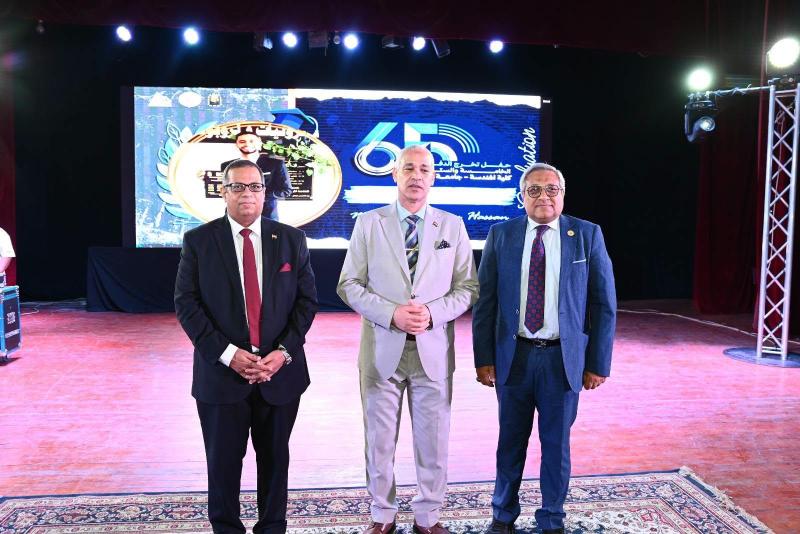
Class of '65 Reunion


Important Announcement

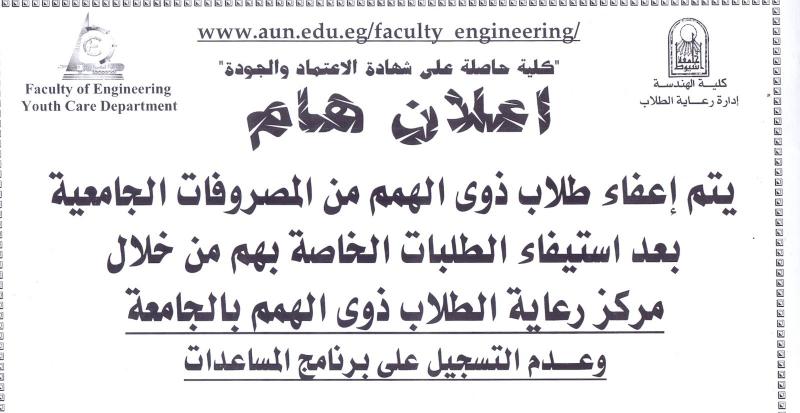
Fourth-year students in the Civil Engineering Department who have submitted appeals are required to visit the office of the Vice Dean for Education and Student Affairs to review their answer booklets. This must be done within one week of the announcement date.
August 24, 2026
Experimental Investigation of the Effect of a MitraClip on Left Ventricular Flow Dynamics
Research Abstract
The MitraClip device has emerged as an effective treatment option for patients with mitral regurgitation. However, implementing a MitraClip alters the mitral valve structure and left ventricular flow dynamics. In this study, we experimentally investigate the effects of the MitraClip and the resulting twin pulsed jets on flow dynamics within the left ventricle. A custom-made left heart pulse duplicator was utilized, considering three different configurations: (1) a healthy mitral valve; (2) a regurgitant mitral valve; and (3) a repaired mitral valve with a MitraClip device. The flow field within the left ventricle was examined using time-resolved particle image velocimetry across different planes. Of particular interest was the analysis of flow structures, viscous energy dissipation and the accumulation of viscous shear stresses in the left ventricle. The results indicate that mitral valve regurgitation increases both viscous energy dissipation and the accumulation of viscous shear stresses in the left ventricle along with a 45% increase in peak velocity compared to the case with a normal mitral valve. Moreover, while mitral valve repair with a MitraClip alters the flow dynamics in the left ventricle, generating twin pulsed jets, it effectively reduces viscous energy dissipation (by 25 and 36% in the lateral and side planes, respectively) and shear stress accumulation compared to the regurgitant valve. However, these improvements do not fully restore the levels observed in a healthy mitral valve. MitraClip mitigates the adverse effects of mitral regurgitation by restoring key hemodynamic parameters closer to healthy levels, highlighting its potential as a promising treatment.
Research Date
Research Department
Research Journal
Annals of Biomedical Engineering
Research Member
Research Website
https://link.springer.com/article/10.1007/s10439-025-03744-9
Research Year
2025