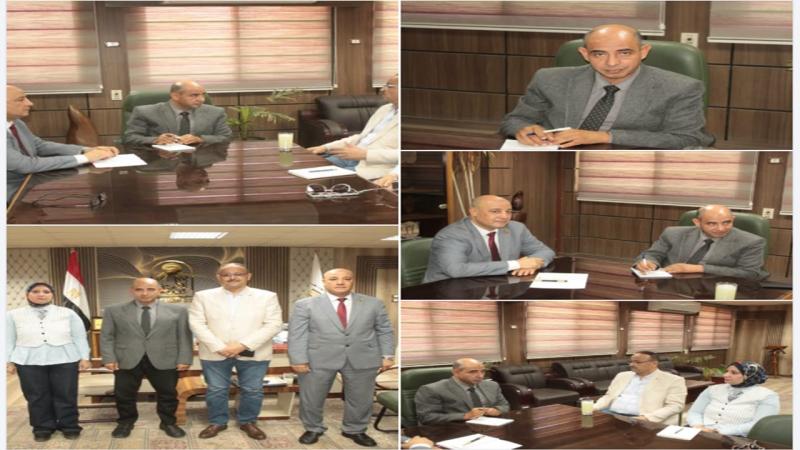
A Seminar at South Egypt Cancer Institute, Assiut University, Discusses Crisis Management in the Medical Work Environment to Enhance Patient and Staff Safety

Under the patronage of Professor Ahmed El-Minshawy, President of Assiut University, the South Egypt Cancer Institute organized a seminar on Tuesday, May 5, 2026, entitled “Crisis Management in the Medical Work Environment.” The event was held under the supervision of Professor Mohamed Ahmed Adawy, Vice President for Community Service and Environmental Development; Professor Mohamed Abou El-Magd, Dean of the Institute; Professor Amr Farouk, Vice Dean for Community Service and Environmental Development and seminar coordinator; and Professor Ibrahim Abou El-Oyoun, Director of the University Oncology Hospital. The seminar lecture was delivered by Amani Mohamed Sherif.

Professor Ahmed El-Minshawy emphasized that crisis management has become a fundamental element in improving the healthcare system, especially in light of the rapid challenges facing the medical sector. He noted that the university is keen on supporting the development of medical and administrative staff capabilities and enabling them to deal with emergencies efficiently and flexibly, in a way that enhances the quality of healthcare services provided to citizens and aligns with international safety and quality standards.

The seminar was attended by Professor Hosny Badrawy, along with a number of faculty members, physicians, nursing staff, and institute employees.

Professor Mohamed Ahmed Adawy stated that organizing the seminar comes within the framework of the university’s support for community-oriented activities aimed at improving institutional performance. He pointed out that the medical work environment naturally faces crises, which require prior preparedness and the establishment of effective response mechanisms to ensure the continuity of medical services with high efficiency and quality.

For his part, Professor Mohamed Abou El-Magd explained that the seminar represents an important step toward raising staff awareness regarding crisis management of all types, especially in dealing with patients and their families. He stressed the institute’s commitment to qualifying medical and administrative teams to handle emergencies with a high level of professionalism.

Professor Amr Farouk added that organizing such events reflects the institute’s orientation toward adopting modern management concepts, particularly crisis management, which contributes to improving the work environment and enhancing the safety of both patients and healthcare workers.

During her lecture entitled “Crisis Management in Medical Institutions,” Professor Amani Mohamed Sherif discussed the concept of crises and their various types within the healthcare sector, including medical, operational, environmental, and human-related crises. She also reviewed the stages of crisis management, starting from prevention, moving through preparedness and response, and ending with recovery and lessons learned.

She further addressed the structure of crisis management teams, which includes logistics, communication, operations, and medical emergency teams, stressing the importance of integration among these teams to ensure rapid and efficient response. In addition, she reviewed the emergency response plan at the Oncology Hospital, which includes early warning and reporting systems, activation of the operations room, field response, evacuation procedures, recovery stages, and the importance of effective communication during crises.

At the conclusion of the seminar, Professor Amani Sherif recommended establishing a permanent crisis management committee within the hospital, developing a specialized emergency plan for the radiotherapy department, conducting regular simulation drills, training all staff on first aid procedures, regularly updating emergency contact information, and connecting the hospital to the regional emergency network.

Assiut University Organizes a Scientific Symposium at the Faculty of Engineering on "Waste Management and Energy Saving to Achieve Sustainable Development"

Under the auspices of Professor Ahmed El-Minshawy, President of Assiut University, the Vice Deanship of the Faculty of Engineering for Community Service and Environmental Development Affairs organized a scientific symposium entitled "Waste Management and Energy Saving to Achieve Sustainable Development", under the supervision and presence of Professor Mohamed Ahmed El-Adawy, Vice President for Community Service and Environmental Development, Professor Khaled Salah, Dean of the Faculty, and Professor Salwa Abdel Rahman Megahed, Vice Dean for Community Service and Environmental Development.

The seminar witnessed the participation of a group of faculty members, their assistants and staff at the college, during which Dr. Mohamed Abou Al-Qasem, Professor in the Department of Mining and Metallurgical Engineering, and Eng. Osama Saeed Anis, Head of the Energy, Environment and Sustainable Development Sector at CEMEX Egypt and the United Arab Emirates, lectured.

Professor Ahmed El-Minshawy stressed that the organization of this symposium comes within the framework of the university's keenness to spread environmental awareness within the university community, introduce the latest waste management practices, and promote the culture of optimal use of natural resources, in addition to linking the academic aspect with industrial applications, in support of the state's directions towards achieving sustainable development in accordance with Egypt's Vision 2030.

The President of the University pointed out the importance of developing students' environmental awareness and refining their innovative abilities in the fields of recycling and energy saving, to qualify them to participate effectively in achieving the sustainable development goals, pointing out that the symposium came out with several recommendations that can be implemented within the college, in addition to a proposal for a waste management plan on the campus, and the presentation of ideas for graduation projects and applied research in this field.

For his part, Professor Mohamed Ahmed Adawy explained the need to expand the application of waste-to-energy technology, pointing to the importance of integrating academic and industrial efforts to achieve tangible results in the fields of waste and energy management, as well as supporting scientific research in the fields of clean energy, increasing community awareness of the importance of preserving the environment, and enhancing cooperation between universities and industrial institutions to achieve the Sustainable Development Goals.

In the same context, Professor Khaled Salah explained that this symposium comes within a series of seminars organized by the Community Service and Environmental Development Sector at the College, within the framework of developing awareness of environmental and community issues, and proposing engineering solutions for them, as part of the activities of the College's strategic plan for the years 2026-2030.

The Dean of the Faculty of Engineering added that today's seminar succeeded in combining two very important issues, namely waste management on the one hand, and rationalization and energy consumption on the other hand, pointing out that a pioneering experience of the Assiut Cement Factory in producing energy from waste, which provides a practical model for a sustainable solution that combines waste treatment and energy generation at the same time.

The seminar addressed several important topics, including: the link between waste management and energy, the concept of the circular economy, the role of universities in achieving sustainability, scientific research and training opportunities, and mechanisms to transform the College of Engineering into a sustainable model, in addition to reviewing the latest scientific methods and practical applications in waste management, and ways to benefit from them in energy production to contribute to reducing the environmental impact.

The symposium came out with several important recommendations, which stressed the need to work on establishing complexes for the production of energy from waste in a way that contributes to maximizing its optimal utilization, in addition to seeking to spread community awareness and provide the necessary mechanisms and incentives to implement the waste separation system from the source, as well as studying providing incentives to industrial entities to encourage them to use waste in energy production or rely on the energy sources resulting from it, to support efforts to achieve sustainable development.

The President of Assiut University discusses with the delegation of the National Center for Studies the enhancement of cooperation in training and awareness programs

Professor Ahmed El-Minshawy, President of Assiut University, received, on Monday, May 4, a delegation of the National Center for Studies, which included Major General Ahmed Al-Shehabi, President of the Center, Major General Dr. Ahmed Farouk, Advisor to the Center, and Mr. Hani Al-Asr, Executive Director of the Center.

This meeting comes within the framework of enhancing aspects of joint cooperation between the two sides, and continuing the implementation of educational and training programs directed to university leaders and faculty members, in a way that contributes to raising the level of awareness of contemporary challenges and enhancing the readiness of academic cadres to deal with various variables.

The meeting was attended by Professor Mohamed Ahmed El-Adawy, Vice President for Community Service and Environmental Development, Dr. Sameh Abdel Salam, Advisor to the President for Financial Affairs, and Mr. Shawkat Saber, Secretary General of the University.

During the meeting, Professor Ahmed El-Minshawy welcomed the delegation of the National Center for Studies, expressing his appreciation for the fruitful cooperation between the two sides, stressing that this cooperation contributes to supporting efforts to develop the educational process, enhance training and qualification programs, and raise the efficiency of academic cadres, which reflects positively on the quality of university performance.

The President of Assiut University also praised the prominent role played by the center in enhancing strategic awareness and building national capacities in various fields, in line with the requirements of the current stage and the accelerated regional and international challenges, pointing out that the educational programs and activities provided by the center contribute to the preparation of conscious cadres capable of analyzing variables and understanding their dimensions, in a way that enhances the efficiency of state institutions at the local and international levels.

Professor El-Minshawy stressed the importance of developing the skills of students and faculty members in the fields of strategic studies, national security, and modern management, explaining that these programs reflect the importance of integration between the academic and training aspects, and contribute to raising the efficiency of participants and enhancing their awareness of contemporary issues, in a way that supports the university's ability to prepare qualified cadres that keep pace with the requirements of development.

The President of the University praised the scientific content of the educational seminar organized by the National Center for Studies, stressing that it contributes to spreading awareness of strategic issues and developing the capabilities of faculty members and researchers to understand and deal with international challenges

For his part, Major General Ahmed Al-Shehabi expressed his pride in cooperation with Assiut University, stressing the keenness of the National Center for Studies to continue implementing training and awareness activities aimed at supporting building awareness of contemporary challenges, and promoting the concepts of intellectual security among faculty members and researchers, in a way that contributes to preparing cadres capable of dealing with accelerated changes efficiently and consciously.

After the meeting, Professor Ahmed El-Minshawy and the delegation of the National Center for Studies honored the deans, vice deans of colleges, and faculty members participating in the activities of the educational symposium, in appreciation of their scientific contributions and efforts in the success of the training program.

Assiut University Organizes an Educational Seminar for University Leaders and Faculty Members on Hybrid Wars and Security Measures Related to Scholarship Missions and International Cooperation

Assiut University organized an awareness seminar on Sunday, 3 May, for university leaders and faculty members on hybrid warfare and security measures related to international scholarships and academic cooperation. The event was held in collaboration with the National Center for Studies, under the patronage of Professor Ahmed El-Minshawy, President of Assiut University, and under the supervision of Major General Ahmed El-Shahaby, President of the National Center for Studies, and Professor Mohamed Ahmed Adawy, Vice President for Community Service and Environmental Development Affairs. The seminar was attended by Professor Gamal Badr, Vice President for Graduate Studies and Research, along with a number of deans, vice deans, faculty members, and researchers.

Professor Gamal Badr emphasized the importance of adopting a comprehensive strategy for the internationalization of higher education as a national priority. He stressed the need to enhance faculty members' awareness of the security considerations associated with academic work abroad, noting that preparing academic and research professionals capable of working effectively in diverse international environments requires comprehensive awareness to maximize the benefits of scholarship opportunities and international collaboration.

For his part, Professor Mohamed Ahmed Adawy explained that the seminar aimed to enhance the awareness of faculty members and researchers in the areas of decision-making and internal environmental analysis. The program also addressed several topics related to Egyptian foreign policy and hybrid warfare, as well as the challenges these issues present in different international contexts. He underscored the importance of preparing academic professionals capable of understanding and responding effectively to rapidly evolving global developments, thereby strengthening the role of universities in supporting sustainable development and promoting intellectual and societal security.

During his lecture, entitled "Security Measures to Be Observed Outside the Country," Major General Ahmed El-Shahaby, President of the National Center for Studies, discussed the nature of contemporary Egyptian overseas scholarship missions. He highlighted the strategic importance of individuals representing Egypt abroad, emphasizing that scholarship recipients and international delegates constitute valuable national assets and must therefore remain aware of potential challenges and be well prepared to respond appropriately to various situations.

Major General Dr. Ahmed Farouk, Advisor to the National Center for Studies, presented an overview of the concept of hybrid warfare and related phenomena, including gray-zone conflicts, psychological warfare, cognitive warfare, and cyber warfare. He explained that such forms of warfare seek to undermine family and societal cohesion, and outlined their objectives, stages, and defining characteristics. He also discussed strategies for countering these threats, both at the individual level—through preserving national identity without extremism, developing critical thinking skills, and choosing positive role models—and at the institutional level through monitoring, awareness, and education.

Mr. Hany El-Aasar, Executive Director of the National Center for Studies, highlighted the Egyptian state's commitment to maintaining a coherent and balanced foreign policy toward regional and international issues. He noted that Egypt adopts a balanced approach that effectively employs its various capabilities to advance its foreign policy objectives while safeguarding the nation's interests and protecting its national security.

Assiut University Participates in the Celebration of "Liberation of Sinai... The Epic of Land and Peace" at the Assiut Media Complex

Under the patronage of Professor Ahmed El-Minshawy, President of Assiut University, Professor Mohamed Ahmed Adawy, Vice President for Community Service and Environmental Development Affairs, participated in a celebration organized by the Assiut Media Complex under the title "Sinai Liberation: The Epic of Land and Peace."

The event was organized in accordance with the directives of Ambassador Alaa Youssef, Chairman of the State Information Service; Major General Tamer Shams El-Din, Head of the Internal Information Sector; under the supervision of Mr. Hamdy Saeed, Head of the Central Administration for North and Middle Upper Egypt Information, and the follow-up of Ms. Abeer Gomaa, Director of Assiut Information Office. The event was moderated by Ms. Fatma Ahmed, Media Specialist.

The celebration was attended by Major General Mohamed Abdelsalam, Security Advisor and Strategic Expert at the Nasser Military Academy for Higher Studies; Sheikh Mortaga Abdel Raouf, Director General of the Assiut Al-Azhar Preaching Region; and Father Nehemiah Abdullah, Representative of the Coptic Orthodox Church in Assiut.

Professor Ahmed El-Minshawy affirmed that the anniversary of Sinai Liberation represents a landmark chapter in Egypt's modern history, reflecting the nation's ability to safeguard its sovereignty and preserve its territorial integrity. He emphasized Assiut University's commitment to supporting and participating in national events that strengthen public awareness and highlight the sacrifices made by the Egyptian people to reclaim their land and protect the nation's identity.

Professor Mohamed Ahmed Adawy stated that the liberation of Sinai was not merely the recovery of occupied territory, but rather a comprehensive model of conflict management in which Egypt successfully balanced military strength with prudent diplomacy. He noted that this achievement reflected the resilience of the national will and the unity of the Egyptian people. During his address, he discussed several key topics, including the outcomes of the October War, the concepts of just and unjust wars, the balance between gains and losses, the role of military power in armed conflicts, mechanisms for negotiation and conflict resolution, as well as human security and the future of Sinai's development.

For his part, Major General Mohamed Abdelsalam highlighted the military dimensions of the liberation battle, praising the heroism of the Egyptian Armed Forces and the remarkable sacrifices they made. He emphasized that Egypt's success was the result of meticulous strategic planning and a deeply rooted military doctrine, while stressing the importance of preserving the nation's security and stability.

Sheikh Mortaga Abdel Raouf emphasized that defending the homeland is both a religious and moral obligation, noting that love of one's country and a sense of belonging are fundamental values in Islamic teachings. He called for instilling these principles in younger generations and affirmed that faith and love of the homeland are inseparable values.

Father Nehemiah Abdullah likewise stressed that Egyptians have long embodied a unique model of national unity, adding that the liberation of Sinai was a direct outcome of this cohesion. He called for preserving this spirit of unity as a foundation for building Egypt's future.

The celebration also featured a variety of artistic and cultural performances. The Hoda Shaarawi School Choir presented patriotic performances celebrating the heroism of the Egyptian Armed Forces, accompanied by poetry recitals and national songs that were warmly received by the audience, creating an atmosphere of pride and national appreciation.

Assiut University Discusses the Dangers of Domestic Violence in an Awareness Workshop Entitled "A Silent Wound Threatens Society" at the Faculty of Sugar Industry Technology

Under the auspices of Professor Ahmed El-Minshawy, President of Assiut University, the Vice Deanship of the Faculty of Sugar Industry Technology for Community Service and Environmental Development organized the activities of a workshop entitled "Domestic Violence: A Silent Wound that Threatens Society", in the presence of Dr. Mohamed Adawi, Vice President for Community Service and Environmental Development, Dr. Saleh Mahmoud Ismail, Dean of the Faculty, and Dr. Raymond Milad Zaki, Vice Dean for Community Service and Environmental Development. The workshop was lectured by Dr. Raghda Abdel Mohsen, Professor at the Faculty of Law, with the participation of a group of members of the Teaching staff, their assistants, and staff, in addition to a distinguished student presence.

Professor Ahmed El-Minshawy stressed that raising issues such as domestic violence within the university contributes to raising community awareness and enhances the role of Assiut University in discussing challenges that affect the stability of the family, pointing out the importance of providing spaces for meaningful dialogue between students and specialists to support building a balanced awareness based on knowledge and respect for societal values.

In this context, Professor Mohamed Ahmed Adawy explained the keenness of the university administration to organize awareness programs that address influential societal issues, stressing that this workshop represents an important opportunity to exchange experiences and offer practical visions to deal with the phenomenon of domestic violence, in a way that contributes to supporting societal stability. He added that such events contribute to raising students' awareness, promoting the values of dialogue and understanding within the family, in addition to introducing them to legal rights and protection mechanisms from various forms of violence.

For his part, Dr. Saleh Mahmoud Ismail stressed that the role of the college is not limited to educational and applied aspects, but extends to include effective social responsibility and awareness, pointing out the importance of raising these issues within the campus because of their direct impact on shaping students' awareness and building their personalities, as well as its role in spreading awareness of issues that affect the stability of the family and society.

Dr. Raymond Milad Zaki also explained that the college is keen to organize educational workshops and seminars on an ongoing basis, to spread awareness of societal issues and enhance students' participation in community service, pointing out that awareness is the first step towards making a positive change and building a society based on awareness and mutual respect.

During the lecture, Dr. Raghda Abdel Mohsen addressed several important topics, foremost of which is the introduction of the concept of domestic violence and its various types, whether physical, psychological, or economic, in addition to reviewing its most prominent social and cultural causes. She also addressed the negative effects of this phenomenon on family cohesion and its repercussions on the mental health of individuals, especially children and women, stressing the pivotal role of the law in confronting these practices and promoting justice within society.

Assiut University Organizes Training Workshops and an Exhibition to Support the Economic Empowerment of Rural Women in Assiut Governorate

Under the patronage of Professor Ahmed El-Minshawy, President of Assiut University, the Center for Monitoring and Studying Community Problems, in cooperation with the Civil Society Support Center in the Community Service and Environmental Development Affairs Sector, and with the participation of the National Council for Women Assiut Branch, and the Small and Micro Enterprises Development Authority in Assiut, organized the activities of training workshops and the second annual exhibition entitled: "Rural Women and Achieving Economic Empowerment", under the slogan: "Productive Rural Women is the Key to the Success of Society". This came under the supervision of professor Mohamed Adawy, Vice President for Community Service and Development Affairs. Ministry of Environment, in coordination with Dr. Marwa Mamdouh Kadwani, Rapporteur of the National Council for Women, Assiut Branch, and Member of the House of Representatives, and Mr. Ehab Abdel Hamid, Chairman of the Assiut Small and Medium Enterprises Development Authority.

Professor Ahmed El-Minshawy stressed that the organization of these events reflects the university's commitment to supporting and empowering rural women, and opening real horizons for them to participate effectively in economic activity, pointing out that developing the skills of women in the villages and the most needy areas represents an important step towards achieving balanced and sustainable development.

The President of the University added that the university seeks, through these training and applied programs, to transform simple ideas into actionable, productive projects, thereby enhancing opportunities to improve the standard of living and supporting the state's efforts to empower women and strengthen their role as a key partner in development.

The activities were held under the supervision of Dr. Ali Kamal Mabad, Director of the Center for Monitoring and Studying Community Problems, Dr. Abdullah Faisal, Director of the Civil Society Support Center, and Dr. Asmaa Gaber Mahran, Deputy Director of the Center for Monitoring and Studying Community Problems, in the presence of Dr. Ali Abdel Rahim, Head of the Dairy Department and Director of the Dairy and Dairy Products Unit at the Faculty of Agriculture, Dr. Sayed Shehata, Head of the Department of Decoration at the Faculty of Agriculture, Dr. Ghada Abdel Aal, Head of the Individual Service Department at the Faculty of Social Work, and Mr. Mohamed Farag, Director of the Office of Misr El Kheir Foundation. in Assiut, in addition to a group of faculty members, their assistants, university employees, members of the National Council for Women, Assiut Branch, and a crowd of women from the villages and centers of Assiut Governorate.

In his speech, Professor Mohamed Ahmed Adawy explained that the program aims to enhance the economic empowerment of rural women by presenting successful models of productive projects, in addition to spreading awareness of the importance of women's role in supporting the national economy, and providing practical training on the implementation of small projects. He stressed that these events come within the framework of the sector's strategy to expand the scope of cooperation with the authorities concerned with women's issues, through training and rehabilitation programs that contribute to supporting their economic and social capabilities, in line with the Sustainable Development Goals.

For her part, Dr. Marwa Kadwany stressed that the economic empowerment of rural women is one of the main pillars to achieve comprehensive development, pointing out the keenness of the National Council for Women to provide technical and training support to women, especially in the most needy villages, to help them achieve a sustainable income. She added that the cooperation with Assiut University and the Enterprise Development Authority represents a successful model of institutional integration, and contributes to spreading the culture of self-employment and encouraging the establishment of small enterprises, stressing that Egyptian rural women have the potential to qualify them to be an active partner in development.

In the same context, Mr. Ehab Abdel Hamid explained that the SMEDA pays great attention to supporting women, especially in rural areas, by providing soft financing programs, training and consulting services that help them establish and manage their projects efficiently, in a way that contributes to improving the standard of living and providing job opportunities within the local community.

Dr. Ali Kamal Mabad pointed out that the program included the implementation of a number of specialized training workshops, which aimed to train four groups of women in a range of home crafts, which contribute to creating job opportunities and improving the level of income. These trades included: manufacturing dairy products, handicrafts and art, preservation, manufacturing and packaging of food products, and the manufacture of children's toys, through training provided by a group of faculty members at the faculties of agriculture, specific education, and early childhood education.

He added that the exhibition accompanying the events included a variety of products, including clothes, bags, accessories, furnishings, and handicrafts, in addition to dairy products and agricultural products, and educational games for children, with the participation of projects affiliated with the Faculties of Agriculture and Education for Early Childhood, the National Council for Women, and projects funded by the Small and Micro Enterprises Development Authority in Assiut.

Dr. Asmaa Gaber Mahran pointed out that the Egyptian state pays great attention to women's empowerment, believing in their vital role in achieving development, especially rural women, who represent a fundamental pillar in society. She explained that this forum embodies the importance of investing in human beings, and opens horizons for communication and exchange of experiences between concerned authorities and project owners, in a way that supports building effective partnerships that contribute to enhancing the success of rural women.

Assiut University Launches a Comprehensive Development Convoy to Serve the People of Bani Mohamed Village at Abnoub Center

Under the auspices of Professor Ahmed El-Minshawy, President of Assiut University, the Community Service and Environmental Development Sector at the University launched, on Monday, April 27, a comprehensive community development convoy, as part of the initiative "Assiut University Development Caravans for Community Benefit", targeting the people of the village of Bani Mohamed in Abnoub Center in Assiut Governorate, within the framework of the societal role played by the university to support the most needy villages, under the supervision of Dr. Mohamed Ahmed Adawi, Vice President for Community Service and Environmental Development Affairs, and coordinated by Dr. Mohamed Abdel Basit. General Coordinator of Caravans.

Professor Ahmed El-Minshawy, President of the University, stressed that the development convoys represent one of the effective mechanisms in activating the societal role of the university, and translating its scientific capabilities into tangible services on the ground, pointing out that the integration of specializations within the convoy reflects the university's vision in providing integrated services that touch various aspects of the daily life of citizens, and contribute to supporting the state's efforts towards achieving sustainable development in the most needy villages.

The convoy came in cooperation with the Decent Life Foundation, the Fund for the Prevention and Treatment of Addiction and Substance Abuse, the Directorate of Health in Assiut, the Directorate of Veterinary Medicine in Assiut, the Directorate of Education in Assiut, the Directorate of Agriculture in Assiut, the Domestic Pest Control Unit at Assiut University, and the Center for Monitoring and Studying Community Problems at Assiut University, in a model that reflects the integration of efforts to serve the local community.

Professor Mohamed Ahmed Adawy explained that the medical convoy of the Faculty of Medicine examined 66 cases in general internal medicine, 59 cases in pediatrics, 61 cases in orthopedics, 37 cases in ophthalmology, 47 cases in dermatology, 33 cases in chest diseases, 16 cases in oncology, and 12 cases in nuclear medicine, under the supervision of Dr. Alaa Attia, Dean of the Faculty of Medicine and Chairman of the Board of Directors of University Hospitals, and Dr. Huda Makhlouf, Vice Dean of the Faculty of Medicine for Community Service Affairs and the Department of Environmental Development, and Dr. Amr Mohammed, Supervisor of the Medical Caravan Center, with the participation of a group of doctors, administrative staff and students.

The South Egypt Cancer Institute also participated in the signing of the examination of 200 cases in the specialties of pediatric oncology, oncology, and surgical oncology, with 21 cases being referred to the institute and 10 cases to the oncology department at the university hospital, under the supervision of Dr. Mohamed Abou El-Magd, Dean of the Institute, and Dr. Amr Farouk, Vice Dean for Community Service and Environmental Development, with the participation of several professors and doctors.

As part of the convoy, the College of Veterinary Medicine participated in a specialized convoy that included the fields of obstetrics and reproduction, animal medicine, bird and rabbit medicine, environmental health, nutrition, forensic medicine and poisons, surgery, anesthesia and radiology, in addition to the implementation of preventive spraying works, under the supervision of Dr. Enas Ahmed Abdel Hafez, Dean of the Faculty, Dr. Mahmoud Rushdi, Vice Dean for Community Service and Environmental Development, Dr. Khaled Mohamed Ahmed, Vice Dean for Education and Student Affairs, and Dr. Madiha Darwish, former Dean of the Faculty of Veterinary Medicine and supervisor of the veterinary convoy.  With the participation of a number of professors, doctors, and students.

The College of Pharmacy also organized a specialized convoy in clinical pharmacy and pharmaceutical sciences, which benefited 530 cases, with the dispensing of free medicines, and the implementation of an awareness workshop on the safe use of medicines, under the supervision of Dr. Jihan Nabil, Dean of the Faculty of Pharmacy, and Dr. Noha Nahed Attia, Vice Dean for Community Service and Environmental Development, with the participation of faculty members, teaching assistants and students.

The College of Nursing carried out an educational and awareness caravan on modern and natural means of family planning, and natural childbirth without pain, which benefited 84 participants, under the supervision of Dr. Fatima Rushdi, Dean of the Faculty, and Dr. Nahid Shawkat, Vice Dean for Community Service and Environmental Development, with the participation of several faculty members.

The College of Science also organized an awareness caravan on rationalizing energy consumption, raising awareness of the dangers of smoking, and maintaining family cohesion in light of the challenges associated with modern electronic uses, which benefited 100 participants, under the supervision of Dr. Abu Bakr Al-Tayeb, Dean of the College, and Dr. Essam Fadl Abu Zeid, Vice Dean for Community Service and Environmental Development, with the participation of several faculty members and staff.

The Faculty of Fine Arts participated in an educational caravan for preparatory students at the Martyr Adnan Khalaf School, to teach the basics of drawing people, faces, landscapes, and plant elements, in the presence of more than 30 students, under the supervision of Dr. Mohamed Helmy Al-Hefnawi, Dean of the Faculty, and Dr. Sahar Boutros, Vice Dean for Community Service and Environmental Development, with the participation of several professors and faculty members.

The College of Education also organized an awareness caravan on women's education, literacy, and reducing dropout from education, which benefited 60 participants, under the supervision of Dr. Hassan Huwail, Dean of the College, and Dr. Amani Sharif, Vice Dean for Community Service and Environmental Development.

The College of Specific Education presented awareness seminars and workshops on proper nutrition, recycling and sustainability, in addition to textile printing and drawing, which benefited 107 participants, under the supervision of Dr. Yasmine Al-Kahki, Dean of the College, and Dr. Mohamed Abdel Basit, Vice Dean for Community Service and Environmental Development Affairs and General Coordinator of the Caravans, with the participation of several faculty members.

The Legal Clinic at the Faculty of Law organized an awareness meeting with the students of the Martyr Adnan Khalaf School, which dealt with the definition of the law, its importance and the need to abide by it, in the presence of 19 students, under the supervision of Dr. Dweeb Hussein Saber, Dean of the Faculty, Dr. Muammar Ratib, Vice Dean for Community Service and Environmental Development, and Dr. Abdel Fattah Saeed, Director of the Legal Clinic, with the participation of several faculty members and staff.

The College of Commerce also organized an educational seminar on the role of youth in promoting transparency, accountability and policymaking, which benefited 30 students from the Martyr Adnan Khalaf Al-Rifi Preparatory School for Boys, under the supervision of Dr. Alaa Abdel Hafeez, Dean of the Faculty, and Dr. Amal Al-Dali, Vice Dean for Community Service and Environmental Development, with the participation of several faculty members.

The College of Social Work participated in an awareness caravan that addressed several societal issues, including violence in schools, cyberbullying, bullying, and character building and self-confidence, which benefited 82 cases, under the supervision of Dr. Mohamed Suleiman, Dean of the College, and Dr. Randa Mohamed Sayed, Vice Dean for Community Service and Environmental Development.

The College of Sugar Industry Technology and Integrative Industries also participated in an awareness seminar on the health and economic harms of excessive consumption of sugars, and the dangers of using artificial sweeteners as alternatives, which benefited 80 participants, under the supervision of Dr. Saleh Mahmoud Ismail, Dean of the Faculty, and in the presence of Dr. Raymond Milad, Vice Dean for Community Service and Environmental Development, and with the participation of a number of faculty members.

The Center for Monitoring and Studying Community Problems at Assiut University participated in an awareness campaign to rationalize energy consumption and promote positive environmental behaviors, which benefited 50 participants, under the supervision of Dr. Ali Kamal Maabed, Director of the Center, and Dr. Asmaa Gaber Mahran, Deputy Director of the Center, with the participation of several administrators and workers.

The Domestic Pest Control Unit at Assiut University also presented a lecture entitled "Chemical Pesticides: The Balance between Effectiveness and Environmental Preservation", which included recommendations for integrated control programs, and raising farmers' awareness of the safe and rational use of pesticides, to achieve a balance between the effectiveness of control and the preservation of human health and the environment, and 43 cases benefited from it, in the presence of Dr. Mohamed Ahmed Ibrahim, Director of the Unit, and Dr. Ahmed Mahmoud Saleh, Executive Officer of the Pest Control Unit, with the participation of engineers and researchers.

The Fund for the Prevention and Treatment of Addiction and Substance Abuse organized an awareness seminar on the prevention of drugs and smoking, and the introduction of hotline services (16023), in addition to the implementation of interactive workshops for school students, which benefited 800 participants, in the presence of Dr. Nadi Sayed Ali, Advisor to the Fund in Assiut, and Mr. Salah Fawaz, Supervisor of the Fund in Assiut, in addition to several officials.

Dr. Mohamed Abdel Basit, General Coordinator of the convoys, stressed that these convoys represent an integrated model that combines health and treatment services, veterinary support, and awareness and educational activities, in a way that contributes to improving the quality of life for citizens in the most needy villages, pointing out that the university continues to implement its plan to reach the largest number of villages and enhance its role in serving and developing the community sustainably.

Dr. Mohamed Mustafa Hamad, General Supervisor of the Committee for Measuring the Impact of the Caravans, along with the members of the committee, Dr. Mohamed Sami Al-Qadi, a lecturer at the Faculty of Arts and Deputy General Coordinator of the Foundation in Assiut, and Mr. Al-Husseini Al-Tayeb, Director of the Technical Office Department at the Office of the Vice President for Community Service and Environmental Development, participated in the convoy.


Assiut University Strengthens its Digital Transformation with a Workshop on "Mechanisms of Using the Digital Platform of the Supreme Council of Universities for the Community Service and Environmental Development Sector at the University"

Under the auspices of Professor Ahmed El-Minshawy, President of the University, Assiut University organized a workshop entitled "Mechanisms of Using the Digital Platform of the Supreme Council of Universities for the Community Service and Environmental Development Sector at Assiut University", under the supervision of Dr. Mohamed Ahmed Adawi, Vice President for Community Service and Environmental Development Affairs, during which Dr. Mohamed Mostafa Hamad, Professor at the Faculty of Education and General Supervisor of the Platform in the Sector, lectured, in the presence of several professors and faculty members in various faculties at the university.

Professor Ahmed El-Minshawy stated that the university is working to expand the applications of digital transformation, in line with Egypt's Vision 2030, pointing out that the digitization of the community service and environmental development sector aims to document the university's efforts in the field of sustainable development in an accurate and organized manner, stressing that the university seeks to employ technology not only to develop administrative procedures, but also to enhance its societal impact, and measure the impact of its activities on the surrounding environment, in a way that supports Assiut University's position in local and international rankings.

For his part, Professor Mohamed Adawy stressed that the organization of this workshop comes within the framework of the university's orientation towards activating digital transformation in the sector of community service and environmental development, pointing out that it aims to develop the skills of faculty members and their assistants in using the digital platform, in a way that contributes to improving the quality of reports and data uploaded, and supports raising the sector's ranking among Egyptian universities.

During the workshop, Dr. Mohamed Mustafa Hamad explained the mechanisms of the administrative and academic systems to deal with the digital platform, how to raise activities and reports, in addition to reviewing methods to improve the quality of the content provided, and the importance of the diversity of activities to achieve a better evaluation.

Assiut University Witnesses the Launch of the Activities of the "Together... For Sustainable Communication" at the Faculty of Specific Education

Under the patronage of Professor Ahmed El-Minshawy, President of Assiut University, the Faculty of Specific Education witnessed the launch of the activities of the "Together... For Sustainable Communication", which was organized by the Sustainable Development Unit in cooperation with the Vice Dean of the Community Service and Environmental Development Affairs Sector at the College, to promote effective and sustainable communication with people with disabilities, under the supervision of Dr. Mohamed Adawi, Vice President for Community Service and Environmental Development, Dr. Yasmine Al-Kahki, Dean of the Faculty, Dr. Saleh Mahmoud Ismail, Director of the Center for Sustainable Development at the University, and Dr. Mohamed Abdel Basit, Vice Dean for Community Service and Environmental Development Affairs and Head of the Sustainable Development Unit.

Professor El-Minshawy stressed that the university places at the forefront of its priorities supporting community initiatives that contribute to building human beings and promoting the values of solidarity and inclusion, pointing out that caring for people with disabilities comes within the framework of an integrated vision that aims to empower and integrate them effectively within the university community, and provide a supportive educational environment that provides them with equal opportunities for creativity and excellence.

Professor Mohamed Ahmed Adawy explained that the initiative comes within the framework of the sector's plan to enhance means of communication with people with special needs, build bridges of cooperation and integration, and overcome the challenges they face in achieving effective communication, in addition to spreading community awareness of inclusion and empowerment issues, and supporting community innovation and capacity building, in line with the Sustainable Development Goals and Egypt's Vision 2030, praising the vital role of the Faculty of Specific Education in implementing such qualitative initiatives.

The activities witnessed the presence of Dr. Mohamed Mustafa Hamad, Professor at the College of Education and a member of the Executive Committee of the Center for Sustainable Development, Dr. Wajdi Refaat Nakhleh, former Dean of the Faculty of Specific Education, Dr. Rehab Ahmed Zaki, Assistant Professor in the Department of Art Education and Executive Director of the Sustainable Development Unit, Dr. Salwa Ali Mohamed, Senior Teacher and PhD in Special Needs Science at Al-Amal School, and Mr. Ahmed Farraj, Secretary of the Faculty, along with a group of faculty members and their assistants, members of the Sustainable Development Unit, employees, and a crowd of students. Among them are students with special needs.

For her part, Dr. Yasmine Al-Kahki stressed that the college pays great attention to the implementation of qualitative initiatives that support its societal role, noting that the "Together... For Sustainable Communication" contributes to the integration of efforts between faculty members, students and community institutions, in a way that enhances the culture of positive communication with various groups, especially people with special needs, pointing out the college's keenness to provide an educational environment that stimulates creativity, which supports the preparation of graduates capable of effectively contributing to community service.

During the events, Dr. Mohamed Abdel Basit, in his lecture entitled "Subcommittees of the Vice Deanship for Community Service and Environmental Development and People with Disabilities Sector", reviewed the importance of forming subcommittees as an organizational mechanism that enhances the efficiency of institutional work, and contributes to the effective planning and follow-up of activities, in a way that supports the quality of services provided to people with disabilities and achieves their sustainable integration within the university community.

In her lecture "Proposals for the Development of Communication Methods with People with Disabilities", Dr. Rehab Ahmed Zaki also addressed a number of applied mechanisms aimed at improving the quality of communication, stressing the importance of employing modern technology and multimedia, and developing the skills of those in charge of the educational process, in a way that contributes to providing a supportive environment that takes into account individual differences and promotes a culture of inclusion.

In the same context, Dr. Salwa Ali Mohammed, during her lecture "Communicating with People with Disabilities", stressed that effective communication is a key pillar to build a more inclusive and equitable society, stressing the importance of respecting individual differences and understanding the needs of each category, in addition to spreading community awareness of methods of human interaction, and training individuals on supportive communication skills, in a way that contributes to empowering people with disabilities and enhancing their effective participation in society.

Subscribe to