


Congratulations
Congratulations
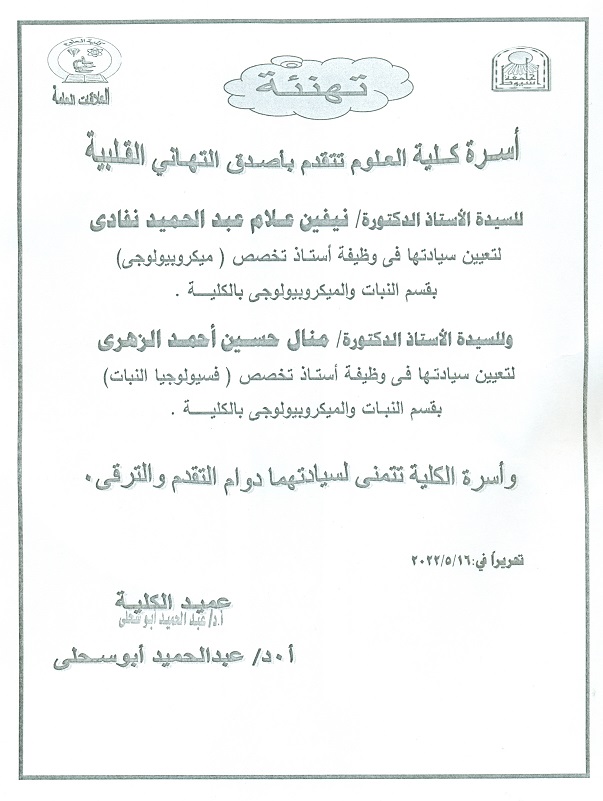
Announcement

Phyto-remedial of excessive copper and evaluation of its impact on the metabolic activity of Zea mays
Research Abstract
Maize is diagnosed as a heavy metal (HM) accumulator, while the tolerance mechanism is not sufficiently known. A hydroponic experiment was performed to test the ability of maize plants to tolerate and accumulate Cu. Excess copper treatments (ECu; 5 and 10 μM CuSO 4) considerably reduced plant growth, photosynthetic pigments, ascorbate peroxidase (APX), and guaiacol peroxidase (POD) activity. However, ECu significantly enhanced catalase (CAT) activity. ECu treatments reduced the leaf membrane integrity as indicated by increasing malondialdehyde (MDA) content in leaves. Proline and phenolic contents were considerably increased in maize organelles by ECu toxicity. ECu treatments considerably stimulated free amino acid (FAA) accumulation, total-soluble proteins (TSPs), and K in shoots, whereas these parameters did not change in the roots. Applications of CuSO 4 did not affect the accumulation of
Research Date
Research Department
Research Journal
Cereal Research Communications
Research Member
Research Publisher
Springer International Publishing
Alleviating excess boron stress in tomato calli by applying benzoic acid to various biochemical strategies
Research Date
Research Department
Research Journal
Plant Physiology and Biochemistry
Research Member
Research Publisher
Elsevier Masson
Research Year
2022
Biosorption of ketoprofen and diclofenac by living cells of the green microalgae Chlorella sp.
Research Abstract
There is a growing interest for the removal of different pharmaceuticals from water owing to their toxicity to various organisms. The present study investigated the use of living cells of the green alga Chlorella sp. in the short-term adsorption of ketoprofen (KET) and diclofenac (DIF) from aqueous solutions. The bioremoval efficiency of both KET and DIF was highly dependent on various parameters such as time, pH, algal dosage, and drug concentration. The adsorption efficiencies of both KET and DIC were maximized at pH 6. The biosorption of KET was better described by pseudo-first-order kinetics, while DIC obeyed the pseudo-second-order model. The maximum adsorption capacities of KET and DIF were attained as 0.328 and 0.429 mg g−1, respectively. The equilibrium data of the investigated drugs showed a better fit to the Freundlich model than the Langmuir model. The Elovich and Temkin models indicated that the algal surface was heterogeneous with different binding energies, while the intraparticle diffusion model assumed a boundary layer effect. Additionally, the Dubinin–Radushkevich isotherm indicated that the adsorption process was predominantly physisorption. FT-IR analysis revealed that H-bonding and n-π interactions were prominent in the biosorption process of the investigated pharmaceuticals on the surface of microalgae. The results of the present study showed that microalgae living cells could be applied as an eco-friendly and cost-effective biosorbent for the removal of KET and DIF at low concentrations.
Research Date
Research Department
Research Pages
69242–69252
Research Publisher
Springer
Research Rank
1
Research Vol
28
Research Website
https://link.springer.com/article/10.1007/s11356-021-15505-x
Research Year
2021
Industrial optimization of alkaline and bleaching conditions for cellulose extraction from the marine seaweed Ulva lactuca
Research Abstract
Marine macroalgae are abundant, sustainable, and low-cost resources for several biotechnological applications and are characterized by superior properties for the production of cellulose compared to lignocellulosic biomass. However, no attempts have been made in the optimization of cellulose extraction from marine macroalgae. The present study investigated the effects of different NaOH and NaClO2 treatments on cellulose yield and its physicochemical properties (molecular weight (MW) and crystallinity) from the green seaweed Ulva lactuca. In the first step, the Box-Behnken design (BBD) indicated that the optimum conditions for alkaline treatment were NaOH 5.0% (w/v), temperature 100 °C, and time 2.0 h. These conditions yielded 4.82% (w/w), with a MW of 2.91 KDa and crystallinity of 72.58%. Under these optimum conditions, a second BBD was developed to optimize bleaching conditions. The optimum bleaching treatment was NaClO2 concentration 2.50% (v/v), temperature 60 °C, and time 1 h, which extracted 5.50% (w/w) of cellulose, with a MW of 2.53 KDa and crystallinity of 93.47%. The results allowed the extraction of cellulose from marine algal biomass with sufficient yield and improved crystallinity for potential industrial applications.
Research Date
Research Department
Research Journal
Journal of Applied Phycology
Research Pages
4093–4103
Research Publisher
Springer
Research Rank
1
Research Vol
33
Research Website
https://link.springer.com/article/10.1007/s10811-021-02581-2
Research Year
2021
Enhancement of microalgal biomass, lipid production and biodiesel characteristics by mixotrophic cultivation using enzymatically hydrolyzed chitin waste
Research Abstract
There is a growing interest for the mixotrophic cultivation of microalgae using sustainable natural carbon sources. Chitin from shrimp waste was hydrolyzed using chitinase from Trichoderma asperellum and was exploited for the mixotrophic cultivation of microalgae. Chitin saccharification was optimized using Box-Behnken design to produce 50.41% (w/w) of reducing sugars using chitin, 0.83% (w/v), chitinase, 2.92 (v/v), temperature, 40 °C and time, 4.48 h. The biomass productivity of Tetradesmus obliquus and Aphanocapsa sp. was promoted to 39.1 and 40.57 mg L−1 day−1 in the presence of 0.5 g L−1 of N-acetylglucosamine oligomers (GlcNAc), which was estimated to be ∼1.9 and ∼2-folds higher than the autotrophic conditions, respectively. Modified Logistic kinetic model confirmed higher growth rates and shortened lag-time of the mixotrophic cultures. The lipid productivity of both microalgae species was >1.5-times higher than the autotrophic conditions. Nitrate removal from the culture medium was found to be an effective strategy to increase both lipid content and lipid productivity for T. obliquus, but this strategy was not effective for Aphanocapsa sp. Fatty acid analysis revealed an increase of saturated fatty acids under mixotrophic cultivation for both microalgae species. Additionally, several biodiesel evaluation parameters indicated superior characteristics for the mixotrophic culture compared to the autotrophic conditions. Accordingly, mixotrophic growth of microalgae using GlcNAc as a new, sustainable carbon and nitrogen source opens a new avenue for biofuel production with an effective waste conversion into valuable commodities.
Research Date
Research Department
Research Journal
Biomass and Bioenergy
Research Member
Research Pages
106251
Research Publisher
Elsevier
Research Rank
1
Research Vol
154
Research Website
https://www.sciencedirect.com/science/article/pii/S0961953421002865
Research Year
2021